Beyond the Hype: Uber''s Platform Pivot and the Unseen Economics of Europe''s First Robotaxi Launch
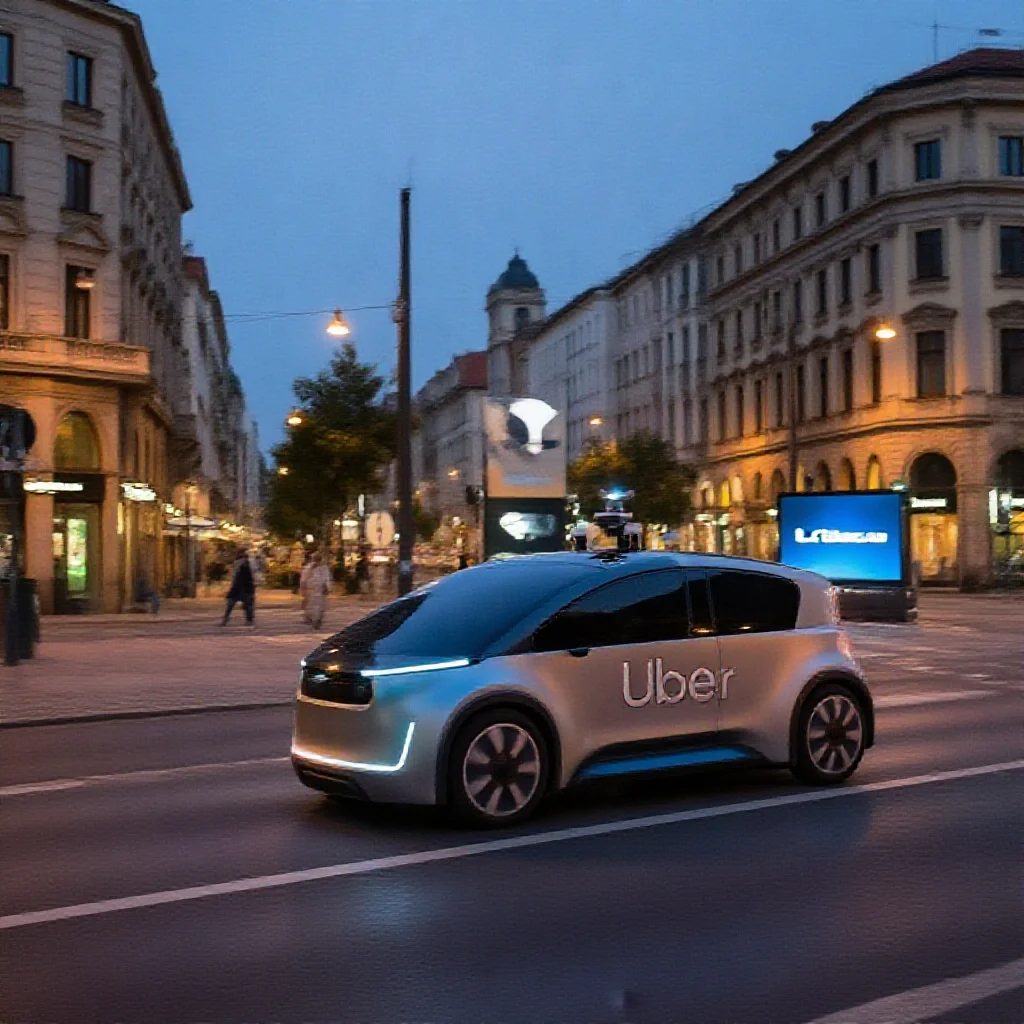
On March 26, 2026, Uber, in partnership with an autonomous vehicle company, launched Europe's first commercial robotaxi service in a geofenced urban area. While this marks a significant technological milestone, the deeper story is Uber's strategic pivot from a ride-hailing operator to an autonomous vehicle (AV) platform. This article analyzes the hidden economic logic behind this shift, exploring how Uber is shedding capital-intensive vehicle ownership and driver management to become a capital-light, high-margin marketplace for AV fleets. We examine the unspoken implications for urban infrastructure, data sovereignty, and the long-term reconfiguration of the automotive and insurance supply chains, positioning this not as a mere service launch, but as a foundational move in the platformization of urban mobility.
Layla Ibrahim
Editorial Analyst
Beyond the Hype: Uber's Platform Pivot and the Unseen Economics of Europe's First Robotaxi Launch
Summary: On March 26, 2026, Uber, in partnership with an autonomous vehicle company, launched Europe's first commercial robotaxi service in a geofenced urban area. While this marks a significant technological milestone, the deeper story is Uber's strategic pivot from a ride-hailing operator to an autonomous vehicle (AV) platform. This article analyzes the hidden economic logic behind this shift, exploring how Uber is shedding capital-intensive vehicle ownership and driver management to become a capital-light, high-margin marketplace for AV fleets. We examine the unspoken implications for urban infrastructure, data sovereignty, and the long-term reconfiguration of the automotive and insurance supply chains, positioning this not as a mere service launch, but as a foundational move in the platformization of urban mobility.
---
The Surface Event: Decoding Europe's First Commercial Robotaxi Launch
The launch of a commercial robotaxi service in a European city on March 26, 2026, represents a calibrated breakthrough in a continent known for its stringent regulatory frameworks. This event follows years of closed testing under the European Union's type-approval process for automated vehicles, which mandates rigorous safety and data security assessments. (Source 1: [EU Transport Authority Statements]). The designation "commercial service" indicates a transition from pilot programs, which were often free and invitation-only, to a monetized offering accessible to the public via the Uber application. However, its confinement to a geofenced area signifies a controlled, phased rollout rather than a full-scale deployment.
The geofence itself is a critical analytical variable. The selected zone—likely a combination of a technological hub, a regulatory sandbox city, and an area with favorable, predictable road geometries—serves as a risk-mitigation instrument. This choice reveals the partnership's primary objective: to validate operational and economic models in a manageable environment before confronting the complexity of unconstrained urban driving. The geofence is not merely a technical boundary but a commercial and regulatory proving ground.
!A map graphic highlighting the geofenced operational area within a recognizable European cityscape.
Uber's Silent Revolution: From Fleet Manager to Capital-Light Platform
The operational launch obscures a more profound strategic realignment. Uber's core objective is not to become a robotaxi fleet operator but to evolve into the dominant platform for autonomous mobility. This pivot is a direct response to the economic pressures of its legacy model, where driver-related costs, including incentives and insurance, have historically constituted a significant portion of revenue. (Source 2: [Uber FY 2023-2025 Financial Statements]).
The platform model inverts this economics. By providing the customer interface, transaction layer, and dynamic routing AI to third-party AV fleets, Uber sheds the capital intensity of vehicle ownership, maintenance, and direct driver management. Its role transforms into that of a marketplace facilitator, a position characterized by higher software-like margins. This ambition has been explicitly signaled in prior corporate communications focusing on an "asset-light future." (Source 3: [Uber CEO/CFO Public Statements, 2024-2025]).
The unspoken beneficiary of this shift is the AV manufacturer, which gains immediate access to a vast, established user base and utilization for its vehicles. However, this relationship carries an inherent tension: Uber's platform strategy deliberately commoditizes the vehicle hardware. The company retains the flexibility to onboard or deprecate fleet partners based on performance metrics, pricing, and vehicle capability, thereby exerting significant pricing pressure on manufacturers and insulating itself from technological obsolescence risks.
The Deep Entry Point: Ripples Through the Underlying Supply Chain
The consistent, predictable demand generated by a scaled robotaxi platform will trigger slow-moving but fundamental reconfigurations across multiple industries.
* Automotive Manufacturing: Vehicle design will shift from consumer-centric features to total cost of ownership (TCO) and durability optimization for fleet buyers. This accelerates the development of purpose-built vehicles (PBVs) with standardized interfaces, modular interiors, and extended lifespans, diverging from traditional automotive design cycles.
* Insurance and Liability: The insurance model migrates from individual driver policies to commercial fleet products underwritten for the platform operator or AV manufacturer. The risk assessment calculus changes from human driver history to software reliability, sensor performance, and cybersecurity resilience, creating a new specialty insurance sector.
* Energy Infrastructure: Robotaxi fleets will necessitate centralized depot-based charging strategies to maximize vehicle utilization, contrasting with the decentralized, opportunistic charging of private EVs. This creates nodal demand for high-capacity grid connections in specific urban zones, influencing municipal energy planning.
The most valuable and contested asset emerging from this system is data. The granular, real-time data on urban mobility patterns, road conditions, and passenger flow generated by the service constitutes a critical supply chain. Ownership and control of this data—whether retained by Uber, the AV partner, or mandated for sharing with municipal authorities—remains a largely unresolved battleground with significant implications for urban planning, competitive advantage, and public policy.
Secondary urban fabric effects will materialize over a longer horizon. A material shift to shared AVs could reduce demand for curbside and off-street parking, freeing land for alternative uses. Conversely, it may increase total vehicle miles traveled (VMT) due to empty repositioning trips and induced demand, presenting new congestion management challenges for city planners. The platformization of mobility centralizes routing decisions, granting the platform operator unprecedented influence over urban traffic flow.
Conclusion: The Platform as the New Urban Utility
The March 2026 launch is less about the vehicle and more about the deployment of a new market architecture. Uber's strategic pivot positions it to become a utility-like layer for urban movement—a capital-light intermediary that matches supply with demand while externalizing the costs and complexities of physical asset management. The long-term viability of this model hinges on regulatory outcomes concerning data sovereignty, platform neutrality, and antitrust scrutiny, as well as the technical and commercial maturity of the AV partners it relies upon. The event signifies the opening of a new phase where competition will be defined not by fleet size, but by algorithmic efficiency, network density, and control over the mobility data stack.
Keywords

Layla Ibrahim
Technology Reporter covering fintech, AI, and startup ecosystems in the Gulf.