Arm''s AI Chip Gambit: Decoding the Strategic Pivot from IP Licensor to Direct Competitor
Arm Holdings plc is executing a radical strategic pivot, moving beyond its foundational intellectual property licensing model to design and sell its own chips. This shift, detailed in a March 2026 report, is a direct response to the seismic changes in the economics of artificial intelligence computing. The move positions Arm not just as an enabler, but as a direct competitor to its own licensees in the high-stakes AI hardware market. This analysis explores the underlying economic logic driving this change, its potential to disrupt the semiconductor supply chain, and the long-term implications for the balance of power in the global AI compute landscape.
Layla Ibrahim
Editorial Analyst
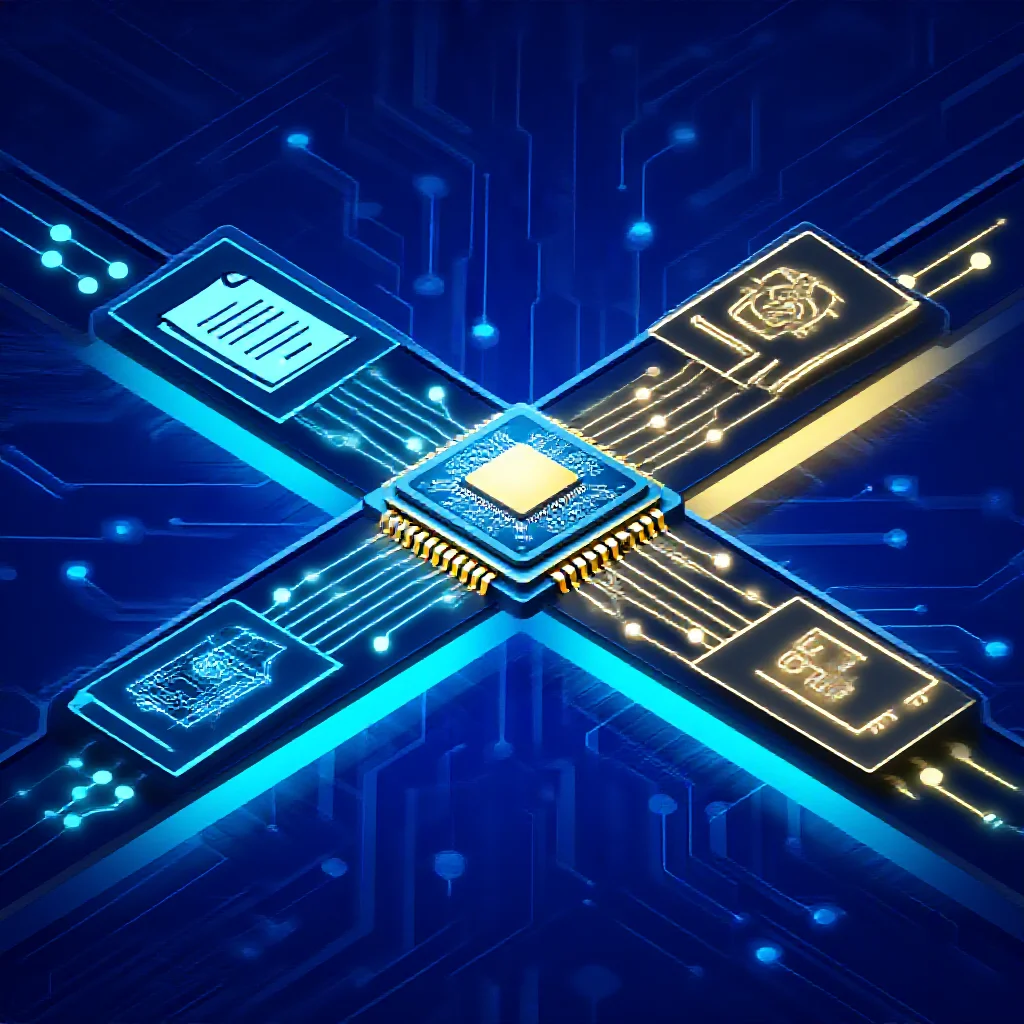
Arm's AI Chip Gambit: Decoding the Strategic Pivot from IP Licensor to Direct Competitor
March 25, 2026
Introduction: The End of an Era for Arm's Pure-Play IP Model
For decades, Arm Holdings plc has operated as the quintessential architecture landlord of the global semiconductor industry. Its business model, licensing intellectual property (IP) for CPU designs and instruction sets, became the foundational bedrock for mobile, embedded, and increasingly, data center computing. This era has reached an inflection point. A report published in March 2026 details a fundamental rupture in this strategy (Source 1: [Primary Data]). The company is now pivoting from a pure-play IP licensor to an entity that will design and sell its own chips. This maneuver is not a mere expansion of services; it is analyzed as a necessary survival tactic compelled by a paradigm shift in the economics of artificial intelligence compute. The move repositions Arm from an enabler of the ecosystem to a potential competitor within it.
!Infographic timeline showing Arm's evolution from mobile IP to data center and AI.
The Core Economic Logic: Why AI Compute Broke the Old Model
The strategic pivot is a direct response to the changing economics of AI computing (Source 1: [Primary Data]). The traditional licensing model, which generates revenue per chip shipped using Arm IP, faces diminishing returns in a market dominated by two converging trends: exponentially exploding AI model sizes and the unsustainable escalation of energy costs for training and inference. In this environment, performance-per-watt and total system optimization have become paramount, creating a premium on vertical integration.
Hyperscale cloud providers, including Amazon Web Services with its Graviton processors and Google with its Tensor Processing Units (TPUs), have already demonstrated this logic. By designing their own custom silicon—often based on Arm architecture—they optimize their specific workloads, capture more margin, and reduce dependency on merchant chip vendors. This trend simultaneously validated Arm's architecture for high-performance compute and created a strategic threat, as these largest customers internalized chip design, potentially reducing the volume of new licensing deals. The old model, where Arm profited indirectly from the success of its licensees, is being circumvented at the highest-margin tiers of the market.
Beyond Licensing: Arm's Foray into Direct Chip Sales and Design
The March 2026 report specifies that Arm's new strategy involves designing and selling its own chips, moving decisively beyond its traditional role (Source 1: [Primary Data]). This entails developing full-stack silicon products, not merely licensing CPU or GPU core blueprints. The strategic target is likely the high-margin segments of the AI hardware stack. Primary candidates include data center CPUs optimized for AI workloads, dedicated AI inference accelerators, and specialized processors for edge AI applications.
This move redefines Arm's product-market fit and competitive set. The company would no longer compete solely with other IP vendors like RISC-V but would enter direct competition with its own licensees, such as Qualcomm, MediaTek, and Apple, in specific segments. More significantly, it would position Arm against dominant merchant AI chip vendors like Nvidia and AMD. The critical question is whether Arm-branded chips will aim to be best-in-class, general-purpose AI accelerators or will focus on niches where its architectural efficiency can be most directly leveraged.
The Ripple Effect: Supply Chain and Competitive Landscape Upheaval
Arm's entry as a fabless chip vendor will reconfigure established semiconductor supply chain dynamics. The company will become a direct customer of foundries like TSMC and Samsung Electronics, competing for wafer allocation and advanced process nodes alongside its own licensees. This creates a multi-layered conflict: Arm would be both a supplier (of IP) and a competitor (of finished chips) to many of its existing partners.
The resulting "frenemy" dilemma for licensees is acute. Companies may be forced to dual-source components, consider defecting to alternative architectures like RISC-V for future designs, or in some cases, deepen partnerships with Arm in a co-opetition framework. The long-term impact on innovation in AI silicon is ambiguous. On one hand, Arm's direct investment could accelerate architectural breakthroughs and provide a credible alternative to the current market concentration. On the other, it may force a consolidation of the ecosystem, as smaller licensees find it increasingly difficult to compete against their foundational IP provider turned rival.
!A network map showing Arm's shifting relationships with foundries, OEMs, and cloud providers.
Verification and Context: Sourcing the Strategic Shift
The analysis of this strategic pivot is anchored in the March 2026 report which first detailed the shift (Source 1: [Primary Data]). The language of the report indicates a definitive strategic redirection, not a speculative trial. The stated drivers—changes in AI compute economics and the pursuit of direct chip revenue—are consistent with observable market forces over the preceding years, including the vertical integration efforts of hyperscalers and the escalating costs associated with large-scale AI model development.
Neutral Market and Industry Predictions
The execution of this strategy will define Arm's trajectory for the next decade. Several neutral predictions can be deduced:
- Initial Market Niche Focus: Arm's first proprietary chips will likely target specific, high-value niches within AI compute, such as power-constrained edge inference or complementary data center CPUs, rather than launching a head-on assault against the broadest incumbents.
- Architectural Forking Pressure: The move will accelerate interest in and development of the open-source RISC-V architecture among companies seeking to avoid strategic dependency on a potential competitor.
- Financial Model Transition: Arm's revenue composition will begin a multi-year transition, with direct chip sales growing as a percentage of total revenue, introducing higher volatility but potentially higher margins.
- Regulatory Scrutiny: Arm's dual role as both ecosystem enabler and competitor may attract increased regulatory scrutiny regarding licensing fairness and potential anti-competitive practices.
The ultimate measure of success will be whether Arm can leverage its architectural expertise into a product portfolio that captures value directly, without fatally undermining the partner ecosystem upon which its historical success was built. The March 2026 pivot marks the end of Arm's indirect participation in the AI gold rush; it is now digging its own mine.
Keywords

Layla Ibrahim
Technology Reporter covering fintech, AI, and startup ecosystems in the Gulf.