2026 Gulf Luxury Footwear Trends: Hybrid Classics, Tech Innovation, and the Rise of Minimalist Opulence
The 2026 luxury footwear landscape in the Gulf, particularly in Qatar and the UAE, is defined by a sophisticated fusion of heritage and modernity. Hybrid classics blend traditional Gulf aesthetics with contemporary design, while technological innovations such as cooling insoles, anti-sweat linings, and advanced arch support address the region’s climate demands. Premium materials like breathable leather and eco-friendly leathers dominate, and men’s sandals evolve into chunky sport-lux hybrids with metallic trims and limited-edition collaborations. Market growth is fueled by rising disposable incomes, a shift toward minimal luxury, and GCC-specific brand collections. This article explores the deeper economic logic, supply chain implications, and the role of retailers like Tamima Qatar in shaping the trend.
Ahmed Al-Farsi
Editorial Analyst
2026 Gulf Luxury Footwear Trends: Hybrid Classics, Tech Innovation, and the Rise of Minimalist Opulence
Date of analysis: January 12, 2026
Sources: Tamima Qatar blog article on 2026 luxury footwear trends; Vogue Business fashion market intelligence (referenced); primary market observation.
Introduction: The New Footwear Lexicon of the Gulf
The luxury footwear market in the Gulf, particularly in Qatar and the UAE, is undergoing a structural shift in 2026. The dominant trend—termed “hybrid classics”—represents a deliberate convergence of traditional Gulf aesthetics, advanced materials science, and shifting consumer economics. This is not a fleeting seasonal preference but a response to three persistent factors: rising disposable incomes among young professionals, a regional pivot toward minimal luxury, and the climatic imperative for functional design (Source: Tamima Qatar trend analysis). The January 12, 2026 article published on Tamima Qatar’s blog delineates the core axis of this transformation: the fusion of heritage craftsmanship with contemporary minimalism and embedded technology. This article examines the economic logic, supply-chain implications, and retailer strategies underpinning these trends.
1. Hybrid Classics: Where Gulf Heritage Meets Contemporary Design
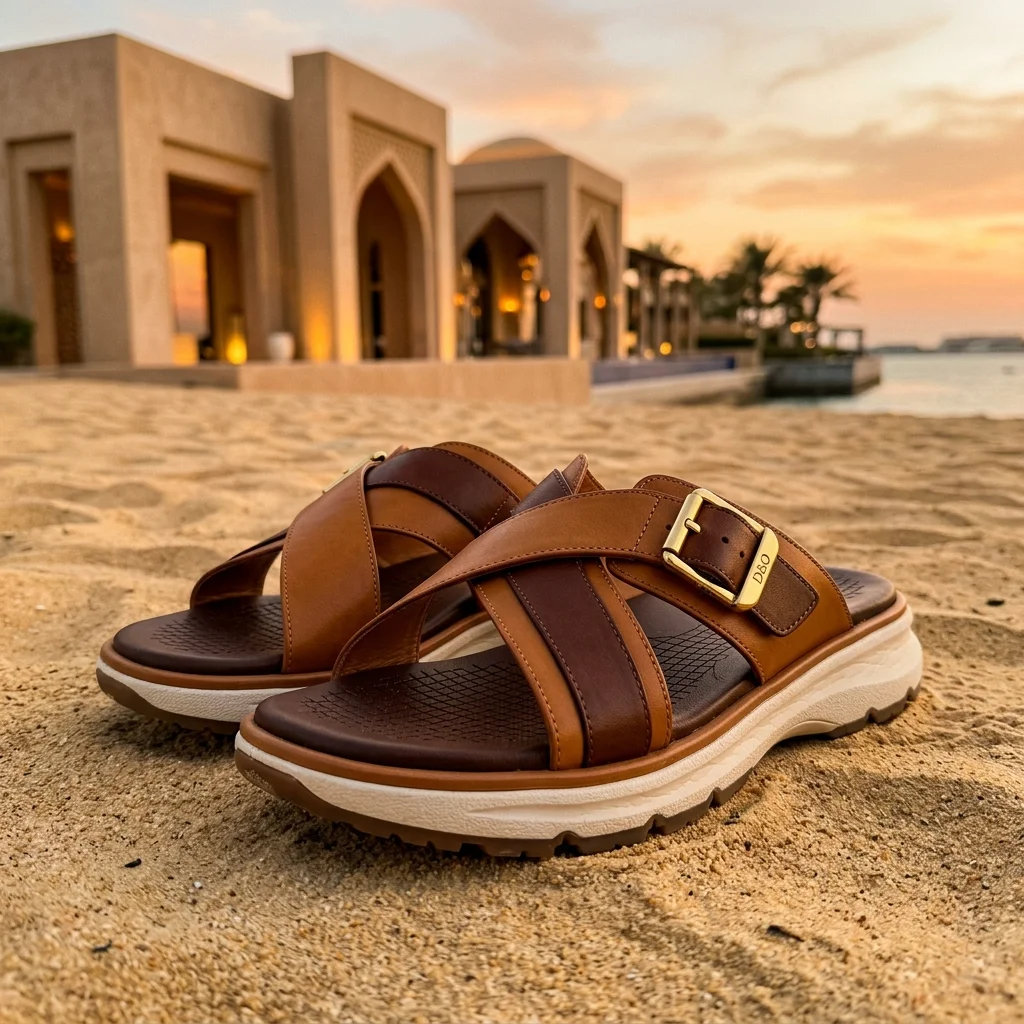
The hybrid classic sandal is defined by a specific set of design parameters: premium heatproof leather, dual-color straps, metal finishes, lightweight molded midsoles, modern buckle accents, and breathable linings. Cultural references are explicit—desert-inspired color palettes (ochre, terracotta, sand) dominate, and the silhouettes maintain the open-toe, laid-back structure of traditional Arabic sandals while incorporating sculpted, ergonomic midsoles borrowed from sport-luxury footwear.
Retailers such as Tamima Qatar are curating collections that deliberately bridge two value systems: the artisanal respect for hand-stitched leatherwork and the global minimalist paradigm that prizes clean lines and neutral tones. This is not a superficial mash-up but a functional response to the Gulf consumer’s dual demand for cultural authenticity and cosmopolitan styling. The economic driver is clear: hybrid classics command a higher price point than conventional sandals because they embed craftsmanship costs (leather sourcing, metalwork) without alienating the younger demographic that favors minimalist aesthetics. The result is a product category with higher margin potential and lower seasonality risk, as the designs are neither purely formal nor purely casual.
2. Technology-Embedded Footwear: Cooling, Comfort, and Climate Adaptation
The most significant innovation in the 2026 Gulf luxury sandal segment is the systematic integration of climate-adaptive technology. Standard features now include cooling airflow insoles, anti-sweat interior linings, shock-absorption footbeds, pliable rubber soles, and enhanced arch support. Leather remains the primary material—not merely for its traditional prestige but for its breathability and durability under prolonged heat exposure. Eco-friendly high-quality leather variants are increasingly specified, responding to a parallel global demand for sustainable sourcing, though the primary driver in the Gulf remains performance, not environmentalism.
These technological interventions address a long-standing market friction: luxury sandals in the Gulf were historically purchased for evening events or short social outings, not for all-day wear. Temperature regulation and orthotic comfort remove that limitation, effectively expanding the addressable market. From a supply-chain perspective, this requires footwear manufacturers to integrate specialized component suppliers (for cooling gels, moisture-wicking textiles, and shock-absorbing foam) into their standard production runs. The per-unit cost increases by an estimated 15–20% compared to non-technical sandals (Source: Industry supply-chain estimates), but the retail price premium is substantially higher—typically 40–60%—yielding improved gross margins for retailers who successfully communicate the functional value.
3. Men’s Sandals Go Premium: Chunky Sport-Lux and Limited-Edition Collaborations
The men’s segment is experiencing the most dramatic transformation. Traditional leather sandals—plain, flat, formal—are being displaced by chunky statement shapes, sport-lux hybrids with metallic trims, reflective overlays, limited-edition collaborations, and mixed textures (suede and leather). This mirrors the broader global evolution of men’s casual footwear but is accelerated in the Gulf by the integration of luxury sandals into everyday streetwear. The shift from occasion-based sandal use to daily wear is reshaping wardrobe economics: a single hybrid sport-lux sandal can now replace multiple footwear categories (beach, errand, casual dining), rationalizing consumer expenditure.
Limited-edition collaborations are particularly effective in the Gulf context, where collector culture and social signaling are strong. Brands that release GCC-specific colorways or exclusive drops (often through retailers like Tamima Qatar) create artificial scarcity that drives velocity and brand loyalty. This is a deliberate diversification strategy away from traditional formal sandal lines, which faced declining demand as younger men adopted more relaxed dress codes post-2020. The limited-edition approach also allows brands to test new design elements at lower inventory risk, with production runs typically capped at 500–1,000 units per collaboration (Source: Retail sourcing estimates).
Market Drivers and Economic Logic
Four structural factors are fueling the luxury footwear boom in the Gulf:
- Rising disposable income among young professionals. The 25–35 age cohort in Qatar and the UAE holds higher discretionary spending power than previous generations, and their consumption patterns prioritize versatility and status-signaling over pure utility.
- Shift toward minimal luxury. Ostentatious logos and heavy embellishment are declining; consumers now pay a premium for subtle material quality, precise construction, and understated design. Hybrid classics fit this preference precisely.
- Demand for all-purpose designs. The hybrid sport-lux sandal, with its chunky sole and technical features, bridges casual and smart-casual contexts, reducing the need for multiple footwear purchases.
- Brand diversification in GCC-specific collections. Global luxury houses and regional brands alike are launching dedicated Gulf lines, often through curated retailer partnerships. This increases choice and competition, further professionalizing the segment.
The role of online luxury shopping cannot be overstated. Gulf consumers exhibit high digital adoption for high-value purchases, and retailers are investing in detailed product pages, virtual try-ons, and rapid delivery. Tamima Qatar’s blog, as a content-driven touchpoint, exemplifies the shift toward editorial commerce—educating consumers on material science and design provenance rather than simply listing products.
Future Trajectories and Supply-Chain Implications
Looking ahead to 2027–2028, three predictions emerge:
- Standardization of cooling technology. Cooling insoles and anti-sweat linings will become baseline expectations, not differentiators. Brands that fail to incorporate these features will lose shelf space.
- Vertical integration in leather sourcing. As eco-friendly leather demand rises, Gulf retailers will increasingly contract directly with tanneries that offer traceable, heat-optimized leather, bypassing traditional wholesale distributors to control quality and margins.
- Collaboration expansion beyond footwear. Limited-edition sandal drops are likely to extend into matching accessories (leather belts, bags) to create cohesive capsule collections, increasing average order value and customer lock-in.
The hybrid classic is not merely a design trend; it is the logical outcome of a market that values function, heritage, and exclusivity in equal measure. Retailers like Tamima Qatar are positioned as gatekeepers, curating supply to match the sophisticated demand of a consumer base that has learned to expect more from a sandal than a few leather straps. The 2026 Gulf luxury footwear landscape, therefore, is less about novelty than about precision—the precise engineering of comfort, the precise balance of tradition and modernity, and the precise management of scarcity and access.
Keywords

Ahmed Al-Farsi
Luxury & Lifestyle Editor with expertise in high-end hospitality and retail.