Beyond the Tender: Kuwait''s Doha Port Study and the Strategic Reshaping of Gulf Logistics
Kuwait's Ministry of Public Works has initiated a critical step by tendering a feasibility study for Doha Port's development, with bids due by April 28. While seemingly a routine procedural step, this move signals a deeper strategic intent. This analysis explores how the study's technical, economic, and environmental assessments are not merely about port expansion but are a calculated play to reposition Kuwait within the fiercely competitive Gulf logistics corridor. We examine the underlying drivers, from economic diversification under Vision 2035 to the geopolitical calculus of reducing regional transit dependencies, and what a revitalized Doha Port could mean for supply chain patterns and Kuwait's long-term role as a regional trade nexus.
Fatima Al-Zahra
Editorial Analyst
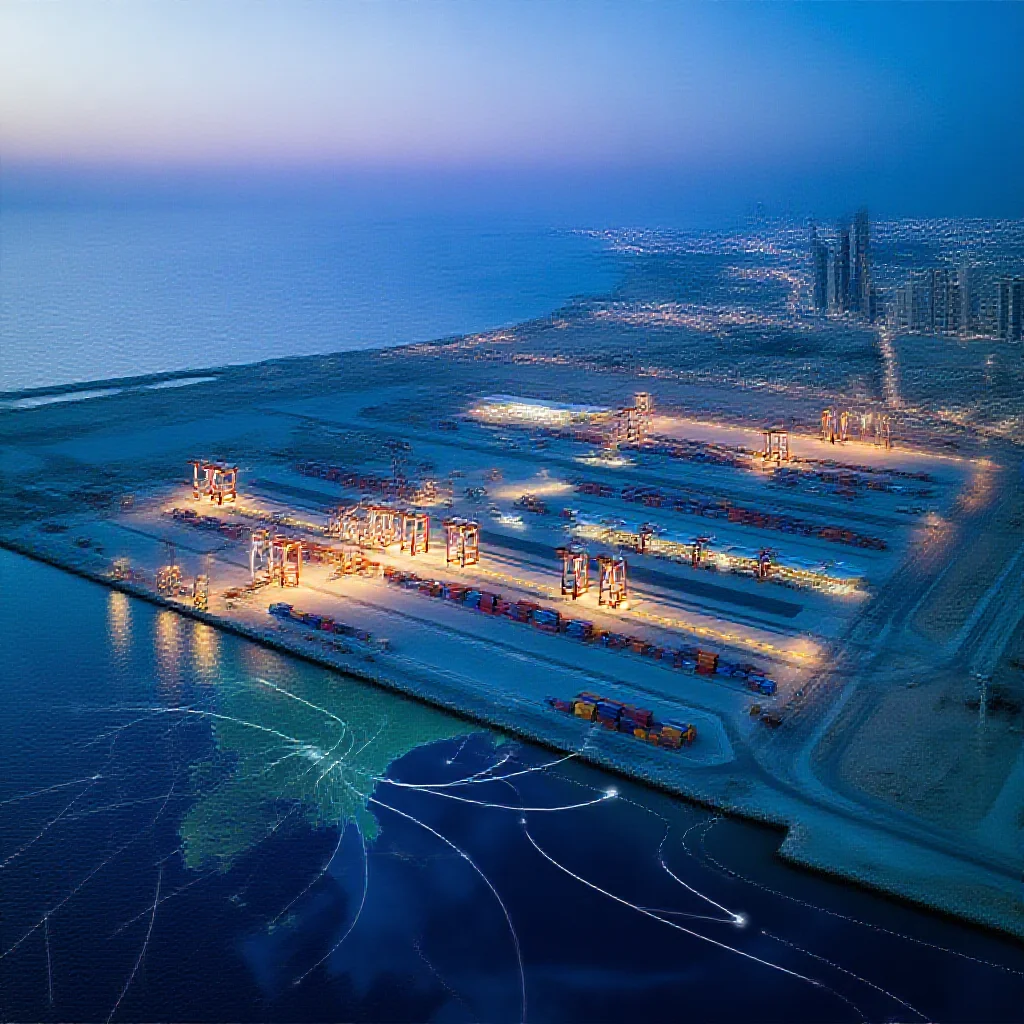
Beyond the Tender: Kuwait's Doha Port Study and the Strategic Reshaping of Gulf Logistics

The Surface Fact: A Procedural Milestone for Port Development
Kuwait’s Ministry of Public Works has initiated a formal procurement process for a comprehensive feasibility study concerning the development of Doha Port. Consultants have been invited to submit proposals, with a definitive deadline for bid submissions set for 28 April (Source 1: [Primary Data]). This action represents a standard yet critical procedural gate for any major infrastructure initiative. The scope of the commissioned study is explicitly tripartite, mandating concurrent assessments of technical, economic, and environmental viability (Source 1: [Primary Data]). These parallel evaluations will form the foundational data set upon which all subsequent investment, design, and construction decisions will be contingent. The April deadline establishes a near-term pressure point, signaling the ministry’s intent to maintain project momentum and transition from conceptual planning to evidence-based analysis.

The Core Strategic Axis: Kuwait's Quiet Bid for Logistics Sovereignty
The issuance of this tender, while administrative in nature, is a tangible manifestation of deeper strategic imperatives. The initiative aligns directly with the economic diversification objectives outlined in Kuwait’s Vision 2035, or "New Kuwait," framework, which seeks to reduce national dependence on hydrocarbon revenues. The underlying economic logic involves capturing a greater share of the high-value logistics and transshipment market within the Arabian Gulf region. A more significant geopolitical undercurrent is the calculated intent to decrease Kuwait’s logistical dependency on neighboring regional mega-hubs. By enhancing domestic port capacity and efficiency, the state aims to strengthen national supply chain resilience, control a larger portion of the value chain for its own imports and exports, and potentially reroute cargo flows that currently bypass its shores.

Deep Audit: The Feasibility Study's Make-or-Break Questions
The study’s ultimate authority will derive from its ability to rigorously answer several interconnected, high-stakes questions.
Technical Viability: The assessment must move beyond generic expansion concepts to specify required basin depths, berth lengths, crane and yard specifications, and dredging requirements. A critical technical component will be the evaluation of connectivity to hinterland transport networks, particularly the long-planned GCC railway, which would determine the port’s effectiveness as a multimodal gateway.
Economic Viability: The study must project realistic cargo flow forecasts in a region already saturated with world-class port facilities. It will need to model a credible return on investment, scrutinizing potential revenue streams from containerized cargo, bulk goods, and roll-on/roll-off traffic. The financial analysis will likely explore various funding mechanisms, with Public-Private Partnership (PPP) models being a probable focus for mitigating fiscal pressure on the state.
Environmental Imperative: Given the sensitive marine ecosystems of the Gulf, the environmental assessment will be a decisive factor. The study must detail mitigation strategies for potential impacts on coastal morphology, water quality, and marine life. Its alignment with global Environmental, Social, and Governance (ESG) standards will influence both international financing prospects and the project’s social license to operate.

The Ripple Effect: Long-Term Implications for Regional Supply Chains
The successful development of Doha Port, as informed by this study, would generate long-term ripple effects across regional logistics patterns. It could establish a new competitive entry point for trade, potentially altering import/export routes for cargo destined for northern Kuwait and southern Iraq, which is currently funneled through ports in other Gulf states. This would introduce new dynamics into the competitive landscape, placing pressure on existing hubs to maintain their service advantages and possibly allowing Kuwait to specialize in niche cargo categories or faster vessel turnaround times.
Beyond direct port operations, the project carries significant secondary implications for human and industrial capital. A major port development typically spurs growth in adjacent industries such as warehousing, freight forwarding, and light manufacturing. The initiative holds the potential to create skilled employment opportunities and attract foreign logistics firms, contributing to the broader knowledge-based economy envisioned in Kuwait’s long-term development strategy.
Neutral Market and Industry Predictions
The market will interpret the 28 April deadline and the subsequent awarding of the feasibility study contract as a key indicator of the project’s procedural seriousness. Logistics analysts will closely monitor the study’s conclusions, particularly its cargo forecasts and proposed PPP structures, to gauge financial attractiveness to international investors and operators. The regional competitive response is predictable; incumbent port authorities may accelerate their own efficiency upgrades or tariff reviews upon confirmation of Kuwait’s firm commitment. The most probable outcome, should the study affirm viability, is a phased development approach for Doha Port, initially targeting specific cargo segments where Kuwait can secure a comparative advantage, rather than an immediate, full-scale challenge to established regional leaders. The feasibility study, therefore, is not merely a report but a strategic document that will either calibrate or constrain Kuwait’s ambitions within the evolving geography of Gulf trade.
Keywords

Fatima Al-Zahra
Real Estate Editor specializing in Dubai and Riyadh mega-projects.