Beyond the Headline: The Off-Plan Engine Driving Dubai''s Q1 2026 Property Resilience
Dubai''s residential market recorded 44,100 transactions in Q1 2026, marking a 4.2% year-on-year sales increase. While this signals resilience, the core story lies beneath the headline figure. This analysis moves beyond simple growth metrics to examine the structural shift powering the market: surging off-plan demand. We explore what this reliance on future supply reveals about buyer psychology, developer financing strategies, and potential long-term risks to market stability. By dissecting the data from Cavendish Maxwell, we uncover the underlying economic logic of a market increasingly fueled by pre-construction sales and its implications for Dubai''s real estate ecosystem.
Fatima Al-Zahra
Editorial Analyst
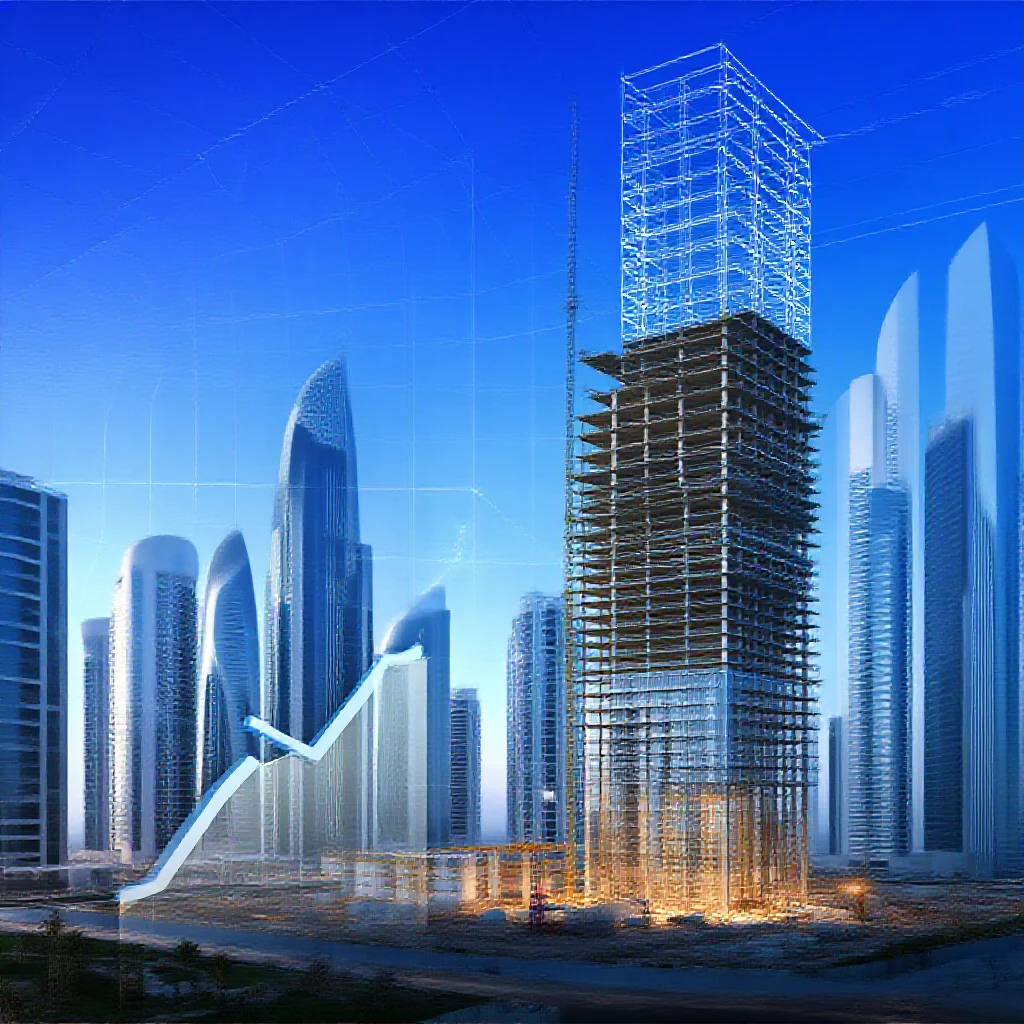
Beyond the Headline: The Off-Plan Engine Driving Dubai's Q1 2026 Property Resilience
Dubai's residential property market recorded 44,100 transactions in the first quarter of 2026, representing a 4.2% year-on-year increase in sales (Source 1: [Primary Data]). This headline figure, reported by real estate consultancy Cavendish Maxwell, indicates a market demonstrating resilience. However, the structural composition of this activity reveals a more significant narrative. The growth was singularly driven by off-plan demand, a detail that necessitates a deeper audit of the market's underlying mechanics, sustainability, and inherent risks.
The Surface Data: Decoding Q1 2026's Transaction Momentum
The transaction volume of 44,100 units establishes a baseline of continued activity. The 4.2% sales rise suggests a market in a state of equilibrium rather than explosive growth, particularly when contextualized against the high-velocity cycles of previous decades. This incremental growth points to a normalization phase. The data from Cavendish Maxwell provides a verified snapshot, aligning with the broader trend of UAE real estate reporting that emphasizes transactional volume as a key health indicator. The figure itself is less indicative of a boom and more suggestive of a market operating under a new set of drivers, where absolute growth percentage is secondary to the source of that growth.
The Core Engine: Why Off-Plan is the Unquestionable Driver
The designation of off-plan demand as the sole growth driver is a critical analytical pivot. Off-plan purchasing extends beyond speculative investor activity to include end-users attracted by extended payment plans tied to construction milestones. In a macroeconomic environment characterized by elevated interest rates, these plans offer an alternative financing model, presenting a perceived lower entry point compared to financing a completed property with a mortgage. From the developer's perspective, off-plan sales are a fundamental component of project financing. Pre-construction sales de-risk large-scale developments, securing capital flow before and during the build phase. This model shifts a significant portion of market risk from the developer's balance sheet to the individual buyer and the financial system backing them.
The Hidden Market Pattern: A Shift from Secondary to Primary Market Reliance
The corollary to surging off-plan demand is the implied stagnation or minimal growth in the secondary, or ready, property market. This divergence indicates a market increasingly reliant on future supply rather than trading existing inventory. It suggests potential affordability constraints in the ready market or a buyer preference for newer stock. This creates a "Pipeline Paradox": today's off-plan boom systematically determines tomorrow's supply. High absorption rates for unbuilt units commit substantial future inventory to the market, with delivery timelines concentrated in subsequent years. The current model, therefore, is not merely responding to demand but actively programming future supply, with direct implications for potential oversupply and secondary market valuations upon project completion and handover.
Deep Audit: Long-Term Implications for Dubai's Real Estate Ecosystem
This structural shift carries systemic implications. Firstly, it increases pressure on construction supply chains—materials, labor, and regulatory approvals—to deliver projects on schedule. Delays can trigger contractual disputes and erode buyer confidence. Secondly, it alters financial system exposure. Banks and investors develop a heightened reliance on the successful and timely completion of off-plan projects. The financial model is contingent on a continuous cycle of pre-sales funding construction, which in turn supports developer debt servicing. Thirdly, the off-plan-centric model raises questions about market maturity. A mature investment market typically exhibits robust liquidity in both primary and secondary segments. A heavy skew towards off-plan may indicate a market still in a development-growth phase, testing the sustainability of a model dependent on perpetual new project launches to maintain transaction volume.
Verification and Forward Outlook: Separating Signal from Noise
Cross-referencing this data point with future delivery schedules, construction cost indices, and secondary market price movements will be essential for verification. The forward outlook hinges on several variables: the global macroeconomic climate influencing investor liquidity, the local regulatory framework's capacity to ensure project delivery and buyer protection, and the eventual absorption rate of the delivered units into the occupied or rental market. The current resilience demonstrated in Q1 2026 is functionally linked to the off-plan engine. The long-term stability of the market will be determined by how smoothly this engine's output—new physical supply—is integrated into the city's real ecosystem, avoiding the pitfalls of the boom-bust cycles driven by pre-construction speculation that have characterized other global markets.
Keywords

Fatima Al-Zahra
Real Estate Editor specializing in Dubai and Riyadh mega-projects.