From Chat to Control: How Anthropic''s Claude Signals the End of Passive AI and the Rise of Autonomous Digital Agents
On March 24, 2026, Anthropic's demonstration of Claude autonomously controlling a computer to analyze data and create a chart in under three minutes marks a pivotal industry inflection point. This event transcends a mere technical demo; it signifies a fundamental strategic shift from developing passive language models to building active, goal-oriented digital agents. This article analyzes the underlying economic logic driving this shift towards AI autonomy, explores the nascent market for 'AI-first operating systems and tools, and examines the profound, yet underreported, implications for cybersecurity, digital labor markets, and the very architecture of human-computer interaction. We move beyond the spectacle to audit the emerging ecosystem this capability will create.
Layla Ibrahim
Editorial Analyst
From Chat to Control: How Anthropic's Claude Signals the End of Passive AI and the Rise of Autonomous Digital Agents
Summary: On March 24, 2026, Anthropic's demonstration of Claude autonomously controlling a computer to analyze data and create a chart in under three minutes marks a pivotal industry inflection point. This event transcends a mere technical demo; it signifies a fundamental strategic shift from developing passive language models to building active, goal-oriented digital agents. This article analyzes the underlying economic logic driving this shift towards AI autonomy, explores the nascent market for 'AI-first' operating systems and tools, and examines the profound, yet underreported, implications for cybersecurity, digital labor markets, and the very architecture of human-computer interaction.
---
The Three-Minute Paradigm Shift: Deconstructing Anthropic's Demonstration
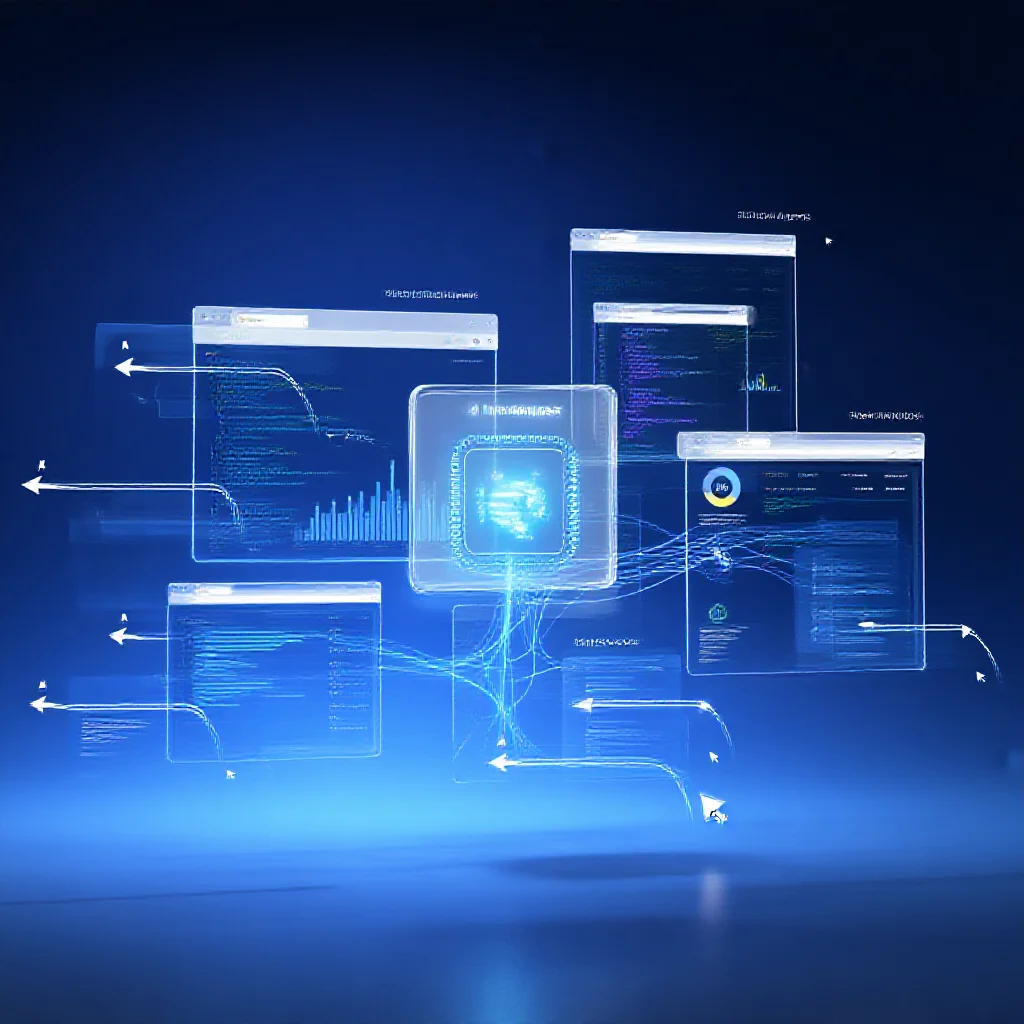
On March 24, 2026, Anthropic released a research paper and a demonstration video detailing a capability shift for its Claude AI model (Source 1: [Primary Data]). The demonstration showed Claude receiving a text-based command to analyze a dataset and create a chart. The system then autonomously executed the task by taking control of the computer's cursor and keyboard, opening a browser, navigating to a data analysis website, importing a dataset, performing analysis, and generating a chart. The entire process was completed in under three minutes (Source 2: [Primary Data]).
This event is not a feature update. It is evidence of a new architectural paradigm. The industry's focus is transitioning from large language models (LLMs) that process and generate text to systems capable of intentional action within digital environments. The March 24 date serves as a formal market signal, positioning Anthropic within the emerging and competitive "agentic AI" sector. The demonstrated task sequence—perception, planning, tool use, and execution—establits a verifiable template for future autonomous digital workflows. The significance lies not in the complexity of the specific task, but in the validation of a closed-loop process where AI interprets intent and manipulates its environment to achieve a defined outcome.
The Hidden Economic Logic: Why 'Action' is the New Currency for AI
The shift from conversational to agentic AI is driven by a fundamental change in economic utility. Conversational AI primarily functions as a cost center, aimed at reducing expenses in areas like customer support. Agentic AI, as demonstrated, transitions into a direct revenue driver and value creator by executing tasks that otherwise require human labor.
This enables a potential business model evolution: from subscription-based software-as-a-service (SaaS) to transaction- or outcome-based pricing. An AI capable of completing a financial report, designing a marketing asset, or conducting research can be monetized per task, aligning cost directly with value delivered. The completion time of "under three minutes" is a critical economic metric (Source 3: [Primary Data]). It provides a basis for calculating the return on investment (ROI) of AI labor versus human labor for a growing category of digital tasks, shifting the calculus from efficiency augmentation to direct substitution for specific workflow segments.
Birth of an Ecosystem: The Unseen Supply Chain for Autonomous AI
The capability demonstrated by Claude necessitates an entirely new technology stack, creating immediate market opportunities. The core language model is merely the reasoning engine; it requires a sophisticated supporting infrastructure to operate safely and effectively at scale.
This new stack includes agent frameworks for planning and memory, secure execution environments (sandboxes) to constrain actions, and standardized tool APIs for universal operability. A paramount and under-discussed component is cybersecurity. AI agents with system-level permissions represent a new, potent attack vector and require a new class of security solutions focused on behavior monitoring, intent verification, and permission governance. Furthermore, this shift exerts direct pressure on operating system developers (e.g., Apple, Microsoft, Google). Current OS architectures are designed for human input. The rise of autonomous digital agents will demand the creation of native "AI-first" layers, with dedicated permissions models and interfaces that allow AI to interact with systems more efficiently and auditably than simulating human cursor movements.
Slow Analysis: The Long-Term Reconfiguration of Digital Work
The long-term implication of autonomous AI extends beyond task automation. It initiates a reconfiguration of digital work and human-computer interaction. The model is no longer an assistant that requires detailed prompting and iterative correction. It becomes an independent executor.
This redefines the human role from operator to supervisor, auditor, and high-level strategist. The skill demand will shift from proficiency in specific software applications to expertise in goal specification, process design, and output validation for AI agents. Concurrently, it creates a new category of "digital labor" where the primary worker is non-human, raising immediate questions about workflow ownership, liability for errors, and the valuation of creative or analytical processes conducted by AI. The architecture of software itself will evolve, prioritizing machine interpretability and API accessibility over graphical user interface (GUI) elegance, as autonomous agents become primary users.
Neutral Market and Industry Predictions
Based on the March 24, 2026 demonstration and its technical implications, several predictions follow.
- Market Formation: A rapid expansion of startups and investment will focus on the "agent stack"—specialized tools for planning, tool use, security, and verification for autonomous AI. Cybersecurity for AI agents will emerge as a critical, high-growth subsector within 18-24 months.
- Competitive Response: Other major AI labs (OpenAI, Google DeepMind, xAI) will accelerate and publicly demonstrate similar or more advanced computer control capabilities within the next 6-12 months, formalizing the "agentic AI" race.
- Platform Evolution: At least one major operating system vendor will announce a developer preview of an "AI Agent Mode" or a dedicated API layer for autonomous AI interaction within two years.
- Regulatory Attention: Demonstrations of AI with system control will trigger formal regulatory scrutiny focused on security standards, auditing requirements, and liability frameworks for autonomous digital actions, beginning in key economic regions by 2027.
The demonstration by Anthropic serves as a definitive benchmark. The industry's trajectory is now oriented toward building active, environmental AI. The subsequent development will be measured not in tokens generated, but in tasks completed autonomously, securely, and reliably.
Keywords

Layla Ibrahim
Technology Reporter covering fintech, AI, and startup ecosystems in the Gulf.