Google''s Outback AI: A Strategic Play for Rural Healthcare and Data Dominance
Google's deployment of an AI system for heart disease diagnosis in rural Australia is more than a healthcare initiative; it's a strategic move with deep economic and technological implications. This analysis explores how the project serves as a real-world testbed for AI in low-resource settings, providing Google with invaluable, hard-to-replicate data to refine its models and establish a foothold in the global digital health market. By collaborating with the Australian government, Google is navigating regulatory landscapes while addressing a critical social need, positioning itself at the intersection of public health and proprietary technology. The initiative reveals a pattern of using targeted, high-impact projects to build scalable platforms for future commercial and data-driven expansion.
Layla Ibrahim
Editorial Analyst
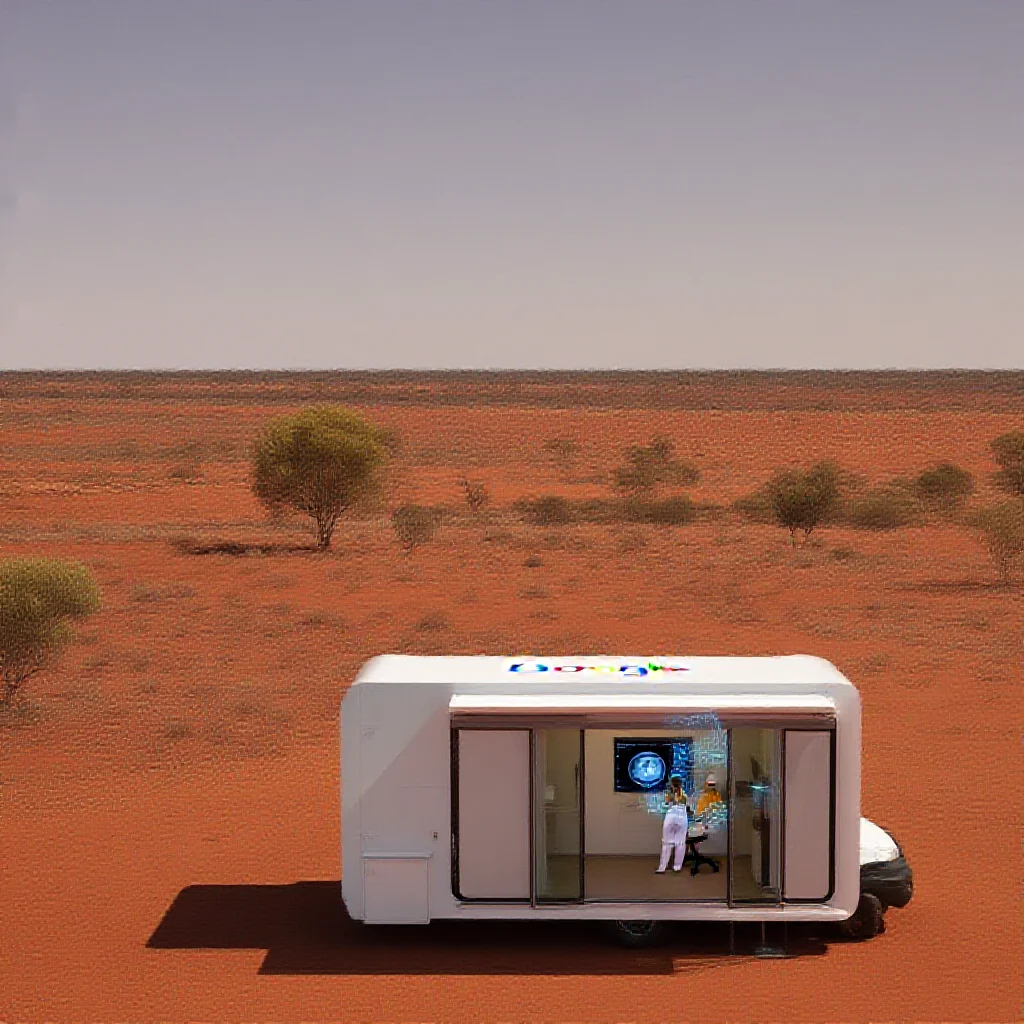
Google's Outback AI: A Strategic Play for Rural Healthcare and Data Dominance
Date: March 12, 2026
A new artificial intelligence system for diagnosing heart disease is being deployed in the remote Australian Outback. The system, developed by Google in collaboration with the Australian government and local health services, analyzes retinal scans to detect early signs of cardiovascular disease (Source 1: [Primary Data]). The stated objective is to address significant healthcare access disparities in rural and remote regions where specialist medical services are scarce. This initiative, however, represents more than a philanthropic healthcare project. It constitutes a calculated strategic maneuver with profound implications for the development of medical AI, data acquisition, and market positioning within the global digital health sector.
Beyond Diagnosis: The Strategic Calculus of Google's Outback Pilot
The deployment of AI in rural Australia functions as a high-value, low-risk strategic investment. The primary asset being acquired is a unique, real-world dataset generated in a controlled, government-backed environment. Rural populations present distinct health profiles and challenges compared to urban cohorts, and data collected in low-infrastructure settings is critical for training robust, generalizable AI models. The economic logic is clear: a public-private partnership de-risks the development phase for Google. The Australian government shares the operational burden and provides regulatory access, while Google gains a validated testing ground for its technology under challenging conditions.
Furthermore, by explicitly targeting healthcare access disparities, the project builds a powerful narrative of social impact. This narrative generates regulatory goodwill and public trust, assets that are increasingly crucial for technology firms operating in the sensitive healthcare sector. Success in this pilot eases the path for regulatory approval and public acceptance of similar AI diagnostic tools in other markets. The initiative is not merely a test of diagnostic accuracy but a test of a deployment model and a public relations strategy.
The Retina as a Data Goldmine: Training AI for a Broader Market
The choice of retinal scan analysis is technologically significant. The retina provides a non-invasive window to systemic health, with blood vessels offering direct indicators of cardiovascular condition. This modality generates rich, high-resolution, and structured image data, which is optimal for training deep learning algorithms. The AI model was trained on a dataset pairing retinal images with corresponding cardiovascular health outcomes (Source 1: [Primary Data]).
The hidden value of the Australian project lies in the creation of a proprietary, linked dataset. Each retinal scan from the Outback, when correlated with patient health records and outcomes over time, becomes a unique data point that refines Google's foundational medical AI models. This data is difficult and expensive to replicate, creating a competitive moat. The long-term strategic play extends beyond cardiovascular disease. A validated AI architecture for retinal analysis establishes a scalable platform. The same core technology can be adapted for the early detection of other systemic diseases with retinal biomarkers, such as diabetic retinopathy, Alzheimer's disease, and certain cancers, vastly expanding the potential market for the underlying platform.
Slow Analysis: Blueprint for the 'Last-Mile' Health Tech Platform
A slow, analytical audit of this project reveals it as a template for solving the "last-mile" problem in global health technology. The "last mile" refers to the final stage of delivery—in this context, delivering specialist-level diagnostic capability to populations with poor connectivity and limited medical infrastructure. The project examines and redesigns the underlying supply chain, which is not of pharmaceuticals, but of expertise and data.
The system effectively digitizes a scarce resource: specialist diagnostic skill. It creates a new workflow where a retinal image captured by a minimally trained technician in a remote clinic can be uploaded, analyzed by cloud-based AI, and a report returned to a local health worker. This model decouples diagnosis from the physical presence of a specialist. The market pattern it establishes is exportable. A successful pilot in a developed nation like Australia, with its robust but geographically challenged health system, creates a proven, regulatory-tested solution. This solution can then be deployed in emerging economies facing similar rural healthcare disparities but with far greater scale, representing a significant future commercial opportunity.
Verification and Evidence: Scrutinizing the Collaboration Model
The collaboration model between a multinational technology corporation and a national government requires scrutiny. The partnership provides Google with critical legitimacy and access to a state-managed health ecosystem. For the Australian government, it offers a potential technological solution to a persistent domestic policy challenge: equitable healthcare distribution. The verification of the AI's efficacy will depend on longitudinal studies conducted within this partnership framework. Key performance indicators will include not just diagnostic accuracy against specialist graders, but also metrics on patient outcomes, cost savings for the health system, and the rate of adoption by rural health practitioners.
The division of responsibilities, data ownership agreements, and long-term financial sustainability models remain central to the project's architecture. The data generated is likely governed by strict agreements that address patient privacy under Australian law while enabling Google to use anonymized data for further model improvement. This collaborative framework serves as a case study for other nations considering similar integrations of private-sector AI into public health infrastructure.
Conclusion: Positioning at the Intersection of Public Health and Proprietary Technology
Google's Outback AI initiative demonstrates a pattern of using targeted, high-impact projects to build scalable platforms for commercial and data-driven expansion. It positions the company at the precise intersection of public health need and proprietary technology development. The project delivers immediate social benefit by addressing a critical access gap in rural Australia. Concurrently, it generates an invaluable, hard-to-replicate dataset from a challenging environment, refines a platform technology with multiple disease applications, and establishes a government-collaborative blueprint for global market entry.
The neutral market prediction is that this model will proliferate. Success in Australia will lead to similar pilots in other geographically expansive countries with mixed urban-rural health economies, such as Canada, the United States, and Brazil. The ultimate trajectory points toward the normalization of AI-assisted diagnostics as a primary tool for extending specialist healthcare coverage, with technology firms that successfully navigate the regulatory and data acquisition phases becoming entrenched providers in the digital health ecosystem. The remote clinics of the Outback have become a strategic proving ground for this future.
Keywords

Layla Ibrahim
Technology Reporter covering fintech, AI, and startup ecosystems in the Gulf.