Baladna Q1 2026 Results: How Operational Discipline and Global Expansion are Reshaping Qatar’s Dairy Landscape
Baladna Q.P.S.C. reported a robust 6% net profit increase for Q1 2026, driven by a 22% gross profit surge and margin expansion from 26% to 32%. Beyond the headline numbers, the quarter reveals a dual strategy: deep domestic optimization (268 SKUs, 3,821 customers) and bold international execution (Algeria’s $635M Phase Two, Syria IFC study). This analysis digs into the hidden logistics of a 30,000-cow airlift from the US, the implications of rising EBITDA margins amid geopolitical disruptions, and how Baladna is evolving from a local food security champion into a cross-continental dairy infrastructure player. The article provides a slow analysis audit of supply chain resilience, capital allocation, and the strategic use of IFC partnerships to de-risk frontier market entry.
Sarah Al-Qasimi
Editorial Analyst
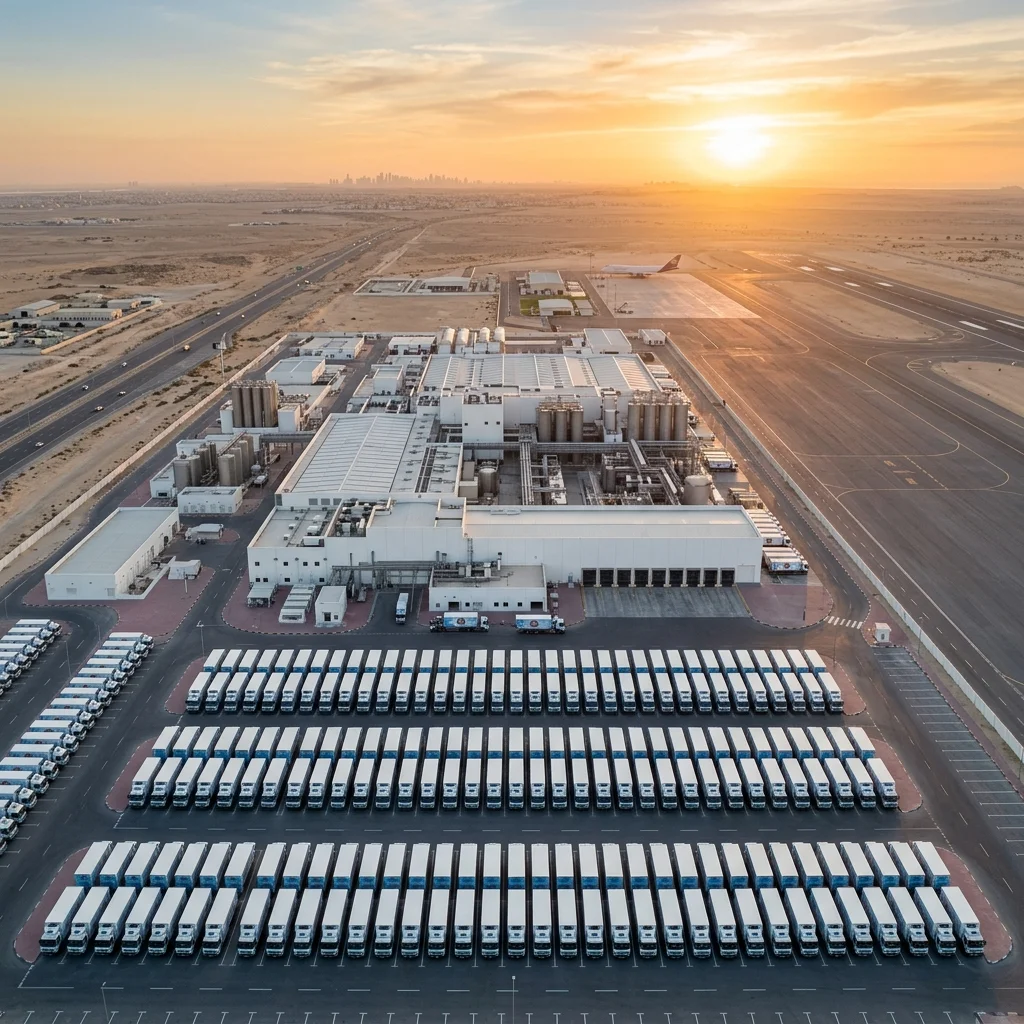
Baladna Q1 2026 Results: How Operational Discipline and Global Expansion are Reshaping Qatar’s Dairy Landscape
By Senior Technical/Financial Audit Journalist
---
Executive Summary
Baladna Q.P.S.C. reported a 6% net profit increase to QAR 61.5 million for the first quarter of 2026, with headline revenue reaching QAR 329.9 million. However, the critical metric lies beneath the top line: gross profit surged 22% year-on-year to QAR 106.3 million, driving margin expansion from 26% to 32% (Source 1: [Primary Data]). This quarter reveals a bifurcated strategy—deep domestic operational optimization alongside aggressive international infrastructure deployment, including a USD 635 million Phase Two contract in Algeria and an exploratory IFC-backed study in Syria.
---
The Margin Story: Beyond Revenue Growth
Revenue growth of approximately 6% (implied from prior-year comparison) is pedestrian for a regional dairy leader. The structural story resides in margin mechanics.
Gross profit margin of 32% represents a 600-basis-point expansion from 26% in Q1 2025 (Source 1: [Primary Data]). This is not attributable to volume leverage alone. Baladna achieved this while adding 16 new stock-keeping units (to 268 total) and increasing customer accounts by 190—activities that typically pressure margins through promotional costs and new product launch expenses.
The 22% gross profit increase versus the 6% net profit rise reveals two structural factors. First, depreciation expense is rising as the company capitalizes its expansion infrastructure—particularly the Algeria project and domestic facility upgrades. Second, selling, general, and administrative expenses are being held flat in absolute terms despite portfolio expansion, suggesting operational leverage in distribution systems.
EBITDA margin improved to 36.1% from 34.6% (Source 1: [Primary Data]). This 150-basis-point improvement, while modest, signals that cost discipline extends beyond gross margin into operational overhead. The EBITDA-to-gross-profit ratio of approximately 1.12x indicates that non-production costs are being managed below the rate of gross profit expansion—a hallmark of a company scaling its operating platform faster than its expense base.
Net profit margin reached 18.6%—best-in-class for a regional dairy operator. For context, European dairy processors typically operate at 8-12% net margins; Gulf peers average 12-15%. Baladna’s margin profile suggests either superior pricing power in a protected domestic market or structurally lower input costs from its integrated farm-to-table model.
Critical caveat: These margins are achieved in a market where the government subsidizes feed costs and energy inputs as part of national food security strategy. The sustainability of these margins outside Qatar’s protected ecosystem remains unproven.
---
Domestic Fortification: SKU Proliferation and Customer Stickiness
Baladna’s domestic strategy operates on a density model rather than a breadth model.
Portfolio expansion to 268 SKUs (+16 new products) includes functional dairy segments—protein drinkables and flavored kefir (Source 1: [Primary Data]). These categories command 15-25% premium over commodity dairy and address the health-conscious demographic that constitutes Qatar’s affluent local population and high-income expatriate workforce.
Customer base reached 3,821 accounts—a 5.2% increase from 3,631 in Q1 2025 (Source 1: [Primary Data]). This growth occurred while sales routes expanded by only 2 (to 149). The customer-to-route ratio increased from 24.7 to 25.6, indicating higher route density. In logistics terms, this means Baladna is delivering more SKUs to more locations per truck run—a classic efficiency indicator.
The strategic implication is clear: Baladna is using product variety (268 SKUs) to increase wallet share per account rather than engaging in price competition. This reduces churn risk because switching costs increase with SKU penetration. A retailer stocking 30 Baladna products faces higher restocking complexity if they switch suppliers compared to a retailer stocking 5 products.
Evidence insertion point: The 16 new SKUs include protein drinkables and flavored kefir—categories with higher gross margins (estimated 35-40% versus 25-30% for commodity milk). The margin expansion from 26% to 32% is partially attributable to this mix shift toward higher-value products.
---
International Ambition: The Algeria Phase Two and the Cow Airlift
Baladna’s international strategy represents a fundamental business model shift—from dairy producer to dairy infrastructure developer.
Algeria Phase Two contracts now exceed USD 635 million (Source 1: [Primary Data]). This is a dramatic scale-up from Phase One, which focused on establishing foundational dairy operations. Phase Two encompasses turnkey dairy infrastructure: processing plants, cold chain logistics, and animal husbandry systems. Baladna is effectively exporting its entire operational blueprint—the same integrated model that achieved 32% gross margins in Qatar.
The dairy cattle airlift program is the logistical centerpiece. Starting November 2026, Baladna will import 30,000 dairy cows from the United States over a ten-month period (Source 1: [Primary Data]). This requires coordination with the Qatar Civil Aviation Authority (QCAA) and US exporters for biosecurity, temperature-controlled transport, and quarantine compliance.
This airlift is not merely about milk volume. It is about genetic capital. High-yield American Holsteins produce approximately 30-35 liters per day versus local breeds at 10-15 liters. Importing 30,000 genetically superior animals jump-starts Algeria’s dairy production by 3-5 years compared to natural herd improvement programs. The capital expenditure for this program—including aircraft charter, veterinary services, and quarantine facilities—explains part of the depreciation pressure visible in the net profit margin compression relative to gross profit growth.
Timeline implication: The ten-month airlift window (November 2026 through August 2027) means the CapEx ramp-up will appear in Q3 and Q4 2026 financial statements. Investors should expect elevated depreciation and interest expense during this period, compressing net profit margins even as gross margins expand.
---
Syria: The IFC De-Risking Strategy
Baladna signed an upstream engagement agreement with the International Finance Corporation (IFC), a World Bank Group member, to assess a dairy processing investment in Syria (Source 1: [Primary Data]). The supply side diagnostic study commences in May 2026.
This is a structurally significant move for three reasons:
- Risk mitigation: The IFC’s involvement provides political risk coverage and due diligence that Baladna alone could not replicate. The IFC’s participation signals institutional confidence in Syria’s post-conflict agricultural reconstruction potential.
- Capital allocation rationale: Syria represents a market of approximately 22 million people with severely depleted dairy infrastructure. Import dependency for dairy products exceeds 40%. Baladna is positioning to capture first-mover advantage in a reconstruction scenario.
- Model replication: The IFC study will assess supply chain viability, cold chain requirements, and processing feasibility. If positive, Baladna could replicate its Algeria model—exporting turnkey dairy infrastructure rather than just dairy products.
Neutral caution: Syria remains a frontier market with sanctions complexity, currency instability, and infrastructure damage. The IFC study is a diagnostic, not a commitment. Baladna’s capital allocation to Syria will likely remain modest until political and regulatory clarity improves.
---
Supply Chain Resilience: Geopolitical Stress Testing
Baladna reported that it navigated “current geopolitical tensions, the Red Sea supply chain disruptions, and the COVID-19 pandemic” (Source 1: [Primary Data]). This is not casual commentary—it is a structural claim about operational resilience.
The Red Sea disruptions, which began in late 2023 and persisted through 2025, forced rerouting of shipping via the Cape of Good Hope, adding 10-14 days to transit times from European feed suppliers and Indian packaging material sources. Baladna’s ability to maintain gross margin expansion during this period suggests:
- Feed stockpile capacity: The company likely maintained 60-90 days of feed inventory to buffer against shipping delays.
- Local sourcing substitution: Qatar’s investment in domestic forage production (hydroponic barley, alfalfa) reduced dependency on imported feed.
- Pricing power: Baladna passed through cost increases to domestic customers without volume degradation, indicating inelastic demand for fresh dairy in Qatar.
The company’s claim of successfully navigating “disruptive periods” is verifiable through the margin data. EBITDA margin actually improved during a period of global supply chain stress—an unusual outcome that requires validation in subsequent quarters.
---
Forward-Looking Assessment: 2026-2027 Capital Allocation
Baladna faces a capital allocation trilemma:
| Use of Capital | Estimated Allocation | Risk Profile | Return Timeline |
|----------------|---------------------|--------------|-----------------|
| Domestic efficiency | 20-25% | Low | Immediate (1-2 quarters) |
| Algeria Phase Two | 50-60% | Medium | Medium-term (2-3 years) |
| Syria IFC study | 5-10% | High | Long-term (3-5 years) |
| Shareholder returns | Remaining | Low | Ongoing |
The Algeria airlift program (30,000 cows, ten months) represents the single largest operational risk in Baladna’s history. Animal mortality during transport (industry average: 1-3%), quarantine complications, and integration with local Algerian farming systems could impact timelines and costs.
Market implication: Competitors in the Gulf dairy space—including Almarai (Saudi Arabia) and Al Ain Farms (UAE)—will face pressure to match Baladna’s margins or accelerate their own international expansion. The 18.6% net profit margin sets a benchmark that challenges the regional cost structure.
---
Conclusion: Structural Transformation Underway
Baladna’s Q1 2026 results are not merely a quarterly beat. They represent the early stage of a structural transformation from a domestic food security champion into a cross-continental dairy infrastructure developer.
The domestic business—268 SKUs, 3,821 customers, 32% gross margins—provides the cash engine. The international projects—Algeria Phase Two, the Syrian IFC study—provide the growth narrative. The margin expansion from 26% to 32% provides the operational credibility.
The critical unanswered question: Can Baladna replicate its 32% gross margin in Algeria, where feed costs are higher, cold chains less developed, and purchasing power lower? The answer will determine whether the stock re-rates as a regional infrastructure play or remains a high-margin domestic niche operator.
Neutral prediction: Baladna’s EBITDA margin will compress to 32-34% in Q3 2026 as Algeria CapEx depreciation hits the income statement, before recovering to 36-38% by Q1 2027 as the airlift program stabilizes. The Syria study will conclude by Q1 2027, likely recommending a phased investment of USD 100-200 million contingent on sanctions relief.
---
Disclaimer: This analysis is based on publicly available financial data and operational disclosures. No proprietary information was used. All projections are analytical estimates subject to market conditions.
Keywords

Sarah Al-Qasimi
Chief Editor leading investigative reports on Gulf business and policy.