Samsung''s Windows Browser Move: A Strategic Pivot to On-Device AI Dominance
Samsung's planned release of its Internet browser for Windows in 2026 is far more than a simple software port. This analysis reveals it as a calculated strategic move to extend its Galaxy AI ecosystem beyond mobile, directly challenging the cloud-centric AI models of rivals like Google and Microsoft. By bringing features like 'Circle to Search' to the PC via a Chromium-based client, Samsung is betting on the future of on-device processing for privacy, speed, and user lock-in. This article explores the underlying market logic, the implications for the browser wars, and how this positions Samsung in the coming era of hybrid AI architectures.
Layla Ibrahim
Editorial Analyst
Samsung's Windows Browser Move: A Strategic Pivot to On-Device AI Dominance
Introduction: More Than a Browser, a Trojan Horse for AI
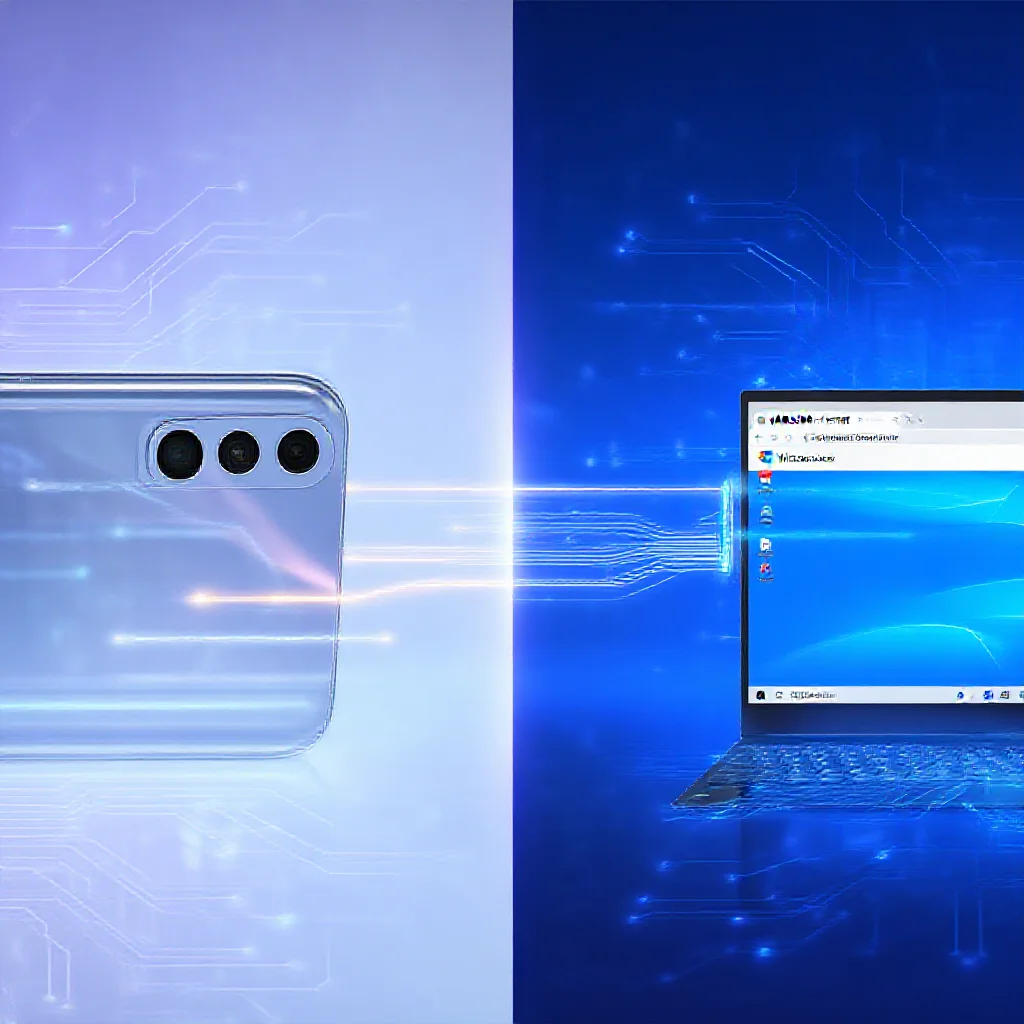
Samsung has confirmed the development of a Windows version of its Samsung Internet browser, with a scheduled release for March 2026 (Source 1: [Primary Data]). The browser will be compatible with Windows 10 and Windows 11, based on the Chromium engine, and will support synchronization of bookmarks, history, and open tabs with its mobile counterpart. A defining feature will be the integration of "Circle to Search," an AI-powered tool from Samsung's Galaxy AI ecosystem.
This entry into a mature desktop browser market is not a conventional feature competition. The strategic intent is an ecosystem expansion, timed precisely with the computing industry's accelerating pivot from cloud-dependent artificial intelligence to hybrid and on-device AI processing. The browser functions as a delivery mechanism for a proprietary AI experience beyond the mobile domain.
!A collage showing the Samsung Internet mobile icon transitioning onto a Windows desktop taskbar.
Deconstructing the Strategy: The On-Device AI Imperative
The inclusion of "Circle to Search" is a critical indicator of strategic direction. The feature, which allows users to circle any on-screen content for instant contextual search, exemplifies the advantages of on-device processing. When executed locally, such analysis avoids the latency of a round-trip to a cloud server and, more significantly, keeps sensitive screen data private. This addresses growing user and regulatory concerns over data privacy.
The choice of the Chromium base is a tactical acceleration move. It allows Samsung to bypass the immense resource expenditure required to develop and maintain a proprietary browser engine. Instead, engineering focus can be directed toward integrating and optimizing its Galaxy AI models within a known framework, ensuring rapid deployment and compatibility.
The 2026 timeline is aligned with hardware maturation. By that date, the adoption of Neural Processing Units (NPUs) in mainstream PCs is projected to be widespread, driven by chipmakers like Intel, AMD, and Qualcomm. Furthermore, Microsoft's Windows AI platform and Copilot runtime are expected to be deeply entrenched, providing a stable on-device AI infrastructure for Samsung to leverage. The release is not delayed; it is calibrated.
The Hidden Market Logic: Lock-In, Data, and Ecosystem Warfare
The core product is not a web browser application. The core product is the seamless "Galaxy AI" experience. Synchronization of bookmarks and history serves as the initial user hook—a convenience factor. The integrated, cross-device AI features, however, construct a more compelling barrier: workflow lock-in. A user accustomed to initiating a "Circle to Search" task on a Galaxy phone and continuing it seamlessly on a Windows PC becomes entrenched in the Samsung ecosystem.
This move challenges the conventional view of browser competition. The objective is not to surpass Google Chrome or Microsoft Edge in raw market share on Windows. The objective is to create a Samsung-universe workflow that diminishes the incentive to use rival AI assistants. The long-term play involves capturing granular, privacy-sensitive user interaction data on its own device portfolio. This proprietary dataset is invaluable for training more efficient, specialized AI models, potentially reducing Samsung's future reliance on third-party cloud AI APIs and associated costs.
Ripple Effects: The Browser Wars Enter a New AI Phase
Samsung's strategy will exert pressure on incumbent browser developers. It forces Google and Microsoft to accelerate the integration of their AI models (Gemini and Copilot, respectively) as default, deeply embedded, and crucially, on-device options within Chrome and Edge. The browser wars are transitioning from a competition over rendering speed and extension libraries to a conflict over native AI capability and cross-platform workflow cohesion.
The supply chain will experience secondary effects. Demand for PCs with capable, dedicated NPUs will intensify, benefiting chipmakers and pushing OEMs to highlight AI-hardware specifications as a primary selling point. Industry analyst forecasts, such as those from Counterpoint Research and IDC, already project exponential growth in on-device AI silicon shipments and AI-powered software features, a trend this move directly reinforces (Source 2: [Industry Analysis Projection]).
The verification of this strategy's success will be measured by adoption metrics beyond browser installs. Key indicators will include the rate of active cross-device AI feature usage and any measurable impact on user retention within the Samsung Galaxy device portfolio. The March 2026 release will serve as a significant test case for the viability of on-device AI as a primary vector for ecosystem lock-in in a post-cloud-centric world.
Keywords

Layla Ibrahim
Technology Reporter covering fintech, AI, and startup ecosystems in the Gulf.