Beyond the Blast: The Long-Term Economic and Supply Chain Fallout of the UAE Energy Infrastructure Attacks
Recent aerial attacks on Abu Dhabi's industrial corridor have inflicted damage requiring a repair timeline of months to years, signaling more than a temporary disruption. This analysis moves beyond immediate security concerns to examine the deeper, systemic vulnerabilities exposed in a global energy and logistics hub. We explore the long-term economic logic of targeting such infrastructure, the potential for permanent shifts in supply chain risk assessment, and the hidden costs of resilience that could reshape regional investment patterns and global energy security strategies for years to come.
Omar Hassan
Editorial Analyst
Beyond the Blast: The Long-Term Economic and Supply Chain Fallout of the UAE Energy Infrastructure Attacks
Introduction: From Tactical Strike to Strategic Disruption
A five-week campaign of aerial attacks inflicted measurable damage on critical assets within Abu Dhabi’s industrial corridor (Source 1: [Primary Data]). The operational timeline for restoring these facilities has been formally estimated in a range from months to years (Source 1: [Primary Data]). This repair window is not merely a logistical footnote; it is a primary metric for assessing systemic disruption. The event transitions from a tactical security incident to a case study in strategic economic vulnerability. This analysis examines the long-term implications for global supply chain architecture, regional investment risk models, and energy security paradigms, moving beyond the immediate scope of physical damage and geopolitical response.
The Anatomy of a Chokepoint: Why Abu Dhabi's Industrial Corridor Was a Target
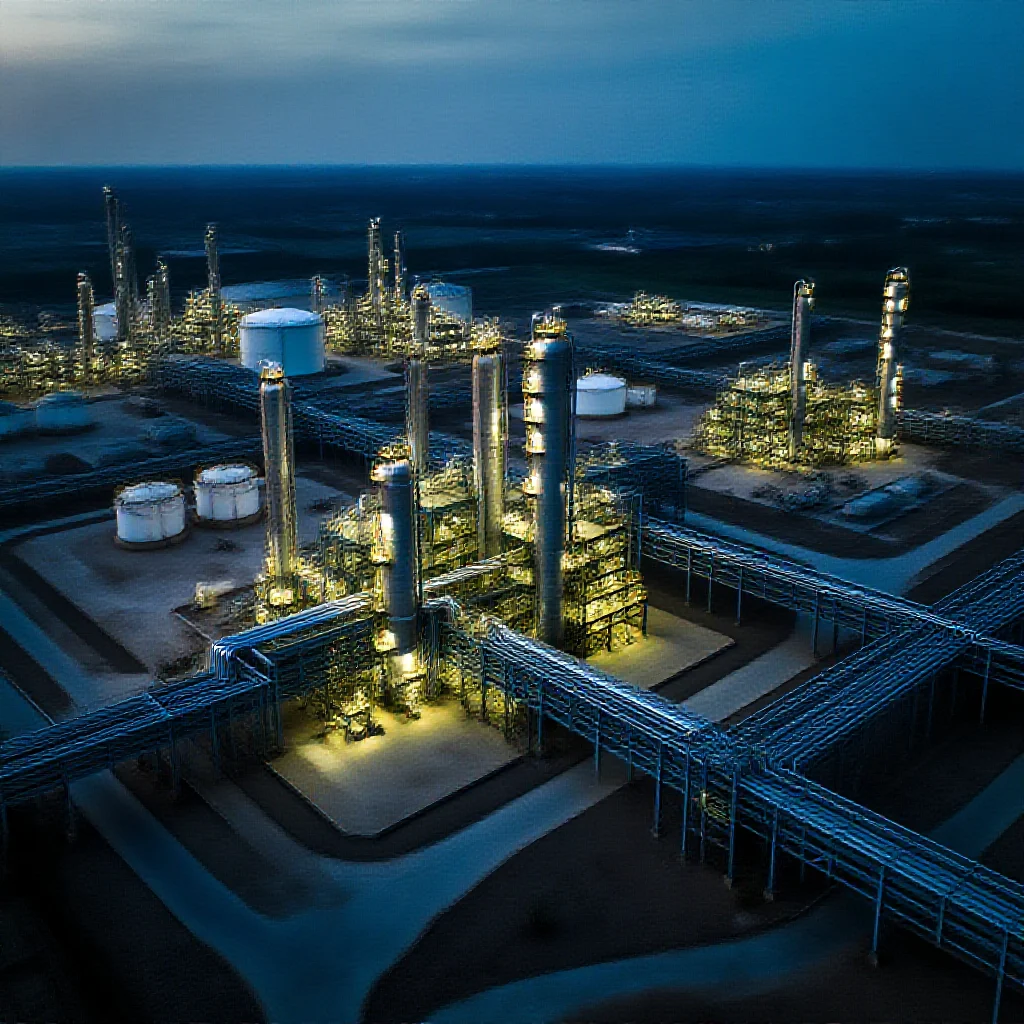
Abu Dhabi’s industrial corridor represents a concentrated nexus of global energy and logistics. It integrates refineries, export terminals, storage facilities, and pipeline networks into a single, high-throughput geographic zone. The economic value of this corridor derives from its integration and scale, enabling the efficient movement of hydrocarbons to global markets.
The attacker’s potential calculus appears rooted in economic logic. Targeting such a densely integrated hub maximizes disruption per kinetic strike. The objective shifts from purely military degradation to imposing sustained economic costs and undermining market confidence. The "months to years" repair timeframe is direct evidence that the targets were not simple, standalone structures but complex, interdependent systems. Damage to one node—a specialized refining unit, a high-pressure pipeline junction—cascades through the network, crippling throughput and complicating restoration efforts with requirements for custom-fabricated parts and sequential, non-parallel repair processes.
The Ripple Effect: Unpacking the 'Months to Years' Repair Timeline
The extended repair schedule is a function of engineering complexity and revised risk assessment. Standard maintenance on such infrastructure follows precise, pre-planned sequences. Unplanned damage from hostile action introduces novel failure modes, requiring comprehensive safety reviews and often a complete re-engineering of affected sections for enhanced resilience before operations can resume.
This introduces a hidden multiplier to the cost of disruption. The financial impact is not limited to lost revenue during the repair period. It includes the capital expenditure for upgraded materials, additional protective systems, and potentially the construction of parallel redundancy before the original asset is brought back online. Consequently, the "months to years" timeline acts as a forcing function for global supply chains dependent on this hub. Shipping contracts, futures pricing, and procurement strategies cannot remain in a holding pattern for such durations. This catalyzes a search for alternative routes and suppliers, a diversification that may become permanent even after full restoration, eroding the corridor’s historic market share.
The New Calculus of Risk: Long-Term Impacts on Investment and Insurance
The event rewrites the risk premium for operating in infrastructure hubs previously perceived as secure. The financial and insurance industries will recalibrate their models. Political risk insurance premiums for similar industrial zones in the region are projected to rise substantially. The cost of capital for new projects will increase, as investors demand higher returns to compensate for newly quantified physical security risks.
This fosters a structural shift from "just-in-time" logistics to "just-in-case" inventory and routing strategies within the energy sector. The efficiency gains of concentrated, hyper-optimized supply chains are now weighed against the vulnerability of single points of failure. The result is an inherent drive toward decentralization and redundancy. Future foreign direct investment in regional industrial projects may favor smaller, geographically dispersed facilities over mega-clusters, accepting marginally higher operational costs for significantly improved systemic resilience. This trend could reshape the physical and economic landscape of Gulf industrialization for decades.
Geopolitical Recalibration and the Future of Gulf Energy Security
Statements from financial institutions and energy analysts following the attacks have emphasized a focus on long-term market confidence over short-term price fluctuations. The security paradigm for critical economic infrastructure is expanding beyond point defense. It now encompasses the resilience of the entire logistical and financial ecosystem that supports these assets.
The strategic response, therefore, involves a multi-layered approach: accelerated digitalization for operational redundancy, strategic fuel and product reserves to buffer disruptions, and diversified export routes including increased pipeline capacity to alternative ports. The incident demonstrates that the security of energy exports is inextricably linked to the security of the industrial base that prepares them for market. As global energy transitions progress, the security of hydrogen production, carbon capture networks, and critical mineral processing facilities will be judged through the same lens of integrated risk exposed by these attacks. The long-term fallout is a permanent elevation of systemic resilience as a core component of national economic strategy and global energy security planning.
Keywords

Omar Hassan
Energy Correspondent tracking OPEC+ policies and renewable energy transitions.