Beyond the Boom: Why Saudi Arabia''s Downstream Market is Shifting from Expansion to Efficiency
Saudi Arabia's downstream projects market is undergoing a fundamental strategic pivot. The era of rapid, large-scale greenfield construction in refining and petrochemicals is giving way to a leaner period focused on optimizing existing assets. This analysis explores the deeper economic logic behind the slowdown in new project awards, revealing a calculated shift towards operational excellence, margin enhancement, and sustainability. The move signals a maturation of the kingdom's industrial strategy, prioritizing value over volume and aligning with global energy transition pressures. We examine the long-term implications for engineering contractors, technology providers, and the broader supply chain as the market redefines what 'growth' means in a changing energy landscape.
Omar Hassan
Editorial Analyst
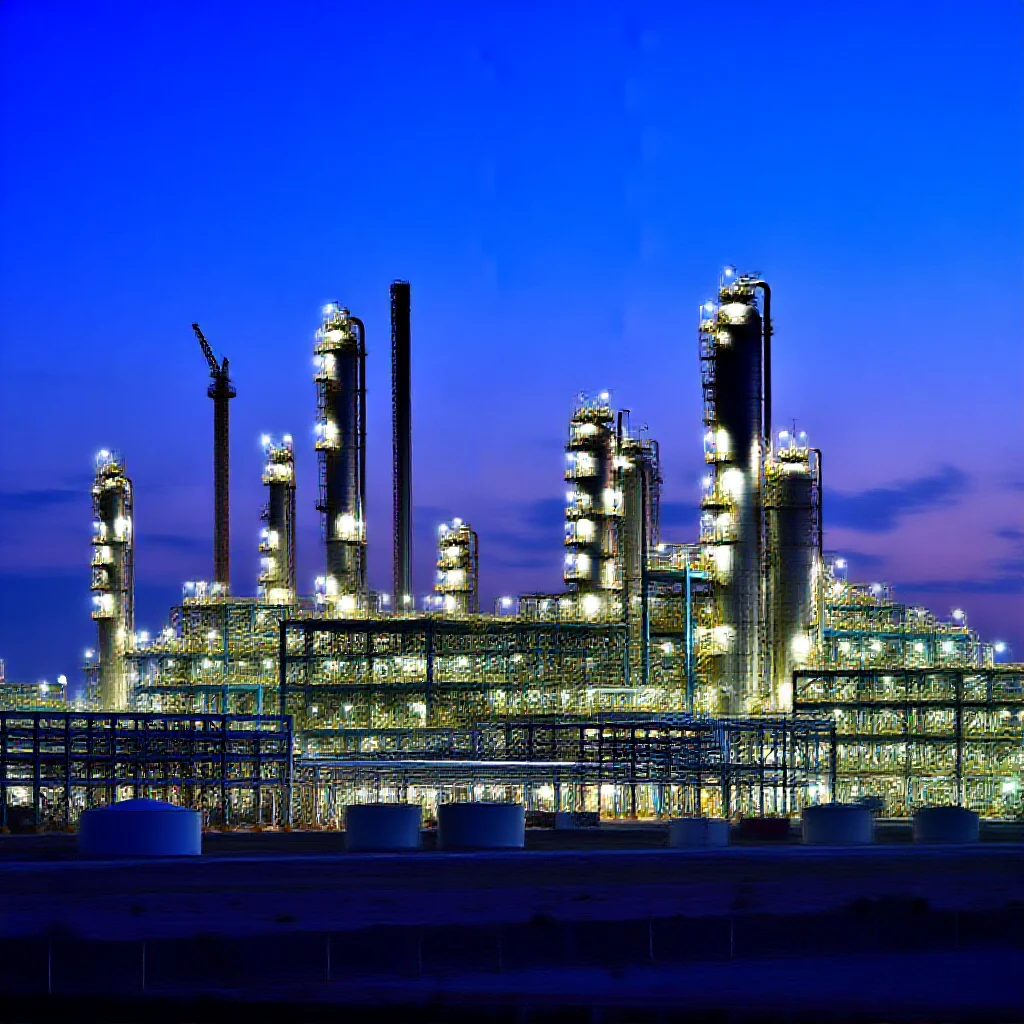
Beyond the Boom: Why Saudi Arabia's Downstream Market is Shifting from Expansion to Efficiency
Introduction: The Quiet Shift in Saudi Arabia's Industrial Engine
The Saudi downstream projects market is entering a lean period. This statement contrasts sharply with the previous decade's narrative of rapid expansion in refining and petrochemical capacity. The number of new project contract awards is declining (Source 1: [Primary Data]). This slowdown, however, does not signal a market failure. It represents a fundamental strategic recalibration. The kingdom's industrial engine is shifting its fuel from capital expenditure (CAPEX) on greenfield construction to a focus on optimizing operational expenditure (OPEX) within its vast existing asset base.
!A comparative infographic showing the decline in new project contract awards over the last 5 years.
Decoding the Slowdown: Strategic Pivot, Not Market Failure
The economic logic behind this pivot is clear. After a historic wave of investment, the priority is now maximizing returns on those massive existing investments before committing to new capacity builds. This aligns with a global downstream environment characterized by compressed margins, evolving trade dynamics, and fierce competition from new capacity in Asia and the United States. Building additional volume in this climate offers diminishing marginal returns.
This operational focus is a direct manifestation of Saudi Vision 2030's mandate to transition the economy from quantitative to qualitative growth. The industrial sector's success is no longer measured solely by capacity additions but by its contribution to economic complexity, efficiency, and integration. The strategic imperative is to extract more value from each barrel of oil processed, not merely to process more barrels.
The New Priority Triad: Performance, Reliability, and Sustainability
The market's focus has crystallized into three interconnected pillars: operational performance, reliability, and sustainability.
Operational performance is the pursuit of yield improvement, energy efficiency, and advanced process control through digitalization. Investments are flowing toward technologies that incrementally increase output and quality from existing process units. Predictive maintenance, powered by artificial intelligence and IoT sensors, is becoming a critical tool to inform this optimization.
Reliability has been redefined as a core profit center. In a volatile market, unplanned shutdowns directly erode margins. Therefore, sustaining high operational availability through comprehensive reliability programs is now a strategic financial activity, not just an engineering one.
Sustainability is the third driver, embodied by the kingdom's Circular Carbon Economy framework. This translates into retrofitting existing assets for carbon capture, utilization, and storage (CCUS), improving feedstock efficiency, and integrating chemical recycling pathways. The goal is to lower the carbon intensity of operations, aligning with global energy transition pressures and creating potential new revenue streams from waste products.
The Ripple Effect: Winners, Losers, and a Transformed Supply Chain
This strategic shift is fundamentally reshaping the project ecosystem and supply chain. The traditional Engineering, Procurement, and Construction (EPC) contractor model, reliant on large greenfield projects, faces significant disruption. Demand for bulk construction materials and greenfield site labor will soften.
The beneficiaries of this new phase are technology licensors, automation and digital solution providers, and specialty maintenance and reliability service firms. There is increased demand for advanced catalysts, high-fidelity sensors, data analytics platforms, and proprietary process optimization technologies. The market is moving from building hardware to upgrading software and integrating advanced materials.
This environment creates distinct opportunities for local Saudi companies. The pivot favors high-value technical services, niche technology partnerships, and digital integration over large-scale construction management. It incentivizes the growth of a sophisticated local service sector capable of sustaining and optimizing world-class industrial assets, a key objective for economic diversification.
Conclusion: Redefining Growth in a New Energy Landscape
The slowdown in new project awards is a marker of market maturation. Saudi Arabia's downstream strategy is evolving from one of expansion to one of excellence. Growth is being redefined not as physical capacity, but as margin enhancement, operational integrity, and sustainability credentialing.
The long-term implication is a more resilient, technologically advanced, and value-focused industrial sector. For the global supply chain, it signals a durable change in demand patterns. The market will remain active, but its character has irrevocably changed. Success will belong to those who provide the tools for optimization, not just for construction, as the kingdom's downstream sector aligns itself with the financial and environmental realities of the 21st-century energy landscape.
Keywords

Omar Hassan
Energy Correspondent tracking OPEC+ policies and renewable energy transitions.