War and Wealth: How Gulf Sovereign Funds Are Rewriting the Rules of Crisis Investing in 2026
Despite a regional conflict (the Iran war) and a sharp economic slowdown (Gulf GDP growth halved to 1.3%), sovereign wealth funds from Saudi Arabia, Abu Dhabi, and Qatar deployed nearly $25 billion in Q1 2026. This article goes beyond the headline pace to reveal a hidden strategic pivot: funds are not just resilient—they are weaponizing crisis liquidity to double down on Western tech and infrastructure while quietly preparing to rescue domestic industries. By analyzing deal patterns, COVID-era playbooks, and expert warnings, we expose how these funds are balancing long-term portfolio dominance with short-term national survival.
Khalid Al-Mansouri
Editorial Analyst
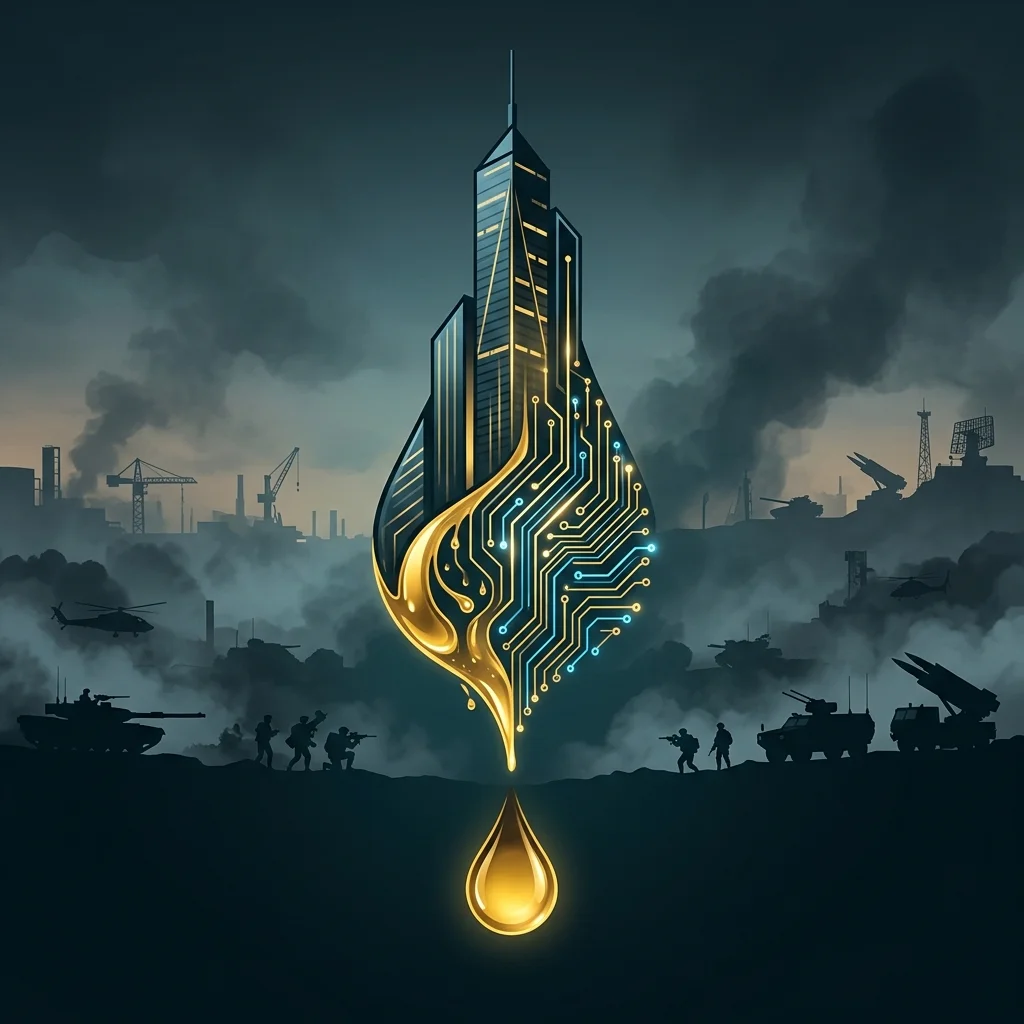
War and Wealth: How Gulf Sovereign Funds Are Rewriting the Rules of Crisis Investing in 2026
By a Senior Technical/Financial Audit Journalist
---
The Paradox of $25 Billion: Why Gulf SWFs Are Spending Like There's No War
In the first quarter of 2026, the three largest Gulf sovereign wealth funds—Saudi Arabia's Public Investment Fund (PIF), Abu Dhabi's Mubadala, and the Qatar Investment Authority (QIA)—collectively deployed approximately $25 billion in new investments (Source 1: Global SWF Q1 2026 data). This figure matches the pace of the previous quarter and exceeds Q1 2025 volumes by roughly 7%.
The timing is counterintuitive. A regional conflict involving Iran has suppressed Gulf economic growth to 1.3% in 2026, down sharply from 4.4% in 2025 (Source 2: World Bank March 2026 forecast). Tourism losses alone are estimated at $32 billion (Source 3: Gulf officials, cited in The Wall Street Journal, April 2026), while Kuwaiti and Qatari economies are projected to contract by more than 5% (Source 4: World Bank).
This is not blind spending. The data reveals a dual-track strategy: aggressively acquiring foreign assets at discounted valuations while maintaining a parallel capability to rescue domestic industries when required. With combined assets under management of approximately $5 trillion—projected to reach $18 trillion by 2050 (Source 5: Global SWF long-term projection)—these funds operate with generational time horizons that render quarterly volatility irrelevant. Unlike conventional institutional investors subject to redemption pressures or margin calls, Gulf SWFs face no such constraints. They can absorb short-term local portfolio losses to capture long-term global gains.
---
The Hidden Logic: A Two-Front War for Capital
Front 1: Overseas Opportunistic Deployment
The COVID-19 pandemic provided the operational template. During 2020–2021, PIF acquired distressed assets in live entertainment, cruise lines, and hospitality at crisis-level valuations. The current environment replicates this structural condition: geopolitical dislocation creates pricing disconnects in sectors where Gulf funds identify secular growth trends.
Deal pattern analysis confirms no retreat from US exposure. Recent transactions include:
| Transaction | Value | Sector | Date |
|-------------|-------|--------|------|
| OpenAI investment (multiple funds) | Undisclosed | AI | Q1 2026 |
| Anthropic investment (multiple funds) | Undisclosed | AI | Q1 2026 |
| Whoop funding round | $10B valuation | Health tech | March 2026 |
| Paramount Global investment | Undisclosed | Media | Q1 2026 |
| Electronic Arts investment | Undisclosed | Gaming | Q1 2026 |
| Traverse Midstream Partners acquisition | $2.25B | Energy infrastructure | March 2026 |
| UK hospitality group (The Ivy, Annabel's) | >£1B ($1.3B) | Hospitality | April 2026 |
(Source 6: Global SWF transaction database; public filings)
Over the past five years, approximately 60% of Gulf SWF foreign investment has flowed into financial services, infrastructure, and technology (Source 7: Global SWF five-year aggregate data). The US share of this allocation has grown consistently, reflecting deliberate portfolio diversification away from hydrocarbon-correlated assets.
Front 2: Domestic Balance Sheet Defense
The second track is less visible but equally structured. Gulf funds maintain strategic liquidity reserves that can be deployed to stabilize government budgets and rescue strategically critical domestic industries. Aviation, defense manufacturing, and downstream energy processing represent the most probable recipients of capital support.
Karen E. Young, Senior Research Scholar at Columbia University's Center on Global Energy Policy, provides the analytical framework: "Sovereign wealth funds may take longer to make allocation decisions as defense, stimulus, and reconstruction take priority" (Source 8: Interview with The Wall Street Journal, April 2026).
This suggests a deliberate sequencing: foreign acquisitions proceed when pricing is advantageous; domestic interventions activate only when local economic conditions reach pre-defined trigger points. The $25 billion Q1 figure indicates that, as of March 2026, the threshold for domestic activation has not been crossed—but the infrastructure to execute it remains in place.
---
The COVID Playbook: Why Mubadala Is Poised to Outmaneuver the Market
Structural Positioning
Diego López, Managing Director of Global SWF, identifies the strategic continuity: "We may see funds act opportunistically, identifying bargains in certain geographies and segments" (Source 9: Global SWF research note, Q1 2026). Mubadala, under the chairmanship of Sheikh Tahnoon bin Zayed Al Nahyan, has built a structurally advantaged position for exactly this scenario.
The institution maintains several operational characteristics that distinguish it from peers:
- Permanent capital base with no redemption obligations
- Direct deal origination capability across 15 sector teams
- Low leverage ratios permitting aggressive bidding
- Cross-sector integration linking technology, infrastructure, and energy expertise
Sector Differentiation from COVID
The COVID playbook targeted consumer-facing sectors with temporary demand destruction (tourism, entertainment, hospitality). The current crisis presents a different opportunity set. Defense supply chain companies—particularly those operating at the intersection of aerospace, electronics, and cybersecurity—are likely to face valuation pressure as governments globally reassess procurement budgets.
Domestically, EDGE (UAE) and SAMI (Saudi Arabia) represent potential recipients of capital injections, alongside energy-adjacent infrastructure operators. The $2.25 billion Traverse Midstream Partners acquisition (March 2026) signals sustained appetite for midstream energy infrastructure even during active conflict—a sector with predictable cash flows and long-term contracted revenue.
The Cognitive Gap in Market Pricing
The critical insight is that public equity markets may misprice Gulf SWF behavior. Standard financial models assume capital withdrawals during regional crises. The data disproves this assumption. With zero cost of capital and no external stakeholders requiring liquidity, these funds experience crisis environments as buying opportunities rather than defensive periods.
The implication: Counter-cyclical capital deployment by Gulf SWFs may compress risk premiums in targeted sectors (AI, defense tech, critical infrastructure) below levels that fundamental analysis would justify—creating a persistent mispricing that only actors with comparable balance sheets can exploit.
---
The Liquidity Trap: When Wealth Funds Become Lenders of Last Resort
The Domestic Absorption Risk
The $5 trillion portfolio base provides a significant buffer, but the domestic economic deterioration creates a potential conflict of interest. If Gulf governments require capital transfers to sustain fiscal operations—or to rescue strategically important industries—funds may face pressure to liquidate foreign positions.
The World Bank's forecast of 1.3% regional growth masks significant divergence. Kuwait and Qatar, with less diversified economies and higher military expenditure ratios, face GDP contractions exceeding 5% (Source 10: World Bank). This creates asymmetric pressure: the Abu Dhabi Investment Authority (ADIA) and QIA face different domestic demands than PIF, which operates within Saudi Arabia's more diversified fiscal framework.
Karen E. Young identifies the operational consequence: "Funds may take longer to make allocation decisions as defense, stimulus, and reconstruction take priority" (Source 11: Columbia University research note, April 2026). The timeline extension is not indecision but deliberate sequencing—weighing domestic capital requirements against international acquisition opportunities.
Historical Precedent for State Intervention
Gulf SWFs have demonstrated willingness to act as lenders of last resort to domestic entities. During the 2014–2016 oil price collapse, PIF provided capital to Saudi Aramco's dividend commitments and supported the Public Pension Agency. During COVID-19, ADIA and Mubadala provided bridge financing to UAE-based aviation and tourism operators.
The current crisis differs in magnitude: military expenditure increases, tourism revenue collapse, and potential reconstruction costs create a broader funding gap. The funds' capacity to absorb these demands without disrupting their foreign acquisition programs depends on two variables:
- Conflict duration: Short-term conflict (<6 months) permits continued dual-track operations
- Oil price trajectory: Sustained $80+/barrel Brent provides fiscal buffer independent of SWF deployment
---
Generational Strategy: The $18 Trillion Horizon
The Time Arbitrage Advantage
The projection of Gulf SWF assets reaching $18 trillion by 2050 (Source 12: Global SWF) reflects compounding growth rates that assume consistent annual deployment. This creates a structural advantage: these funds can accept negative short-term returns on domestic stabilization investments if doing so preserves the long-term value of their core portfolios.
Structural Implications for Global Markets
The strategic pivot identified in this analysis carries three observable consequences for professional investors:
- Sector concentration risk in AI and infrastructure: Gulf SWF capital may drive valuations in selected US technology companies above levels justified by near-term earnings, creating exit liquidity for private equity holders.
- Compressed risk premiums during crises: The willingness to deploy counter-cyclically means that crisis-related discounts in targeted sectors may be shallower and shorter than historical patterns suggest.
- Domestic industrial policy transmission: Capital directed to defense and aerospace suppliers (via EDGE, SAMI, SAFE, Barzan) may create competitive dynamics that reshape global defense procurement markets.
---
Market Conclusions
Gulf sovereign wealth funds are executing a strategy visible only through aggregate deal pattern analysis. The $25 billion Q1 2026 deployment, set against 1.3% GDP growth and $32 billion tourism losses, represents not resilience but deliberate tactical positioning. The COVID-era playbook is being refined and redeployed, with Mubadala structurally best positioned to execute it.
Investors and analysts tracking Gulf SWF allocation patterns should monitor two variables:
- Domestic capital call triggers: The conditions under which funds divert capital from foreign to domestic use (observable via sovereign bond issuance patterns and budget deficit forecasts)
- Sector rotation within foreign portfolios: The shift from consumer-facing to defense-controlled and infrastructure-linked assets
For now, the war has not altered the fundamental calculus: generational capital continues to flow outward, capturing whatever discounts crises generate. The true test will come if domestic demands escalate beyond the funds' substantial—but finite—liquidity reserves.
Keywords

Khalid Al-Mansouri
Senior Financial Analyst covering GCC capital markets with 15 years of experience.