Gulf Luxury Lifestyle Trends: The Hidden Economic Logic Behind Demand, Design, and Supply Chains
This article should take a slow-analysis approach, because the real story behind Gulf luxury lifestyle trends is not just visible consumption but the economic and logistical system enabling it. The core axis is how capital, real estate, tourism, premium retail, and digital services interact to shape a high-margin lifestyle ecosystem. The piece should go beyond surface-level luxury coverage and examine long-term shifts in sourcing, personalization technology, hospitality standards, and supply-chain resilience. Verification should be embedded where claims about market growth, consumer behavior, and investment flows are introduced, using credible sources such as official statistics, company filings, luxury market reports, and regional tourism data.
Ahmed Al-Farsi
Editorial Analyst
Gulf Luxury Lifestyle Trends and the Economic Logic Behind Demand, Design, and Supply Chains
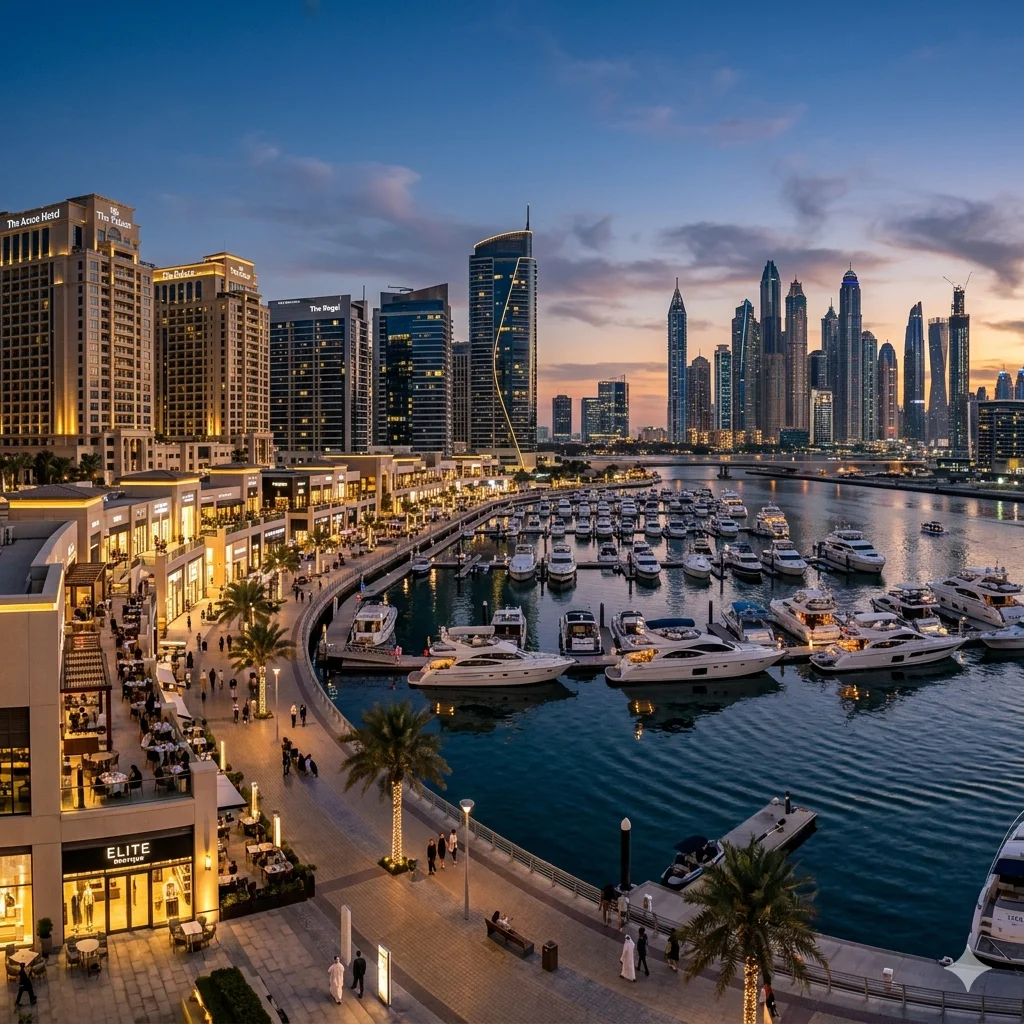
[IMAGE: A sophisticated panoramic scene of a modern Gulf city at dusk, featuring luxury hotels, high-end shopping districts, yacht marina, upscale skyline, elegant architecture, and premium lifestyle elements]
Luxury in the Gulf is often discussed as a visible phenomenon: flagship malls, waterfront hotels, supercars, and high-end dining rooms. But the more important story is structural. Gulf luxury lifestyle trends are not only about consumption; they reflect a broader economic system in which capital, real estate, tourism, premium retail, and digital services reinforce one another. In that sense, luxury is less a single market than an operating model.
This matters because the region’s luxury economy is built to turn prestige into recurring revenue. A hotel guest becomes a retail customer, a retail customer becomes a resident buyer, and a resident buyer becomes part of a long-term service relationship. The result is an ecosystem in which image and infrastructure are tightly linked.
Luxury as an Economic System
[IMAGE: Aerial view of a Gulf luxury district connecting hotels, malls, waterfronts, and residential towers]
In the Gulf, luxury demand is closely tied to capital allocation. Wealth concentration, sovereign investment, tourism policy, and urban development all influence where spending goes and how brands position themselves. Rather than appearing as isolated purchases, luxury choices often signal confidence in a location, a development pipeline, or a broader lifestyle proposition.
This is especially visible in cities that combine premium real estate with global hospitality and retail. A new waterfront district is not simply a housing project; it can become a platform for branded residences, luxury dining, private beach clubs, and high-end shopping. When these layers align, luxury stops being a discretionary add-on and becomes part of the city’s economic identity.
That logic helps explain why the Gulf can sustain premium pricing across several sectors at once. A strong hotel market supports restaurant demand. A strong residential market supports furniture, art, and personal services. A strong retail corridor supports flagship launches and elevated inventory strategies. Each segment feeds the others.
Why This Requires Slow Analysis
[IMAGE: Editorial-style desk scene with market reports, charts, and a luxury city backdrop]
This topic requires slow analysis, not quick news commentary. Short-term headlines can capture a hotel opening, a fashion event, or a tourism spike, but they rarely explain the underlying mechanisms. The more important shifts are long-cycle: how consumer profiles change, how brands adjust their service model, how supply chains are reconfigured, and how digital tools affect personalization.
For example, a one-month surge in tourist arrivals may draw attention, but the deeper question is whether the region is building repeat visitation, higher average spend, and stronger cross-sector conversion. Likewise, a luxury retail launch is more meaningful if it reveals new sourcing patterns, staffing models, or customer data capabilities.
Verification matters here. Claims about market growth, tourism volume, or luxury spending should be checked against multiple sources: official statistics, company filings, luxury market reports, and regional tourism data. In a market this interconnected, single headlines often overstate momentum or ignore the constraints beneath it.
What Ordinary Coverage Misses
Most coverage of luxury in the Gulf focuses on the visible symbols: supercars, giant malls, five-star hotels, and high-profile events. Those symbols are real, but they do not explain why the system is durable.
[IMAGE: Inside a high-end boutique with tailored service, elegant materials, and discreet luxury design]
The hidden logic lies in the operating model. Luxury brands entering Gulf markets often adjust product mix, staffing, and inventory to local expectations. That can mean larger format stores, dedicated VIP rooms, private appointment systems, multilingual service teams, and fast fulfillment capabilities. In hospitality, it can mean suites designed for families and high-net-worth travelers, privacy-sensitive check-in processes, and elevated wellness offerings.
The client relationship is equally important. In many Gulf markets, a significant share of luxury revenue depends on private clients, concierge services, and ultra-personalized experiences. These customers expect speed, discretion, and continuity. As a result, premium operators invest in relationship management systems as much as in storefront aesthetics.
This is one reason the luxury market in the Gulf has a different structure from markets that rely mainly on occasional aspirational purchases. Here, value is often created through repeat service and integrated lifestyle planning.
Real Estate, Tourism, and Retail: Three Engines of Demand
[IMAGE: Luxury marina resort surrounded by upscale retail and residential towers]
The Gulf’s luxury economy is driven by three main engines: premium real estate, international tourism, and luxury retail. Each operates differently, but their interaction is what creates scale.
Premium real estate sets the baseline. High-end residential developments, branded residences, marina districts, and mixed-use projects attract affluent buyers and long-stay residents. These buyers typically generate recurring demand for design, furnishings, maintenance, wellness, and private services.
Tourism expands the demand pool. Regional authorities have spent years building destination brands around events, culture, business travel, and leisure. Official tourism data from leading Gulf destinations has consistently shown the importance of visitor growth and higher-value segments, especially in cities that combine business infrastructure with premium leisure. For instance, Dubai’s Department of Economy and Tourism has reported continued growth in international visitation in recent years, while Saudi Arabia’s tourism strategy has also aimed to scale both religious and leisure travel.
Retail converts that traffic into spending. Premium malls, luxury streets, and airport retail zones serve not only as points of sale but as brand theaters. They create the physical environment in which international labels can present their local identity, test product assortments, and build relationships with wealthy clients.
Among the three, tourism often acts as the lead indicator for short-term luxury demand, while real estate is the stronger signal of long-term confidence. Retail sits between them, translating destination appeal into measurable transaction volume.
The Role of Hospitality Standards
High-end hospitality is one of the clearest indicators of how the region’s luxury ecosystem functions. A luxury hotel in the Gulf is not just a place to stay; it is a coordination hub for dining, retail, spa, transport, and event services.
[IMAGE: A luxury hotel lobby with private arrival area, concierge desk, and elegant contemporary interiors]
This creates a multiplier effect. A guest attending a conference or leisure trip may also book a branded residence tour, make purchases at a nearby boutique, reserve a fine-dining experience, or use private transport to another destination district. In this sense, high-end hospitality extends the life cycle of the customer far beyond the room booking.
The standard is also rising. Expectations now include not only physical luxury but operational precision: faster check-ins, multilingual service, personalized itineraries, and integrated digital communication. Hospitality groups that fail to meet those expectations risk losing high-spending travelers to competitors that can coordinate the full service chain.
Technology as a Luxury Differentiator
Technology has become part of the luxury offer itself. In the Gulf, AI-driven personalization, digital concierge platforms, and seamless payment systems are increasingly central to the premium experience.
[IMAGE: A modern luxury lounge with a digital concierge interface and discreet smart service elements]
This is not only about convenience. It is about how brands learn from data. Analytics can help operators tailor product assortment, anticipate appointment demand, manage inventory, and retain private clients. In retail, this means fewer stock mismatches and more relevant product allocations. In hospitality, it means better segmentation of guest preferences, from dining habits to room setup to travel patterns.
The shift is especially important in a region where service expectations are high and customer journeys are often multi-country. A traveler may shop in Dubai, stay in Doha, and connect through Riyadh. Digital integration helps brands maintain continuity across those touchpoints.
At the same time, technology is becoming part of the status signal. A frictionless payment process, a personal shopping app, or a well-designed booking interface can matter as much as the physical environment. In the Gulf, digital polish increasingly functions as a luxury cue.
Supply Chains, Sourcing, and Resilience
Luxury demand is only one side of the story. The other is supply.
The region’s premium ecosystem depends on reliable sourcing, timely delivery, and resilience against disruptions. That matters because luxury customers are less tolerant of delays, stockouts, or inconsistent service. Brands therefore need supply chains that can handle smaller-batch imports, faster replenishment, and more localized customization.
For global luxury houses, the Gulf can be both an opportunity and a test. Demand may justify exclusive launches or special editions, but it also requires careful calibration of inventory and distribution. Over-supplying a market can erode exclusivity; under-supplying it can damage customer loyalty.
This creates pressure on logistics partners, customs processes, and warehousing capacity. It also encourages brands to invest in regional hubs, local service centers, and tighter forecasting systems. In that sense, Gulf luxury lifestyle trends are shaping not only what is sold, but how it is moved and maintained.
Long-Term Shifts in the Market
The most important long-term shift is that luxury in the Gulf is becoming more integrated. It is no longer just about imported goods or iconic buildings. It is about the entire value chain that supports a premium way of life: design, development, hospitality, mobility, private services, digital interfaces, and after-sales care.
[IMAGE: Evening skyline with a connected network of luxury hotels, retail promenades, and residential towers]
That integration has several implications. First, it raises entry barriers for smaller operators that cannot match service depth or capital intensity. Second, it increases the importance of place-based branding: a district, city, or destination must offer a coherent experience, not just isolated attractions. Third, it creates a more durable revenue base, because spending is distributed across multiple services rather than concentrated in one purchase event.
For investors and operators, the key question is no longer whether luxury demand exists. It is whether the region can keep converting wealth into repeatable, high-margin service ecosystems.
Conclusion
Gulf luxury is best understood as an economic system shaped by capital flows, destination strategy, and service infrastructure. The visible markers of prestige are only the surface. Beneath them lies a network of real estate, tourism, premium retail, technology, and logistics that turns lifestyle demand into recurring value.
That is why Gulf luxury lifestyle trends deserve careful, evidence-based analysis. The region is not simply consuming luxury; it is organizing an environment in which luxury can be produced, delivered, personalized, and sustained.
Keywords

Ahmed Al-Farsi
Luxury & Lifestyle Editor with expertise in high-end hospitality and retail.