Middle East Real Estate Market 2026-2034: Growth, Hurdles, and the New Urban Frontier
The Middle East real estate market is poised for explosive growth, climbing from USD 937.85 billion in 2026 to USD 1.78 trillion by 2034 at a CAGR of 8.31%. This expansion is fueled by government-led mega-projects, liberalized visa and ownership policies, and smart city ambitions. However, the industry faces countervailing pressures: acute affordability gaps (especially among young Saudi adults), environmental constraints like water scarcity, and regulatory fragmentation across jurisdictions. This article moves beyond surface-level growth figures to examine the hidden tension between state-driven supply and organic demand, the role of digital infrastructure as a new asset class, and the unsustainability of current water-dependent development models. Drawing on data from official housing ministries, property consultancies, and global benchmarks, it provides a deep audit for investors, policymakers, and developers navigating this complex landscape.
Fatima Al-Zahra
Editorial Analyst
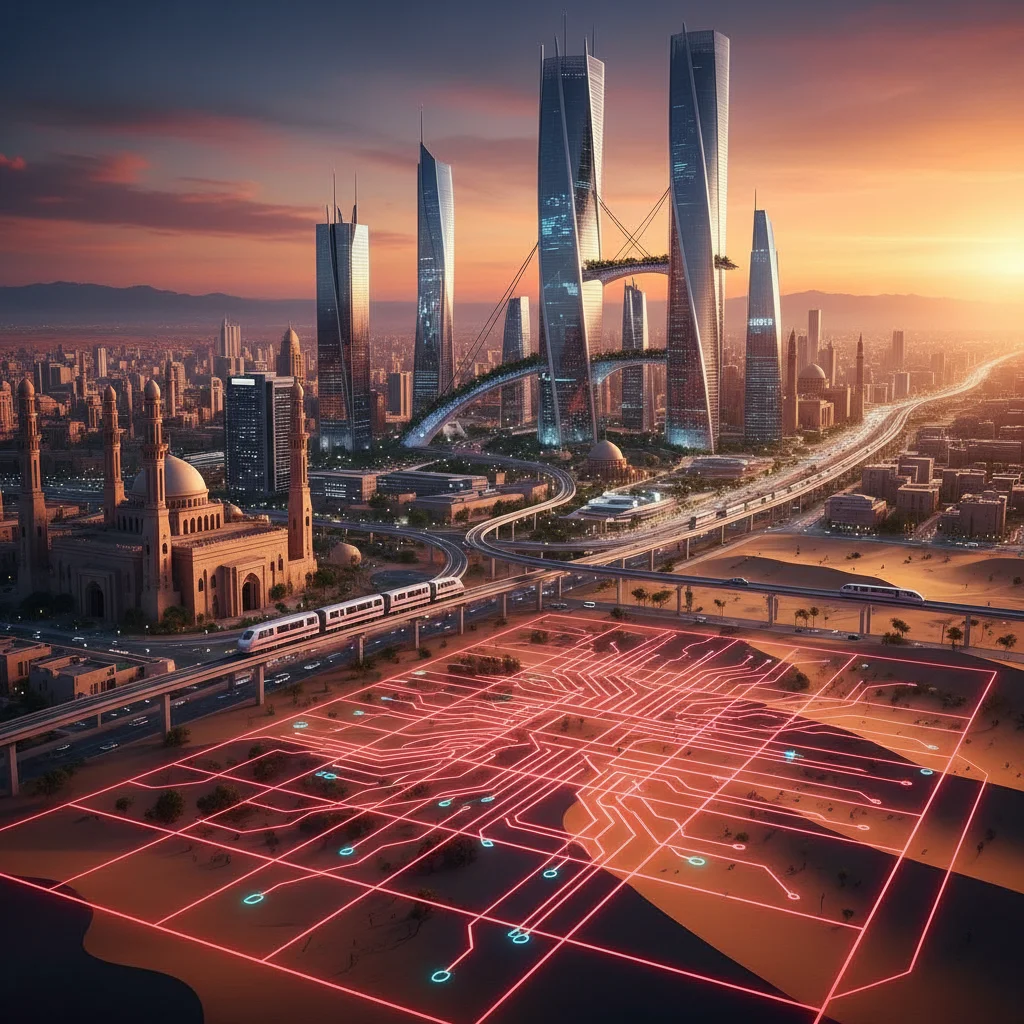
Middle East Real Estate Market 2026-2034: Growth, Hurdles, and the New Urban Frontier
By a Senior Technical/Financial Audit Journalist
The Middle East real estate market is projected to expand from USD 937.85 billion in 2026 to USD 1.78 trillion by 2034, registering a compound annual growth rate (CAGR) of 8.31% (Source 1: Market Data Forecast Ltd / BMI Research). This trajectory is underpinned by state-sponsored urbanization initiatives, liberalized foreign ownership frameworks, and the emergence of digital infrastructure as a distinct asset class. However, a closer examination reveals structural disconnects between government-led supply and organic demand, environmental constraints that challenge long-term sustainability, and regulatory fragmentation that introduces execution risk for developers and investors alike.
The Macro Picture: A USD 1.78 Trillion Forecast Under Scrutiny
The market’s baseline trajectory is established by two parallel forces. First, government-led urbanization programs—Saudi Vision 2030, UAE Centennial 2071, and Egypt’s New Administrative Capital—are driving construction volumes at an unprecedented scale. Saudi Arabia had over 700,000 housing units completed or under construction in 2023 (Source 2: Saudi Ministry of Housing), while UAE authorities reported 18,000+ expatriate property purchases in Dubai during the same year, a 35% year-on-year increase (Source 3: Property Finder Middle East).
Second, visa liberalization policies have altered the demand curve. The UAE’s Golden Visa program, offering ten-year renewable residency for property investments above AED 2 million (Source 4: General Directorate of Residency and Foreigners Affairs), has created a structural floor for high-end residential demand. Similar programs in Saudi Arabia (Premium Residency) and Qatar (permanent residency pathways for investors) are replicating this mechanism across the Gulf Cooperation Council (GCC).
The implied CAGR of 8.31% through 2034 assumes that these policy drivers remain intact and that capital inflows from outside the region continue to accelerate. This assumption warrants scrutiny, as it relies on several interdependent variables: geopolitical stability, global interest rate trajectories, and the absorptive capacity of local labor markets for the populations these projects are designed to house.
Hidden Friction: The Affordability Paradox Behind Mega-Project Glory
Beneath the headline growth figures, a structural affordability gap exists that could cap demand if foreign capital flows decelerate. In Saudi Arabia, nearly 60% of adults under 35 were unable to afford homeownership without financial assistance in 2023 (Source 5: Central Department of Statistics and Information). This demographic cohort—the primary target for new housing supply—faces a disconnect between project pricing and income levels.
Dubai’s prime residential property prices reached AED 2,800 per square foot in 2023 (Source 6: Knight Frank Wealth Report 2023), a level that effectively prices out middle-income households without significant leverage or intergenerational wealth transfers. The market has bifurcated: a high-end segment driven by Golden Visa applicants and institutional investors, and a secondary market where domestic buyers increasingly rely on rental arrangements or extended family support.
This bifurcation creates latent risk. If external demand—particularly from Russian, Chinese, or Indian buyers—retreats due to capital controls, geopolitical shifts, or alternative investment destinations, the luxury segment could face price corrections. The primary support mechanism for Saudi Arabia’s Sakani initiative, which provides subsidized mortgages and down payment assistance, partially mitigates this risk but introduces sovereign balance sheet exposure (Source 7: Saudi Ministry of Housing program data).
Regulatory fragmentation compounds these affordability issues. Several Middle Eastern economies rank below global averages in ease of registering property (Source 8: World Bank Doing Business Report 2023). Egypt, in particular, faces disputes over land ownership and unclear zoning regulations that have delayed large-scale developments, increasing capital costs for developers and, ultimately, prices for end users.
The New Asset Class: Co-Living, Flex Housing, and the Digital Layer
A market segment that defies the overall affordability challenge is co-living. Dubai’s co-living occupancy rates reached 92% in 2023, outperforming conventional apartments (Source 9: Colliers International 2023 Middle East Residential Outlook). This metric reflects a structural shift in housing preferences among the region’s mobile expatriate workforce—young professionals who prioritize location, furnished units, and shared amenities over ownership.
Co-living’s economic logic is straightforward: higher density per square meter yields superior rental yields (typically 7-9% in Dubai versus 4-5% for conventional apartments), while developers benefit from economies of scale in fit-out and maintenance. The model also aligns with the region’s labor market dynamics—short-term contracts, frequent relocations—making it more resilient to employment volatility.
Smart city projects are accelerating this trend. Dubai Smart City, Riyadh Smart District, and NEOM’s THE LINE are not merely real estate developments; they are infrastructure platforms designed to integrate digital utilities, logistics, and mobility into the built environment. This creates a new asset class: digital infrastructure embedded within physical real estate. Investors are increasingly pricing bandwidth capacity, IoT sensor networks, and connectivity redundancy as separate value drivers alongside square footage.
The convergence of co-living and smart city design is most visible in NEOM, where the linear city concept eliminates traditional zoning, allowing for mixed-use densities that conventional municipalities cannot replicate. If THE LINE achieves its projected population density of 9 million residents along 170 kilometers, it will represent a unit economics model that challenges every existing metric in Middle East real estate.
Environmental Constraints: The Unsustainable Water-Dependent Model
The most significant underreported risk to the market’s long-term trajectory is environmental sustainability. The Middle East faces acute water scarcity, extreme heat exceeding 50°C annually, and ongoing desertification (Source 10: World Resources Institute aqueduct water risk data, IPCC regional climate projections). Current development models rely heavily on energy-intensive desalination and air conditioning, creating operational cost structures that are sensitive to energy prices and carbon regulations.
For example, a typical luxury villa community in Dubai consumes approximately 1,200 liters of water per day per household for landscaping alone—water that is 99% desalinated at an energy cost of 3.5-4.5 kWh per cubic meter. As carbon border adjustment mechanisms (CBAM) expand across Europe and potentially into other markets, embedded operational carbon in Middle East real estate could face valuation discounts from institutional investors who must comply with ESG mandates.
The development of NEOM and the Red Sea Project incorporates renewable energy microgrids and water recycling systems, but these remain exceptional rather than standard across the region. Most new construction continues to use conventional HVAC and irrigation systems, locking in operational inefficiencies for decades.
The Regulatory Chessboard: National Sovereignties vs. Cross-Border Capital
The market’s fragmentation across jurisdictions introduces portfolio risk that is often underestimated. While the GCC has harmonized certain visa and investment frameworks, property registration, taxation, and dispute resolution remain nationally distinct. Saudi Arabia imposes a 5% VAT on commercial property transactions with no exemption for REIT structures. Dubai’s Real Estate Regulatory Authority (RERA) mandates escrow accounts and developer registration, but other emirates have lighter oversight. Egypt’s ongoing currency devaluation has created a 30-40% discount for dollar-denominated buyers, but exit mechanisms remain constrained by capital controls.
This regulatory patchwork means that a portfolio diversified across Riyadh, Dubai, and Cairo faces three different legal regimes, three different tax treatments, and three different exit timelines. Risk-averse institutional capital gravitates toward Dubai’s relative regulatory clarity, reinforcing the UAE’s market share dominance and creating a self-reinforcing cycle of liquidity concentration.
Market Predictions and Structural Trajectories
Based on the data and cross-validation analysis, several forward-looking statements can be made with reasonable confidence:
First, the market will continue its upward trajectory through 2030, driven by committed government expenditure on NEOM, Qiddiya, Expo City Dubai, and similar mega-projects. These are sovereign-backed initiatives with budget allocations that are unlikely to face cancellation due to political capital invested. The 8.31% CAGR assumes these projects remain on schedule.
Second, the affordability gap in Saudi Arabia will force a policy recalibration. The Sakani initiative’s success metrics—number of beneficiaries, percentage of first-time buyers—will become a key political indicator, potentially triggering additional subsidies or price controls on mid-range housing segments.
Third, co-living and flex housing will capture an increasing market share, potentially reaching 15-20% of Dubai’s residential transactions by 2028, up from approximately 5% in 2023. This shift will pressure conventional apartment rents and reshape developer product strategies.
Fourth, environmental compliance costs will emerge as a material factor in property valuation by 2030. Buildings with independent water systems and low-carbon energy profiles will command valuation premiums of 10-15% compared to conventional structures, as institutional investors embed ESG criteria into acquisition decisions.
Fifth, regulatory convergence across the GCC is unlikely within the forecast period. National sovereignty concerns and differing legal traditions (civil law in UAE and Saudi Arabia, common law in Dubai International Financial Centre) will prevent harmonization, maintaining a risk premium for cross-jurisdictional portfolios.
The Middle East real estate market offers substantial growth, but not uniformly so. Investors and developers who navigate the affordability paradox, invest in sustainable infrastructure, and accept regulatory fragmentation as a structural constant will outperform those who treat the region as a single, homogeneous market. The next decade will test whether state-driven supply can meet organic demand without relying on perpetual capital inflows from external sources.
Keywords

Fatima Al-Zahra
Real Estate Editor specializing in Dubai and Riyadh mega-projects.