The GCC Luxury Paradox: Why 30% Higher Prices and Missing VIP Service Drive Shoppers Abroad
Despite being one of the world's wealthiest regions, the GCC luxury market loses billions to overseas spending. New data reveals that prices in the Middle East are 15–30% higher than in Europe, and the lack of personalized VIP service is the second-biggest reason consumers shop abroad. Meanwhile, shoppers increasingly demand international brands that connect with local culture. This article unpacks the economic logic behind the price premium, the hidden supply-chain costs, and the strategic pivot needed for regional retailers to recapture the Gulf’s luxury spend.
Ahmed Al-Farsi
Editorial Analyst
The GCC Luxury Paradox: Why 30% Higher Prices and Missing VIP Service Drive Shoppers Abroad
Introduction: The $15 Billion Exit – Why Gulf Shoppers Leave Their Own Markets Behind
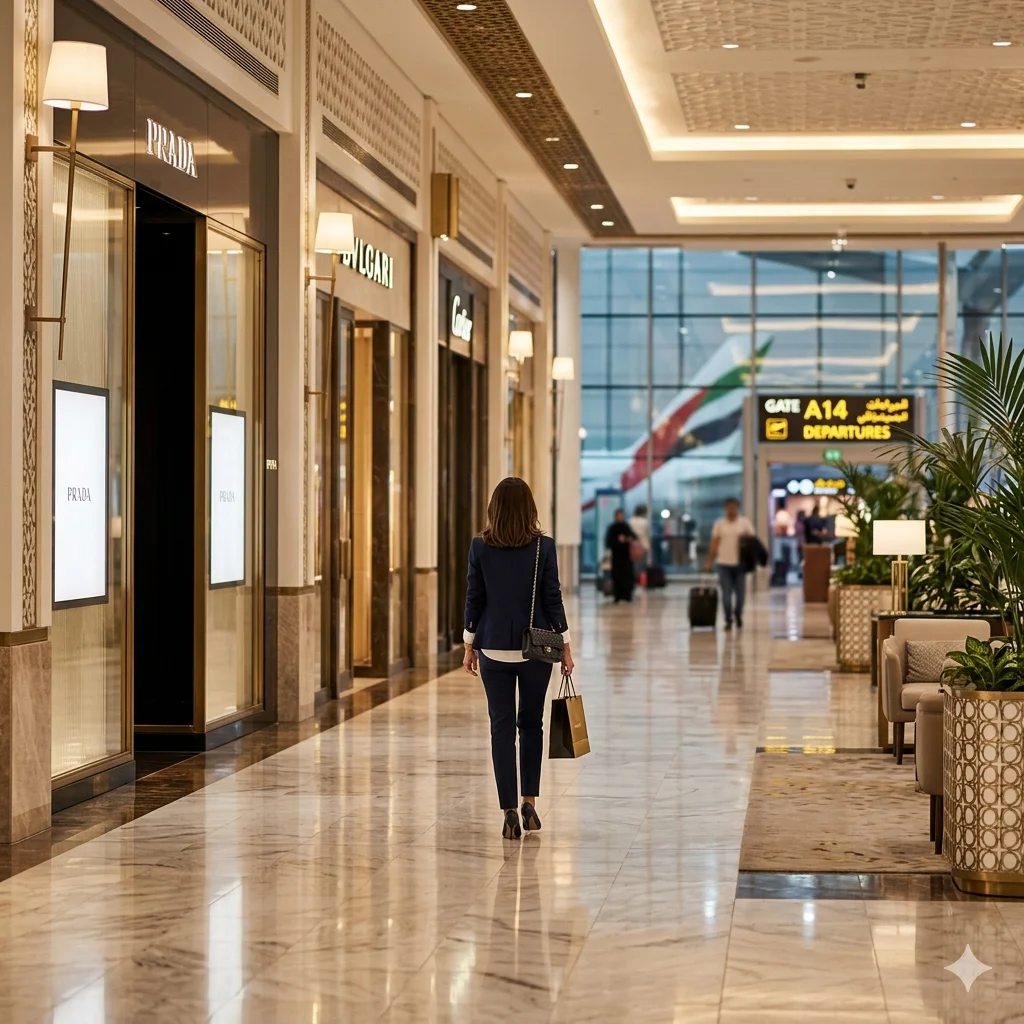
In the heart of Dubai, the world's most opulent shopping malls gleam with marble floors and designer boutiques. Yet a growing number of the region's wealthiest consumers are bypassing these glittering retail palaces for the streets of London, Paris, and Milan. According to industry estimates, Gulf Cooperation Council (GCC) residents collectively spend approximately $15 billion annually on luxury goods outside the region — a staggering leakage that regional retailers have struggled to plug.
The numbers paint a stark picture. New data from Jasmina Banda, CEO of Chalhoub Group's luxury division, reveals that luxury goods in the Middle East carry a 15–30% price premium compared to Europe. This is not merely a matter of tax differentials; it reflects structural inefficiencies buried deep in the supply chain. Compounding the pricing issue, a lack of personalized VIP service has emerged as the second-biggest factor driving affluent GCC shoppers abroad. For a clientele that expects pampering as standard — private shopping suites, dedicated consultants, and home delivery of limited-edition pieces — the region’s retail experience often falls short.
There is a third dimension: cultural resonance. Today’s Gulf consumers want international brands that speak to local identity, not just global status. As Banda puts it, “Consumers from the region are now looking for international brands to connect with local culture, which means thinking like a local, but behaving like a global player.”
The paradox is that the GCC is both one of the world's wealthiest luxury markets and one of the most prone to losing its own high-spending customers. Solving this paradox requires more than discounting. It demands a redefinition of luxury itself in a region that places an extraordinary premium on status, service, and identity.
[IMAGE: A montage of luxury storefronts in Dubai Mall juxtaposed with a London Bond Street or Paris Champs-Élysées scene, illustrating the shopping migration.]
---
The Price Premium: Why Middle East Luxury Costs 30% More
When a Saudi royal or an Emirati businesswoman walks into a Dior boutique in Dubai, she pays 15% to 30% more for the same handbag than if she purchased it in Paris. The price gap is not a symptom of greed but a product of complex economic forces that regional retailers cannot easily dismantle.
Import duties and tariffs form the first layer. Despite the GCC's free-trade agreements with the European Union, luxury goods still attract customs duties ranging from 5% to 12% depending on the product category and country of entry. These are passed directly to consumers.
Logistics and warehousing costs are significantly higher in the region. The Gulf’s extreme climate requires temperature-controlled storage for leather goods, perfumes, and delicate fabrics. The need for air freight instead of sea freight — to ensure rapid replenishment of fast-moving luxury items — adds another 10–15% to landed costs.
Real estate overhead in prime retail corridors is among the world's highest. A flagship store on Sheikh Zayed Road in Dubai or the Mall of Qatar in Doha commands rent per square foot that rivals or exceeds that of the Champs-Élysées. Landlords in the Gulf often demand long-term lease commitments and revenue-sharing clauses, squeezing retailer margins.
Brand distribution agreements further inflate prices. Many European luxury houses operate through exclusive distributors or joint ventures in the Middle East. These intermediaries add their own markup layers to cover local marketing, staffing, and compliance costs. The result: a brand that sells a handbag for €2,000 in Milan may list it for €2,600 in Riyadh.
There is also a hidden cost: the heavy reliance on duty-free and grey-market channels. When GCC consumers see the same product at Dubai Duty Free for 20% less than a city-center boutique, it undermines official retail pricing strategies. Some shoppers even buy from parallel importers who circumvent authorized distribution, further pressuring margins for compliant retailers.
The implication is clear: regional retailers cannot simply match European prices without destroying their margins. Instead, they must shift the value proposition away from price competition and toward experiences, exclusivity, and service — the very areas where many are currently underperforming.
[IMAGE: Infographic showing a price comparison of a luxury handbag in Dubai vs. London vs. Paris, with icons for tax, shipping, and rent.]
---
The Service Deficit: ‘Being Pampered’ as a Lost Art in Gulf Luxury Retail
For decades, the Gulf’s luxury retail scene has been defined by a single word: service. Affluent shoppers in the region expect to be treated not just as customers, but as honored guests. Yet according to Jasmina Banda, “The lack of VIP service is the second-biggest reason why consumers from the region shop abroad.”
What does “pampering” mean in the Gulf context? It goes far beyond a glass of champagne at the entrance. For top-tier GCC clients, luxury retail service includes:
- Private shopping rooms that feel like personal salons, with direct access to the brand’s latest collections before they hit the floor.
- Dedicated personal consultants who remember every purchase, every preference, and every family member’s birthday.
- At-home visits to present new arrivals, arrange fittings, and handle alterations.
- Instant access to limited editions without waiting lists or lottery systems.
- Complimentary tailoring, monogramming, and gift-wrapping delivered within hours.
- VIP event invitations for fashion shows, brand dinners, and private viewings.
In European luxury retail, such treatment is typically reserved for the top 1% of spenders — customers who have proven their loyalty over years. In the Gulf, the expectation is baseline. A shopper spending $5,000 in a boutique expects the same red-carpet treatment as someone spending $500,000. When that doesn’t happen, they vote with their feet.
The evidence is stark. Gulf tourists are among the highest-spending visitors in London, Paris, and Milan. At Harrods, dedicated Arabic-speaking personal shoppers cater to clients from the region. Galeries Lafayette in Paris offers private shopping sessions with refreshments, chauffeur services, and even airport transfers for GCC nationals visiting during summer sales. These experiences are calibrated to the precise needs of the Gulf luxury consumer.
Meanwhile, back home, some regional retailers have cut back on VIP services during the post-pandemic staffing crunch. Others rely on sales associates who lack the cultural fluency to engage with demanding local clients. The result is a service gap that international competitors have been quick to exploit.
The region’s luxury lifestyle trends are evolving rapidly, and loyalty is expensive to earn but cheap to lose. For GCC retailers, reinvesting in personalized service is no longer optional — it is the single most effective lever to recapture the $15 billion exit.
[IMAGE: A photograph of a high-end boutique with a private consultation area, personal shopper, and refreshments, showing the ideal VIP experience.]
---
Cultural Connection: Thinking Like a Local, Behaving Like a Global Player
The third pillar of the luxury paradox is cultural resonance. GCC consumers are not simply buying logos; they are buying identity. As Jasmina Banda observes, “Consumers from the region are now looking for international brands to connect with local culture, which means thinking like a local, but behaving like a global player.”
This duality is critical. Gulf shoppers want the prestige of a global luxury house — the heritage of Louis Vuitton, the savoir-faire of Hermès — but they also want brands that reflect their own values, tastes, and traditions. They are looking for collections that incorporate Middle Eastern motifs, colors, and fabrics. They appreciate capsule lines released during Ramadan or Eid. They want packaging that says “luxury” in a way that resonates with Arab aesthetics.
Several international brands have begun to respond. In 2023, Loro Piana opened a private members' club in Dubai that blends Italian luxury with Bedouin-inspired interiors. Gucci launched a “Gucci Arabia” collection featuring calligraphy and geometric patterns. Christian Louboutin designed a shoe collection using traditional Emirati embroidery. These efforts have been met with enthusiasm — but they remain exceptions rather than the rule.
The gap is especially pronounced in the area of exclusive product offerings. In Europe, every flagship store offers limited-edition items that are never available elsewhere. In the GCC, many boutiques stock the same global range, with only occasional regional variations. For a consumer who expects the rarest pieces, the sense of being treated as a second-tier market is palpable.
The cultural connection extends beyond product. It encompasses store design (does the architecture reflect local heritage?), staffing (are sales associates fluent in Arabic and versed in local customs?), and marketing (are campaigns shot locally with regional influencers?). Brands that “think like a local” in these dimensions are far more likely to earn the loyalty of Gulf shoppers.
But behaving like a global player also means providing a seamless, world-class experience. GCC consumers are among the most digitally connected in the world. They expect omnichannel service — the ability to browse online, reserve in-store, request home delivery, and arrange returns with a single click. Many luxury retailers in the region still operate with fragmented systems that frustrate these expectations.
The interplay of price, service, and cultural resonance creates a complex decision matrix for the luxury consumer in the Middle East. When all three factors align, customers stay home. When any one of them falters, they book a flight.
[IMAGE: A moodboard showing luxury brands incorporating Middle Eastern design elements: a handbag with Arabic calligraphy, a watch with a desert motif, and a boutique interior with Arabian-style arches.]
---
The Strategic Pivot: What Regional Retailers Must Do
The luxury paradox in the GCC is not an unsolvable problem — but solving it requires a fundamental shift in strategy. Regional retailers can no longer compete on price alone; they must compete on value, which in the Gulf context means service and cultural connection.
First, reimagine the VIP experience as a baseline. Every luxury boutique in the region should offer private consultation spaces, dedicated personal shoppers, and concierge-level services that match what European flagships provide for their top clients. This is not a cost center; it is a retention investment. Brands like Chalhoub Group are already piloting “secret” lounges and appointment-only shopping experiences that promise exclusivity without the premium price tag.
Second, leverage local cultural expertise. Rather than waiting for global headquarters to design regional collections, GCC retailers can collaborate directly with local artisans, artists, and designers. Pop-up events, limited-edition collaborations with regional influencers, and heritage-inspired window displays can build emotional connections that price cannot touch.
Third, exploit the loyalty loop. Affluent GCC shoppers are highly brand-loyal when they feel valued. Retailers should use data analytics to track preferences and purchase history, then offer personalized incentives — early access to new arrivals, invitations to closed-door events, complimentary personalization services. The goal is to make the local shopping experience so seamless and rewarding that it outweighs the perceived savings of shopping abroad.
Fourth, address the structural pricing gap head-on. While regional retailers cannot eliminate import duties or shrink the rental premium, they can offer value-added services that effectively lower the total cost of ownership. Free alterations, complimentary shipping, extended warranties, and points programs that offer experiential rewards — such as private fashion weekends in Paris — can close the perceived value gap without price cuts.
The stakes are high. The GCC luxury market is projected to grow to $22 billion by 2027, but that growth is contingent on stemming the outflow of high-spending customers. Every shopper who flies to Europe to buy a handbag represents not just a lost sale but a lost relationship — one that takes years and significant investment to rebuild.
The luxury paradox reveals a deeper truth: in a region where wealth is abundant but competition is global, the definition of luxury itself must evolve. It is no longer enough to offer expensive goods behind beautiful windows. Luxury must be a feeling — of being recognized, understood, and pampered. And that feeling, more than any price tag, will determine where the Gulf’s wealthiest shoppers choose to spend.
[IMAGE: A conceptual photograph of a luxury retail counter with a thank-you note handwritten in Arabic, alongside a cup of Arabic coffee and a branded shopping bag, symbolizing personalized service.]
---
Conclusion: The Flight Is Still Worth Taking — For Some
For the foreseeable future, many GCC luxury shoppers will continue to shop abroad. The allure of a weekend in Paris, the thrill of tax-free shopping, and the cachet of buying directly from a European flagship remain powerful draws. But the $15 billion exit can be reduced.
The region’s retailers hold a unique advantage: proximity. A loyal customer in Riyadh or Doha can visit a boutique weekly, not just annually. Brands that invest in creating a continuous, immersive luxury experience — one that matches the warmth of the local culture with the precision of global operations — can turn that proximity into an unassailable moat.
The GCC luxury paradox is not a failure of the market. It is a call to action. The region does not need to lower prices to match Europe. It needs to raise the bar so high that price becomes secondary — and the shopping experience becomes the true luxury.
[IMAGE: A silhouette of a luxury shopper walking through a beautifully lit mall corridor, exiting toward a stylized airplane silhouette in the background, symbolizing the choice between local and international shopping.]
Keywords

Ahmed Al-Farsi
Luxury & Lifestyle Editor with expertise in high-end hospitality and retail.