From Azure to Autonomy: How OpenAI''s Infrastructure Shift Redefines the AI Power Balance with Microsoft
OpenAI's strategic move to develop its own AI inference chips and data centers marks a pivotal shift from a deep partnership with Microsoft to a complex competitive dynamic. This analysis explores the underlying economic logic of vertical integration in the AI era, where control over the foundational compute layer is becoming the ultimate source of power and profit. We examine how this transition, beginning with Microsoft's 2019 $1 billion investment, signals a new phase where AI giants seek independence from cloud hyperscalers, potentially reshaping the entire technology supply chain and the future of AI-as-a-Service models.
Layla Ibrahim
Editorial Analyst
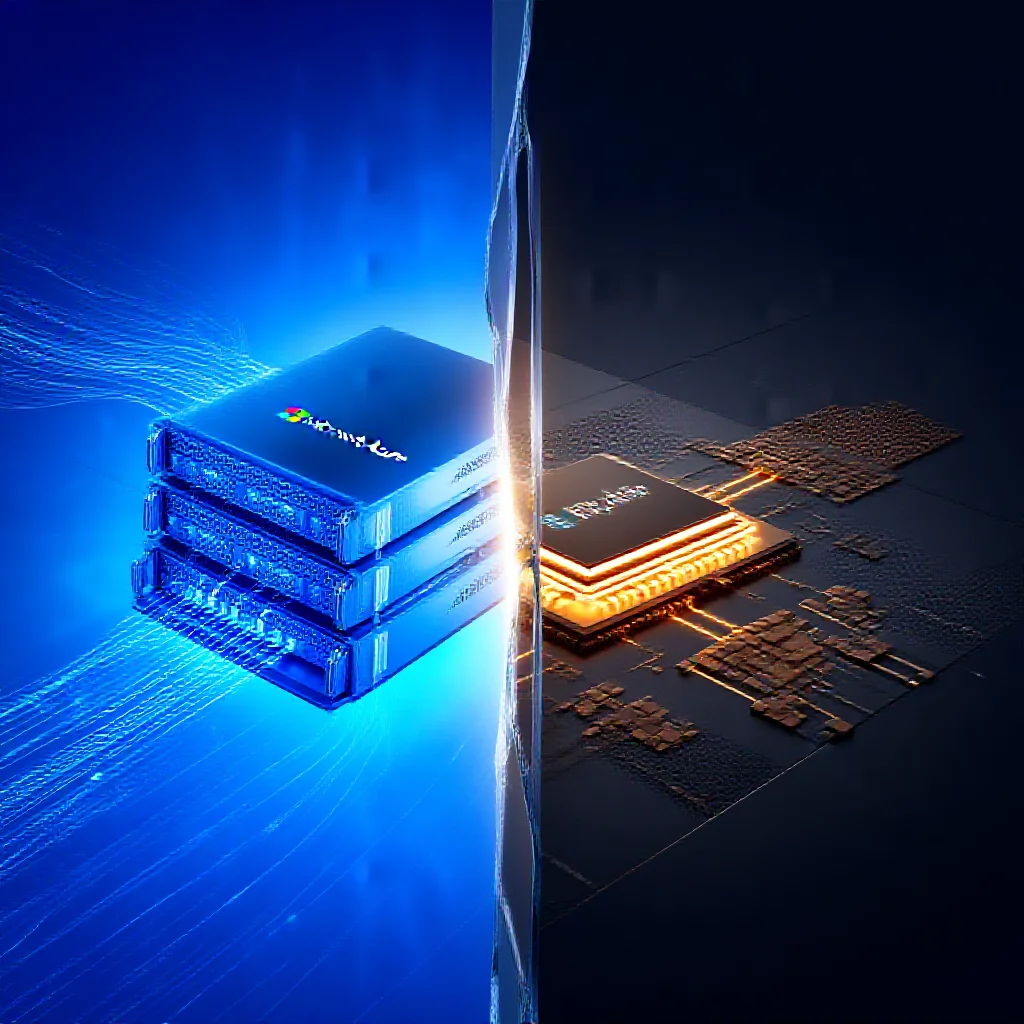
From Azure to Autonomy: How OpenAI's Infrastructure Shift Redefines the AI Power Balance with Microsoft
Summary: OpenAI's strategic move to develop its own AI inference chips and data centers marks a pivotal shift from a deep partnership with Microsoft to a complex competitive dynamic. This analysis explores the underlying economic logic of vertical integration in the AI era, where control over the foundational compute layer is becoming the ultimate source of power and profit. We examine how this transition, beginning with Microsoft's 2019 $1 billion investment, signals a new phase where AI giants seek independence from cloud hyperscalers, potentially reshaping the entire technology supply chain and the future of AI-as-a-Service models.
---
The Unspoken Economics: Why AI Giants Can't Stay 'Just Software'
The reported initiatives by OpenAI to develop proprietary AI inference chips and construct its own data centers are not merely tactical expansions. They represent a fundamental response to an unsustainable economic model. The core business of operating large language models (LLMs) like GPT-4 involves continuous, massive-scale inference—the process of generating responses to user queries. This creates a perpetual and enormous demand for compute power.
When this compute is rented from a cloud provider like Microsoft Azure, it constitutes a dominant and variable cost of revenue. For an entity serving hundreds of millions of users, this cost structure erodes long-term profitability and strategic flexibility. Vertical integration, therefore, transitions from an optional efficiency play to a survival imperative. Controlling the hardware stack—from chip architecture to server design and data center operations—is the only reliable path to margin control. This move signals the end of the pure-play AI software model. OpenAI’s strategy provides a blueprint for other major AI labs, indicating that achieving scale necessitates owning the foundational infrastructure.
Image Suggestion: An infographic-style illustration showing a cost breakdown pie chart dominated by "Cloud Compute" transforming into a vertical stack of owned hardware layers (chip, server, data center, model).
Anatomy of a Pivot: From Strategic Ally to Calculated Competitor
The evolution of the OpenAI-Microsoft relationship follows a predictable trajectory of technology industry symbiosis. The initial phase (2019-2023) was deeply symbiotic. Microsoft's $1 billion investment in 2019 (Source 1: [Primary Data]) provided critical capital, while Azure offered the immediate, scalable infrastructure required to train and deploy increasingly large models. This partnership embedded Azure deeply into OpenAI’s operational DNA and provided Microsoft with a decisive edge in the cloud AI wars.
The inflection point occurs when technological ambition and financial scale reveal dependency as a strategic liability. The reported development of in-house chips and data centers for 2026 (Source 1: [Primary Data]) identifies this threshold. The competition that emerges is not a direct product war—Microsoft Copilot versus ChatGPT—but a more fundamental battle for control over the underlying "pickaxe" layer. By building its own infrastructure, OpenAI seeks to dictate the cost, performance, and roadmap of the compute that powers its own services and, potentially, those of future customers, placing it in a new competitive axis with its former benefactor.
Image Suggestion: A timeline graphic with two diverging arrows originating from a 2019 "Strategic Partnership" node. One arrow (Microsoft) points towards 'Cloud & Enterprise Services', the other (OpenAI) points towards 'AI Models & Foundational Infrastructure'.
The Ripple Effect: Reshaping the Global AI Supply Chain
OpenAI’s vertical integration strategy will exert pressure across the global technology supply chain. The semiconductor industry, long dominated by designers like Nvidia, will face a new class of sophisticated, hyper-scale customers developing application-specific integrated circuits (ASICs) for inference. This could pressure merchant chip pricing and performance roadmaps while forging new, direct alliances between AI labs and silicon fabricators like TSMC.
Furthermore, the initiative to build proprietary data centers shifts OpenAI’s capital expenditure profile. It moves the organization into the domains of energy procurement, real estate, and cooling technology, influencing geopolitics of compute and creating a new class of AI-specific infrastructure assets. For cloud providers like Microsoft Azure, the long-term implication is a potential shift in role. They may transition from being the primary landlords for all AI compute to brokers and operators of more specialized, hybrid ecosystems, where they manage and integrate third-party silicon (including their own) alongside infrastructure owned by large AI entities.
Image Suggestion: A global map showing established Azure data center regions versus potential new OpenAI-owned facility locations, with semiconductor supply lines flowing between fabrication plants in Asia and these endpoints.
Verification & Context: Separating Strategy from Speculation
The analysis of this strategic shift is grounded in confirmed reporting and logical deduction from established business patterns. The foundational fact is Microsoft's $1 billion investment in OpenAI in 2019 (Source 1: [Primary Data]), which established the initial deep integration. Subsequent reports of OpenAI developing its own AI inference chips and building data centers (Source 1: [Primary Data]) provide the basis for analyzing the pivot.
This move aligns with historical precedents in technology, where leading software applications eventually integrate backward to control key hardware or platform dependencies to optimize cost and innovation pace. The competitive dynamic is deduced from the inherent conflict in controlling a critical input for one's own product that is also a profit center for a partner. The future predictions regarding the supply chain are extrapolations based on the capital intensity and strategic importance of semiconductor and data center markets when challenged by a new, deep-pocketed vertical integrator.
Neutral Market & Industry Predictions
The likely market outcome is the stratification of the AI industry into infrastructure owners and pure-play application developers. A small cohort of well-capitalized leaders like OpenAI will operate their own vertically integrated stacks, achieving significant cost advantages and strategic autonomy. This will raise barriers to entry, consolidating power at the model layer.
Cloud hyperscalers will respond by accelerating their own custom silicon programs—as seen with AWS Graviton and Google TPU—and offering more flexible, hybrid infrastructure models to retain relevance. The semiconductor landscape will become more fragmented, with increased demand for ASIC design expertise and fabrication capacity, benefiting foundries. The AI-as-a-Service model will bifurcate: one tier offering raw, efficient inference on proprietary stacks, and another offering bundled model-and-cloud services from hyperscalers. The ultimate competitive balance will be determined by the execution speed and technical efficacy of OpenAI’s in-house infrastructure compared to the evolving, scale-optimized offerings from Microsoft Azure and its peers.
Keywords

Layla Ibrahim
Technology Reporter covering fintech, AI, and startup ecosystems in the Gulf.