Beyond the Headline: The $300M Saudi Investment in Syria and Its Geopolitical Significance
The announcement of a $300 million Saudi real estate project in Damascus, led by Al-Mutlaq Real Estate Investment Company, is more than a business deal. This analysis explores the project as a potential indicator of shifting Gulf economic diplomacy and a cautious re-engagement with Syria's post-war reconstruction. We examine the strategic timing, the signal it sends regarding regional normalization, and the inherent risks of investing in a sanctioned and fragile economy. The article investigates what this move reveals about long-term Saudi economic strategy and the challenges of pioneering large-scale development in a complex geopolitical landscape.
Fatima Al-Zahra
Editorial Analyst
Beyond the Headline: The $300M Saudi Investment in Syria and Its Geopolitical Significance
Introduction: A Landmark Deal in a Fractured Landscape
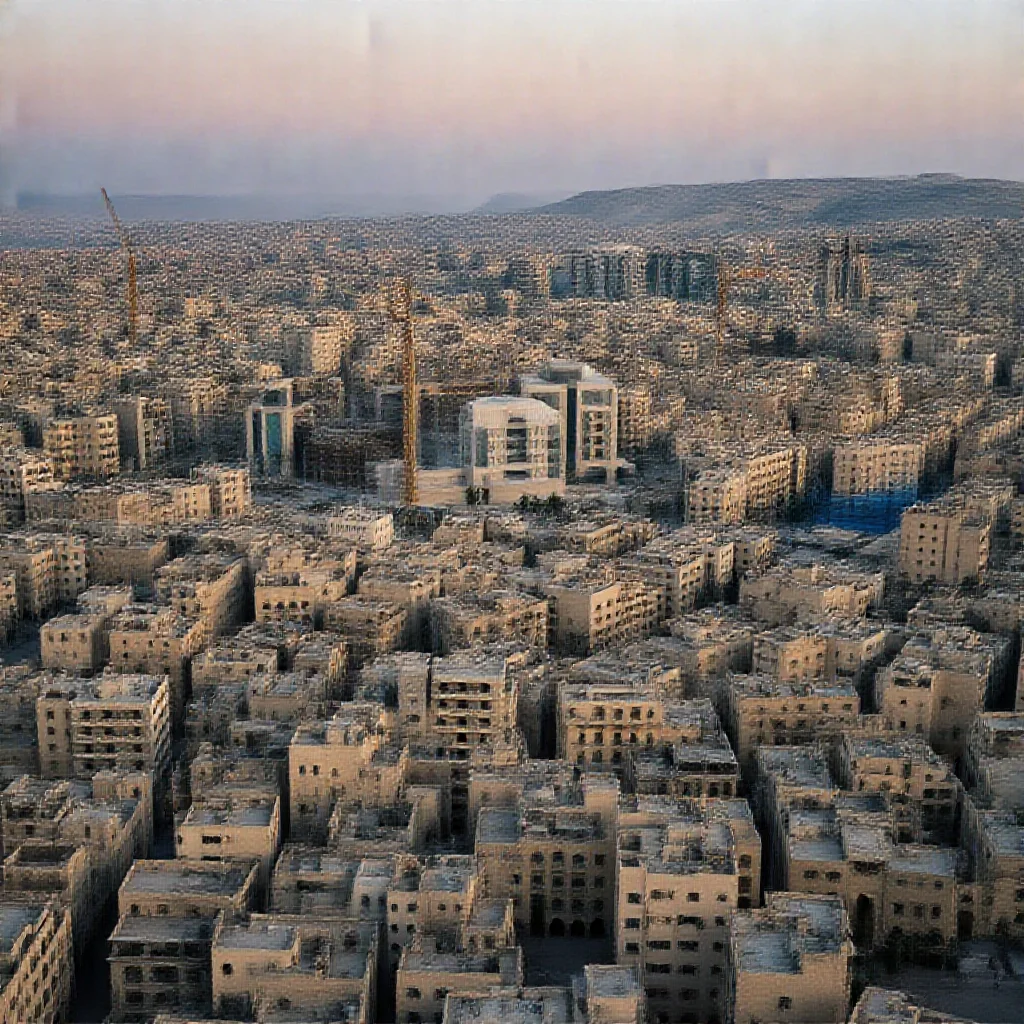
On March 14, 2024, Al-Mutlaq Real Estate Investment Company announced plans to develop the Syria Beaumont, a $300 million residential and commercial project in Damascus (Source 1: [Primary Data]). In the context of Syria’s protracted conflict and international isolation, this transaction constitutes a data point with outsized significance. The announcement moves beyond mere business news, positioning itself as a potential signal in regional geopolitics and economic diplomacy. The core analytical question is whether this venture represents an isolated commercial calculation or a deliberate, calibrated move within a broader strategy of regional re-engagement.
Deconstructing the Announcement: The Al-Mutlaq Gambit
The entity behind the announcement, Al-Mutlaq Real Estate Investment Company, is a Saudi firm whose strategic profile warrants scrutiny. While details of its past projects are not specified in the primary data, the scale and location of this initiative suggest an entity operating with significant backing and a tolerance for high-risk environments. The project itself, the Syria Beaumont, is defined as a mixed-use development in the Syrian capital (Source 1: [Primary Data]). Its reported $300 million valuation indicates a premium offering, ostensibly targeting a specific market segment within a post-war economy characterized by widespread poverty but also the potential presence of capital from returning expatriates or a resilient elite. The timing of the announcement, March 2024, follows Syria’s readmission to the Arab League in May 2023, suggesting a possible correlation with a gradual, if cautious, regional normalization process.
The Geopolitical Calculus: Normalization Through Capital
This investment can be analyzed as an instrument of economic statecraft. Saudi Arabia, along with other Gulf states, has been navigating a complex diplomatic re-engagement with Damascus, often characterized by a dual-track approach: maintaining formal political distance while permitting commercial and humanitarian channels to advance. The Al-Mutlaq project fits within this paradigm, acting as a tangible, private-sector-led probe into the Syrian market. Its significance lies not only in its scale but in its sector—real estate and construction. A deep analytical entry point considers whether such a project could stimulate parallel investments in underlying economic supply chains, such as cement, steel, and financial services, or if it is designed to function as a self-contained enclave, insulated from the broader Syrian economy.
The Risk Audit: Navigating Sanctions and Fragility
The operational challenges facing this project are formidable. The primary hurdle is the complex web of international sanctions, most notably the U.S. Caesar Syria Civilian Protection Act, which imposes secondary sanctions on non-U.S. entities conducting significant business with the Syrian government or certain sectors. Navigating financial transactions, securing international contractors, and sourcing materials without triggering sanctions will require specialized legal and financial engineering. Furthermore, market risks are acute. The demand for premium real estate in an economy with a decimated GDP, collapsed currency, and massive internal and external displacement is unproven. Reports from economic risk consultancies like Control Risks and Verisk Maplecroft consistently highlight the extreme difficulty of conducting business in Syria, citing corruption, arbitrary regulation, and infrastructure deficits as persistent barriers beyond the sanction regime.
The Broader Pattern: Gulf Capital and Post-Conflict Reconstruction
The Syria Beaumont project can be situated within a wider pattern of Gulf capital testing opportunities in conflict-affected or politically complex states. Similar forays have been observed in Lebanon, Iraq, and parts of North Africa, where investment often serves dual purposes: seeking potential high returns in underserved markets and extending strategic influence through economic means. In the Syrian context, early-mover investments in reconstruction—even on a limited scale—can secure long-term strategic footholds and influence over the shape of economic recovery. However, this pattern is not uniform; it is often characterized by pilot projects that proceed incrementally, with further commitments contingent on perceived stability and the evolution of the international legal landscape.
Conclusion: A Signal Amidst Uncertainty
The $300 million Saudi real estate announcement is a significant marker, though its ultimate import remains contingent on execution and context. Analytically, it functions as a leading indicator of shifting Gulf economic diplomacy towards Syria, suggesting a willingness to translate political normalization into concrete, albeit risky, commercial activity. The project’s future will serve as a live case study on the feasibility of large-scale private investment under severe sanctions and within a fragile post-conflict economy. Neutral market prediction suggests that its success or failure will be closely monitored by other regional investors, potentially catalyzing a cautious trickle of similar ventures if initial barriers are successfully navigated, or reaffirming Syria’s status as a prohibitive risk if they are not. The move ultimately reveals a long-term strategic patience, where capital is deployed not just for immediate return, but as a stake in the geopolitical reconfiguration of the Levant.
Keywords

Fatima Al-Zahra
Real Estate Editor specializing in Dubai and Riyadh mega-projects.