Arabian Gulf Business News: The Ultimate Gulf Business Report Hub for GCC Economic Insights
Arabian Gulf Business News is a digital-first platform delivering comprehensive business news and analysis exclusively from the six GCC countries—Saudi Arabia, UAE, Kuwait, Bahrain, Qatar, and Oman. This article explores the hidden economic logic behind the platform''s rise: the growing demand for real-time, localized intelligence as the Gulf region accelerates its diversification under Vision 2030 and similar national strategies. We examine how the platform curates actionable data, serves as a critical tool for investors and decision-makers, and fills a gap left by traditional media. Offering a deep audit of its value chain, the piece positions Arabian Gulf Business News as more than a news outlet—it is a strategic resource for navigating the region''s complex economic landscape.
Sarah Al-Qasimi
Editorial Analyst
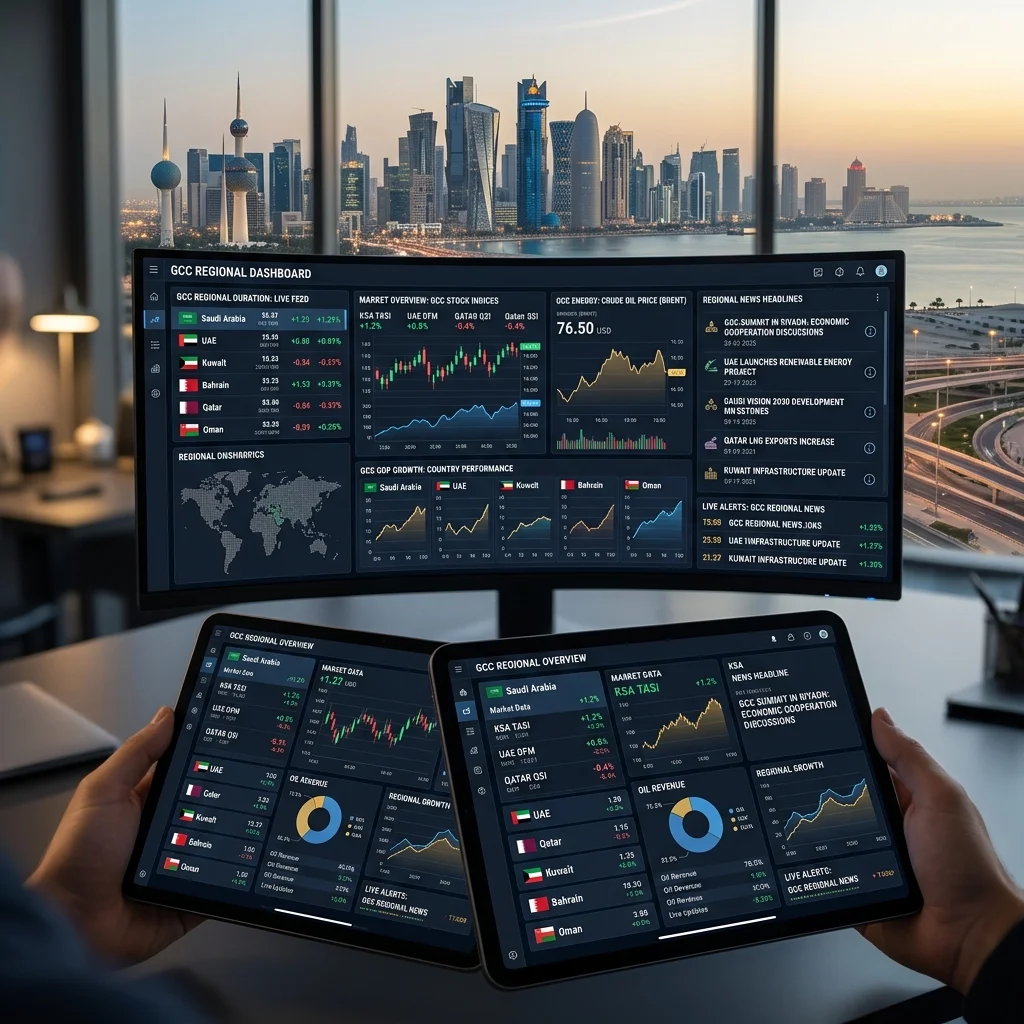
Arabian Gulf Business News: A New Digital Hub for GCC Economic Intelligence
Introduction: The Digital Pulse of the Gulf Economy
The six nations of the Gulf Cooperation Council—Saudi Arabia, the United Arab Emirates, Kuwait, Bahrain, Qatar, and Oman—are navigating an unprecedented economic transformation. For decades, their wealth and global influence rested almost entirely on hydrocarbon exports. Today, under national blueprints such as Saudi Vision 2030, UAE Centennial 2071, and Qatar National Vision 2030, the region is pivoting toward knowledge-based, diversified markets. Mega-projects like NEOM, the Red Sea Project, and the Dubai Expo legacy are reshaping urban landscapes, while regulatory reforms—from 100% foreign ownership in key sectors to streamlined visa regimes—are attracting capital and talent at record levels.
Yet this rapid change creates a critical challenge for investors, multinational corporations, and regional SMEs: how to access timely, localized business intelligence that cuts through the noise. Traditional international news wires often cover the Gulf through a broad lens, missing the granular policy shifts, sector-specific trends, and on-the-ground dynamics that drive real investment decisions. The need for a dedicated, real-time Gulf business report has never been more acute.
[IMAGE: A collage of GCC city skylines (Riyadh, Dubai, Doha, Manama, Kuwait City, Muscat) overlaid with digital network lines and news icons, representing the region's interconnected digital economy.]
Enter Arabian Gulf Business News, a digital-first platform that has positioned itself as the definitive source for GCC business news and analysis. Unlike traditional media outlets that treat the Gulf as a secondary beat, this platform delivers curated intelligence exclusively from all six member states. It is not merely a news aggregator; it is a strategic tool designed to help decision-makers navigate the region’s complex and fast-evolving economic landscape. By aggregating data from central banks, government ministries, and official statistics, and by filtering out irrelevant global noise, the platform offers a lens through which the Arabian Gulf economy can be understood with clarity and precision.
Curating Actionable Intelligence: How the Platform Works
What sets Arabian Gulf Business News apart is its deliberate focus on economic diversification and the sectors that now drive the region’s growth. Coverage spans the full spectrum: oil and gas (still the backbone, but increasingly complemented by downstream and petrochemical innovation), finance and banking, real estate and construction, tourism and hospitality, technology and fintech, logistics and transportation, and the rapidly maturing startup ecosystem.
Each country receives tailored attention. For Saudi Arabia, the lens is on Vision 2030 mega-projects, the Public Investment Fund’s global deals, and regulatory changes that open the economy. For the UAE, the focus sharpens on Dubai’s trade corridors, Abu Dhabi’s industrial zones, and the emergence of crypto and Web3 hubs. Qatar’s LNG expansion and post-World Cup tourism strategy are dissected. Kuwait’s development plan and Oman’s logistics push under Vision 2040 are given equal weight. Bahrain, with its pioneering fintech sandbox, is covered as a testbed for financial innovation.
[IMAGE: An infographic showing sector icons (oil, finance, real estate, tourism, tech, logistics) with estimated GDP contribution percentages for each GCC country, highlighting the shift from oil to non-oil sectors.]
The platform’s editorial methodology is data-driven and rigorous. Stories are sourced not only from press releases but from verified data points released by national statistical agencies, central bank monetary reports, and regulatory bodies. This ensures that users of the Gulf business report are not reading rumor or speculation, but actionable intelligence. For example, when Saudi Arabia’s Ministry of Investment updates its foreign ownership guidelines, Arabian Gulf Business News contextualizes the change against sectoral benchmarks and competitor regimes in the UAE and Qatar. This comparative edge is invaluable for multinational corporations weighing regional headquarters locations.
Moreover, the platform recognizes that the Gulf’s business news landscape is fragmented. An investor interested in real estate may need to follow Dubai Land Department data, Saudi Ministry of Municipal and Rural Affairs announcements, and Qatari free-zone regulations simultaneously. Arabian Gulf Business News solves this fragmentation by aggregating and synthesizing across borders, presenting a cohesive picture of the Arabian Gulf economy that no single national news outlet can provide.
Why a Dedicated Gulf Business Report Matters for Strategic Decision-Making
Information asymmetry remains one of the biggest barriers to entry for external investors in the Gulf. Global news agencies often report on the region only when major geopolitical events occur or when oil prices spike. Meanwhile, local operators—from family-owned conglomerates to government-linked entities—have deep networks and insider knowledge that are hard for outsiders to access. A dedicated digital platform that bridges this gap reduces both research time and risk.
Consider the case of an SME looking to expand into the Gulf’s free zones. Each emirate in the UAE offers dozens of free zones with different ownership rules, visa packages, and industry specializations. Abu Dhabi’s ADGM, Dubai’s DIFC, and Ras Al Khaimah’s RAKEZ each have unique value propositions. A platform like Arabian Gulf Business News can provide on-the-ground insights—such as recent changes to minimum capital requirements, new co-working incentives, or shifts in regulatory enforcement—that are rarely picked up by international wire services. This real-time GCC business news becomes a competitive advantage.
[IMAGE: A decision-maker in a modern office reviewing data on a tablet, with charts showing GCC stock market indices and a map of the Gulf region with key investment zones highlighted.]
Another critical dimension is the rise of ESG investing in the Gulf. Sovereign wealth funds like the Public Investment Fund (Saudi Arabia), ADIA (Abu Dhabi), and QIA (Qatar) have committed billions to green transitions and sustainable infrastructure. Meanwhile, the UAE’s Year of Sustainability and its hosting of COP28 have accelerated corporate disclosure requirements. Arabian Gulf Business News increasingly covers sustainability, green finance, and governance trends—helping investors align their portfolios with the region’s evolving investment insights. For example, when the Saudi Capital Market Authority mandates ESG reporting for listed companies, the platform breaks down the implications for foreign portfolio investors and local asset managers alike.
The platform also serves as a critical resource for tracking the region’s initial public offering (IPO) pipeline. From Saudi Aramco’s landmark listing to the flurry of family-office IPOs on Tadawul and the Dubai Financial Market, the Gulf has become one of the world’s most active IPO markets. A dedicated Gulf business report offers pre-IPO analysis, subscription data, and post-listing performance tracking, enabling institutional investors to calibrate their entry points.
The Data-Driven Edge: Leveraging the Platform for Market Analysis
In an era where information overload is as dangerous as information scarcity, the true value of a digital-native platform lies in its ability to surface patterns rather than just headlines. Arabian Gulf Business News leverages technology to give subscribers a data-driven edge. While the platform’s news feed is curated by experienced editors, behind the scenes, algorithmic tools likely scan for trends—such as which sectors are attracting the most capital, which policy announcements generate the strongest market reactions, and which countries are leading the diversification race.
[IMAGE: A screenshot mockup of a dashboard interface showing real-time data feeds, sentiment analysis graphs, and historical trend lines for key GCC economic indicators. The dashboard is clean and professional.]
Compare this with traditional media. A newspaper might publish one article on a new industry regulation in Qatar. But a digital platform can update its coverage in real time, provide historical context via an embedded database, and link to related articles about similar regulations in Saudi Arabia and Oman. The speed, depth, and regional granularity give digital-native platforms an undeniable advantage for time-sensitive investment insights. Moreover, the platform’s archives become a searchable database of GCC business news that researchers and analysts can mine for competitive intelligence.
Subscribers can use Arabian Gulf Business News to track company announcements—not just listed firms but also major private enterprises and state-owned entities. When Saudi Arabia’s sovereign wealth fund makes a minority investment in a logistics startup, the platform can connect that move to the broader Vision 2030 logistics strategy, to parallel investments in the UAE’s DP World, and to the emerging port infrastructure in Oman’s Duqm. This holistic view is precisely what small and medium-sized enterprises need to navigate the region’s supply chain opportunities.
Another feature likely embedded in the platform is sentiment analysis. By scanning official statements, expert commentary, and market data, the platform can provide a qualitative measure of economic confidence in each GCC state. For instance, if Kuwait’s parliament delays a key privatization law, sentiment indicators may show a dip in investor confidence, actionable for bond traders and equity analysts.
Conclusion: A Strategic Tool for the New Gulf Economy
The Gulf region is no longer a monolithic oil economy; it is a mosaic of fast-changing, interconnected markets each pursuing its own diversification roadmap. For anyone with a stake in the Arabian Gulf economy—from an institutional investor managing a multi-asset portfolio to an entrepreneur scouting a free-zone location—the challenge is not a lack of information, but a lack of organized, reliable, and timely information.
Arabian Gulf Business News fills that gap with precision. By functioning as a centralized digital hub for GCC business news, it reduces the friction of cross-border research and offers a lens through which the region’s economic transformation becomes transparent. The platform’s focus on data verification, sector-specific coverage, and cross-country comparisons elevates it beyond a traditional news outlet. It is, in effect, a strategic resource—a Gulf business report that never closes, never stops updating, and never loses sight of the local nuances that make or break investment decisions.
As the region pushes toward a post-oil future, the demand for such intelligence will only grow. The investors and decision-makers who succeed will be those who embrace the tools that offer real-time, localized, and actionable data. Arabian Gulf Business News has staked its claim as that tool—a digital pulse for the Gulf’s new economy.
[IMAGE: A futuristic city skyline at dusk, with a large digital dashboard superimposed in the foreground showing live data feeds and financial charts. The overall aesthetic is clean, modern, and professional, with subtle golden light.]
Keywords

Sarah Al-Qasimi
Chief Editor leading investigative reports on Gulf business and policy.