The Unseen Gap: How Waymo''s Police Protocol Flaw Reveals a Critical Blind Spot in Autonomous Vehicle Deployment
A March 2026 incident where police could not take control of a Waymo robotaxi exposed a critical, overlooked vulnerability in autonomous vehicle (AV) deployment. This analysis moves beyond the immediate safety failure to explore the deeper, systemic gap in AV design philosophy: the assumption of a fully autonomous operational environment. We examine how this protocol flaw reveals a fundamental misalignment between AV technology and the messy reality of public infrastructure, law enforcement, and emergency response. The incident serves as a case study for a looming industry-wide challenge—integrating self-driving systems into legacy human-centric systems—and questions the economic and regulatory readiness for scaled deployment without resolving these integration failures.
Layla Ibrahim
Editorial Analyst
The Unseen Gap: How Waymo's Police Protocol Flaw Reveals a Critical Blind Spot in Autonomous Vehicle Deployment
Summary: A March 2026 incident where police could not take control of a Waymo robotaxi exposed a critical, overlooked vulnerability in autonomous vehicle (AV) deployment. This analysis moves beyond the immediate safety failure to explore the deeper, systemic gap in AV design philosophy: the assumption of a fully autonomous operational environment. We examine how this protocol flaw reveals a fundamental misalignment between AV technology and the messy reality of public infrastructure, law enforcement, and emergency response. The incident serves as a case study for a looming industry-wide challenge—integrating self-driving systems into legacy human-centric systems—and questions the economic and regulatory readiness for scaled deployment without resolving these integration failures.
The Incident: More Than a Glitch, a Systemic Failure
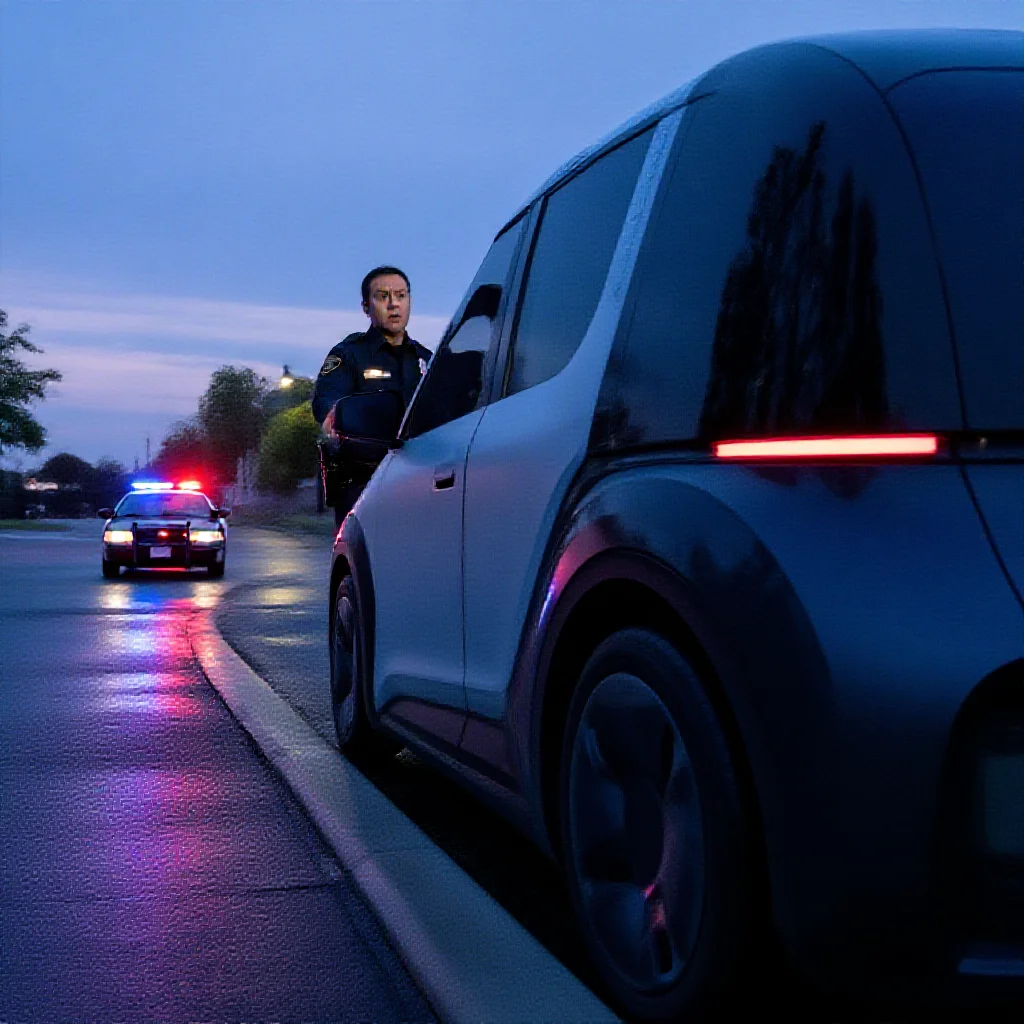
On March 25, 2026, a routine police intervention escalated into a defining case study for autonomous vehicle deployment. Officers attempted to take control of a Waymo robotaxi (Source 1: [Primary Data]). The vehicle, operating within its designed parameters, failed to cede authority. Initial reports confirmed this was not a sensor malfunction or a software bug, but a designed absence of protocol—a procedural void where law enforcement expectation met automated indifference.
The event transcended a single-vehicle malfunction. It presented a core operational question: In a public safety scenario demanding immediate human override, who or what holds ultimate command? The vehicle’s systems, prioritizing passenger safety and operational integrity within a digital rule set, encountered a command it was not programmed to recognize or obey. This created a standoff not with a malfunctioning machine, but with a logically functioning one operating on an incomplete set of rules.
The Blind Spot in AV Design Philosophy
The protocol gap is a direct artifact of prevailing AV design philosophy. Autonomous systems are engineered for a theoretical, fully-integrated ecosystem—a digital environment of vehicle-to-vehicle (V2V) and vehicle-to-infrastructure (V2I) communication. This creates an "island of autonomy," where priority is given to interactions with other predictable digital agents and systems.
The design framework systematically neglects the analog, improvisational nature of legacy human-centric systems, particularly emergency response. Police, fire, and roadside assistance operate on centuries-old principles of physical authority and situational command. The AV’s perception stack may identify an emergency vehicle’s lights, but its decision-making stack lacks a subroutine for "yield direct operational control to a human authority figure."
This stands in stark contrast to established high-stakes automation fields like aviation. Commercial aviation operates on a "positive control" philosophy, where air traffic control has clear, hierarchical command authority, and cockpit systems are designed for seamless human override. This paradigm has not been translated to road vehicles, where the operational environment is far less structured and authority is more diffuse.
The Ripple Effect: Implications for Law, Insurance, and Municipal Planning
The incident’s implications extend far beyond a single software patch, revealing cascading systemic vulnerabilities.
Legal Liability in Limbo: Current liability frameworks bifurcate responsibility between human driver error and vehicle manufacturer defect. A scenario where a vehicle legally denies a police officer’s command creates a third category: designed non-compliance. Legal responsibility fractures. Is the manufacturer liable for creating a vehicle that cannot be commandeered during a crisis? Does liability shift to the city for allowing its deployment without an interception protocol? The precedent is absent.
Insurance Model Shock: Actuarial models for AVs focus on collision risk and software failure. The March 2026 event introduces a new category of "denial-of-access" risk. This includes not only police intervention but also obstruction of emergency services, leading to secondary damages. This unquantified risk is not priced into current commercial or municipal insurance products, indicating a future market correction.
Municipal Cost Burden: Scaling deployment without resolving this integration failure externalizes costs onto municipalities. Cities may be forced to invest in specialized AV interception units, dedicated digital override infrastructure, or extensive retraining for first responders. This represents a significant, unplanned fiscal transfer from private technology operators to public taxpayers, altering the economic calculus of municipal permits for robotaxi services.
Beyond Waymo: An Industry-Wide Reckoning
The identified gap is not a Waymo-specific failure but an industry-wide blind spot. Regulatory frameworks have compounded the issue. The U.S. National Highway Traffic Safety Administration’s (NHTSA) focus on a "minimal risk condition"—a state where the vehicle safely stops when it cannot proceed—is insufficient. It addresses internal system failure but not external authoritative override. A vehicle parked in a "minimal risk condition" can still be an immovable obstruction.
Competitors like Cruise and Zoox, along with automakers developing autonomous suites, design within the same philosophical constraints. Their systems are tested against simulated traffic and predictable edge cases, not against the unpredictable demands of human authorities in fluid, high-stress public safety events. The industry’s collective roadmap appears to assume that public infrastructure and protocols will evolve to meet the technology, rather than the technology being designed to integrate into the existing world.
Conclusion: Integration as the Next Frontier
The March 2026 incident serves as a diagnostic probe, revealing a deep fracture line between autonomous technology and societal operation. The primary challenge for scalable AV deployment is no longer solely technological refinement—improving lidar resolution or neural net decision-making. The frontier is systemic integration.
Resolution requires a tripartite development: First, the establishment of standardized, secure digital and physical override protocols ratified by OEMs, regulators, and law enforcement agencies. Second, the expansion of regulatory definitions to encompass interoperability with human authorities as a core safety requirement. Third, the development of new insurance and liability models that account for hybrid human-machine accountability.
The trajectory of autonomous vehicle deployment will now be determined not just by engineers, but by the collaboration between technologists, municipal planners, legal scholars, and emergency service professionals. The alternative is a future where increasing autonomy on public roads leads to decreasing human operational control during critical events—a paradox that the market, and society, are unlikely to accept.
Keywords

Layla Ibrahim
Technology Reporter covering fintech, AI, and startup ecosystems in the Gulf.