Syrian Capital in Mayfair: The $300M Beaumont Project and London''s Post-Pandemic Luxury Real Estate Revival
A $300 million project to convert London''s historic Beaumont hotel into luxury residences and a new five-star hotel is being developed by Beaumont Property Development, a subsidiary of the Syrian-owned Yildizlar SSS. Scheduled to begin construction in Q3 2024, this venture highlights a significant trend: the strategic influx of Middle Eastern capital into prime London real estate as a safe-haven asset, particularly in the post-pandemic recovery phase. This analysis explores the project''s role in revitalizing Mayfair''s luxury market, the geopolitical and economic logic behind Syrian-linked investment in the UK, and what this signals about the future of high-end urban redevelopment.
Fatima Al-Zahra
Editorial Analyst
Syrian Capital in Mayfair: The $300M Beaumont Project and London's Post-Pandemic Luxury Real Estate Revival
Introduction: A Syrian Firm's Bold Move in the Heart of Mayfair
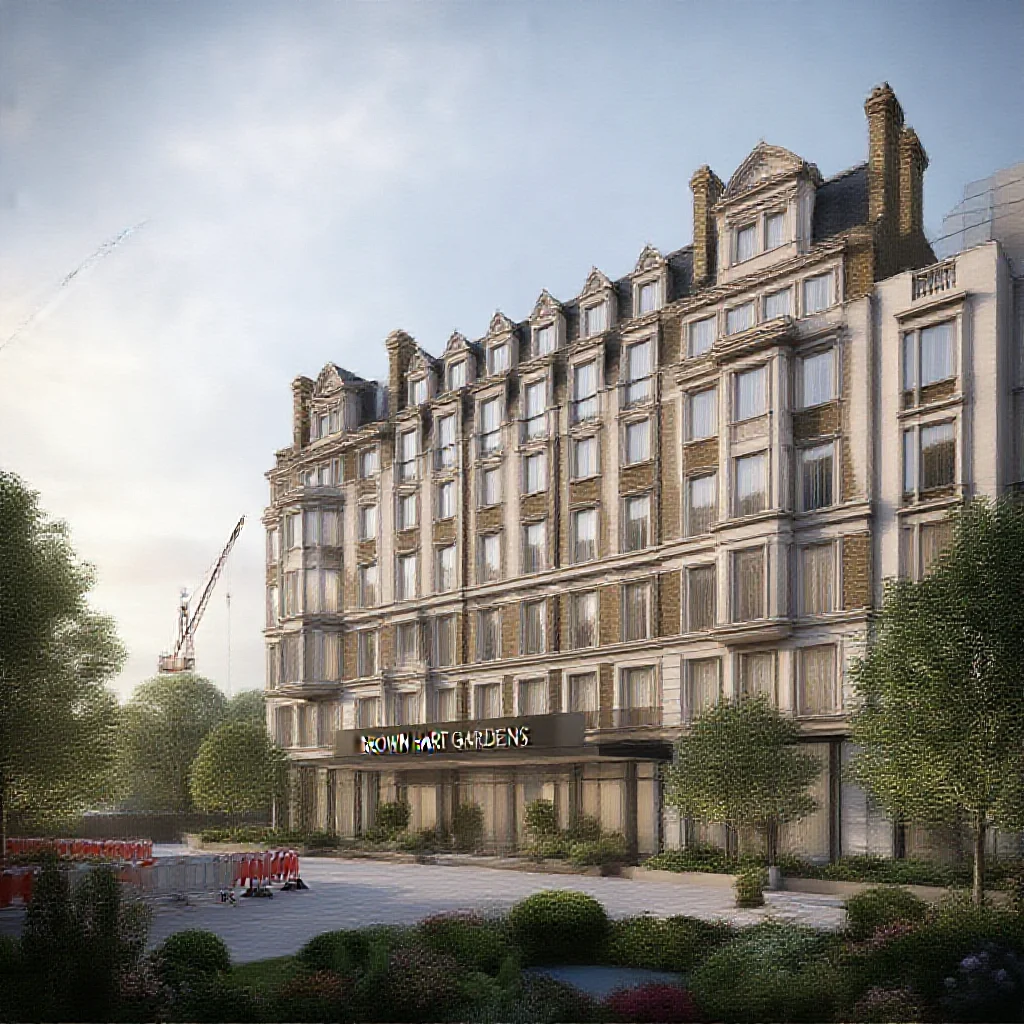
A $300 million redevelopment of a historic London landmark is proceeding under the direction of a Syrian-owned investment entity. The project involves the conversion of The Beaumont hotel on Brown Hart Gardens in London's Mayfair district into 23 luxury residences and a new five-star hotel with 50 rooms (Source 1: [Primary Data]). The development is being executed by London-based Beaumont Property Development, a subsidiary of the Syrian-owned investment firm Yildizlar SSS (Source 1: [Primary Data]). This venture presents a paradox: a major capital commitment to a prime London asset from a region often associated with geopolitical volatility. The transaction raises a central analytical question regarding what this specific investment reveals about the resilience of London's property market and the evolving patterns of global capital seeking safe-haven assets in the post-pandemic economic landscape.
Deconstructing the Deal: The Players and the Timeline
The corporate structure of the transaction indicates a deliberate operational approach. The local development vehicle, Beaumont Property Development, acts as the on-the-ground entity for the ultimate beneficial owner, Yildizlar SSS. This layered structure is standard for international property investment, providing a localized management team while channeling foreign capital. The appointment of UK-based construction firm Mace as the main contractor serves as a significant signal of intent (Source 1: [Primary Data]). Mace’s reputation for delivering complex, high-quality projects in sensitive urban environments lends credibility and mitigates execution risk for the foreign investor.
The project timeline is strategically aligned with broader market cycles. With construction scheduled to commence in Q3 2024 and completion targeted for the end of 2026, the development coincides with a period of stabilized post-pandemic construction logistics and supply chains (Source 1: [Primary Data]). This schedule positions the launch of the luxury residences and hotel to meet anticipated demand from a market that has absorbed existing inventory and is seeking new, high-specification supply in the latter half of the decade.
The Hidden Economic Logic: Why Syrian Capital, Why Now?
The involvement of Syrian-linked capital in a Mayfair trophy asset is not an isolated anomaly but a manifestation of a persistent macroeconomic trend. Capital from regions experiencing geopolitical or economic uncertainty consistently seeks stable, tangible assets in politically secure global cities. Prime Central London (PCL) real estate, particularly in districts like Mayfair, has historically functioned as a premier safe-haven asset class for international wealth preservation. This investment is less about the origin of the capital and more about its destination and the attributes that destination provides: legal security, title transparency, and long-term value retention.
The project also leverages the intangible "Brand London" premium. Converting a historic hotel like The Beaumont capitalizes on embedded cultural capital and narrative—elements highly bankable for marketing to ultra-high-net-worth individuals (UHNWIs). These buyers and the future hotel's clientele are purchasing not just real estate but an address, a history, and an experience, which command a significant price premium. The move demonstrates a sophisticated understanding of how cultural assets can be monetized in the global luxury market.
A Deep Audit: The Beaumont as a Case Study in 'Slow Analysis'
The Beaumont project serves as an effective lens for "slow analysis"—the examination of long-term urban and market transformations rather than immediate news events. The development acts as a deep entry point into several interconnected systems. Firstly, it impacts the specialized supply chain for high-end restoration and bespoke interior craftsmanship in London. A project of this caliber will engage a network of artisans, material suppliers, and technical consultants, reinforcing London's ecosystem for superlative luxury construction.
Secondly, it reflects the evolution of investment migration patterns. While not directly a citizenship-by-investment scheme, the acquisition of luxury residences in London often correlates with global mobility and the diversification of a UHNWI's life and assets across stable jurisdictions. The project’s success will be a barometer of continued confidence in this model. Finally, the conversion of a historic hotel into mixed-use luxury space indicates a market trend toward creating self-contained, experience-rich enclaves within urban centers, catering to a desire for exclusivity and convenience.
Conclusion: A Bellwether for London's Next Chapter
The commencement of the Beaumont project in Q3 2024 will be a tangible bellwether for the next phase of London's luxury real estate market. Its progress through to 2026 will be closely monitored as an indicator of several key factors: the sustained flow of Middle Eastern and global capital into UK brick-and-mortar assets, the absorption capacity for ultra-prime residential product, and the recovery trajectory of the luxury hospitality sector in central London.
Market predictions based on this case study suggest a continued preference for mixed-use developments that blend residential, hotel, and amenity spaces in prime locations. Furthermore, it underscores that London's appeal as a safe-haven destination for capital remains robust, provided the assets in question offer unique heritage, impeccable quality, and operational excellence. The ultimate measure of this project's significance will be its commercial success upon completion, which will either validate or challenge the current strategic influx of foreign investment into the city's most prestigious districts.
Keywords

Fatima Al-Zahra
Real Estate Editor specializing in Dubai and Riyadh mega-projects.