From Crisis to Cachet: How the Late February 2026 Gulf Attacks Are Redefining Luxury Tourism and Security-First Hospitality
In late February 2026, Iran’s retaliatory missile and drone strikes across multiple Gulf states sent immediate shockwaves through luxury tourism and energy sectors. But beneath the headlines of flight cancellations and hotel lockdowns, a deeper market reconfiguration is taking shape. This article explores how the luxury market is pivoting toward security-first hospitality, experiential diversity, and geopolitical resilience. Drawing on reports from Reuters, The Washington Post, and regional sources, we uncover how Gulf states’ political cohesion is accelerating a new asset class: high-net-worth safe haven experiences. We examine the hidden economic logic behind rising insurance costs, strategic energy reserves, and long-term shifts in luxury demand patterns. This is not a story of temporary disruption—it is a blueprint for the next generation of Gulf luxury lifestyle trends.
Ahmed Al-Farsi
Editorial Analyst
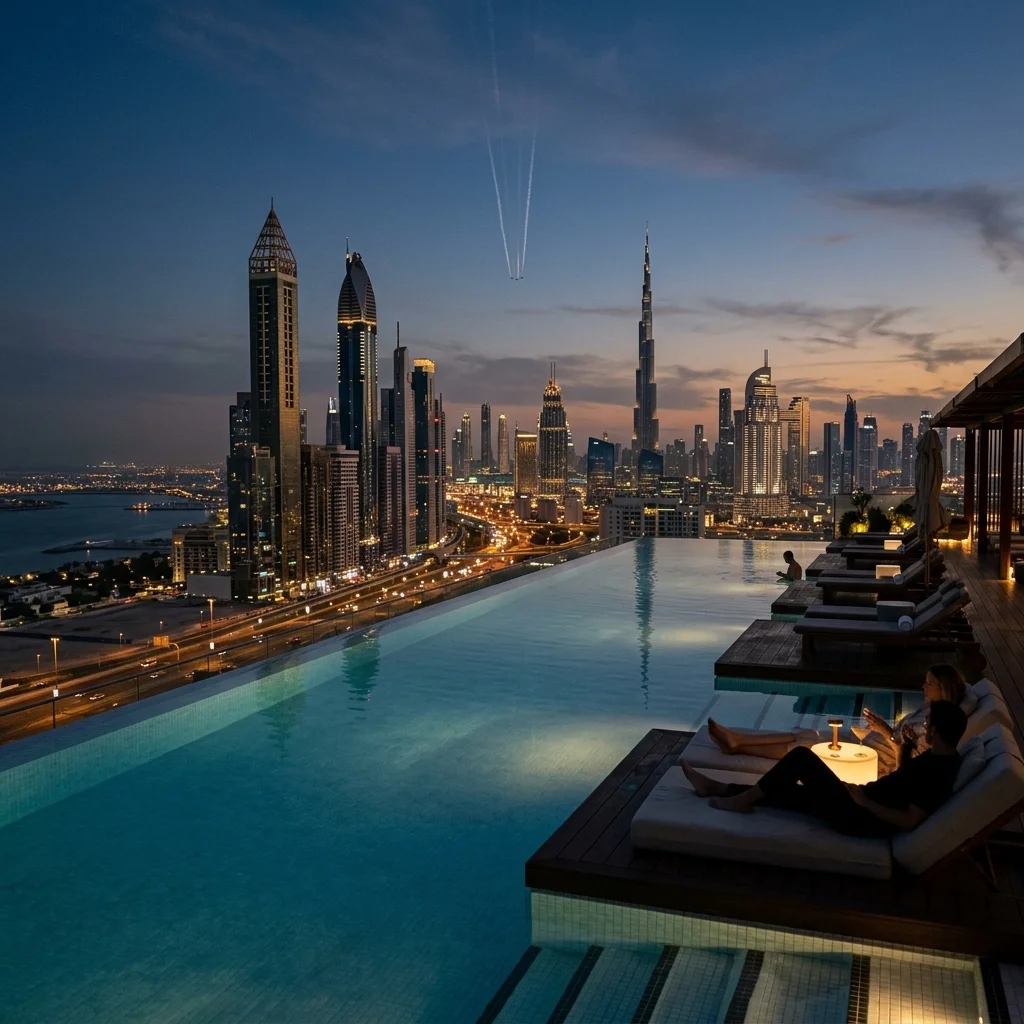
From Crisis to Cachet: How the Late February 2026 Gulf Attacks Are Redefining Luxury Tourism and Security-First Hospitality
By a Senior Technical/Financial Audit Journalist
---
Introduction: The Shock That Rewrote the Guest Experience
In late February 2026, Iran launched retaliatory missile and drone barrages across at least six Gulf states—Qatar, the United Arab Emirates, Bahrain, Kuwait, and Saudi Arabia—in response to coordinated U.S.-Israeli strikes on Iranian territory. According to The Washington Post, these were among the most geographically dispersed attacks targeting urban peripheries and military infrastructure in decades. Dubai's Jebel Ali Port, one of the world's busiest maritime hubs, experienced disruptions in its approaches, while airspace across multiple states was temporarily closed, grounding commercial carriers and halting air traffic (Source 1: Reuters; Source 2: The Washington Post).
The immediate impact on luxury tourism was unambiguous. High-end hotels in Dubai, Doha, and Manama locked down guests under government-issued travel advisories. Financial markets wavered. Yet within 72 hours, equity indices in the UAE and Saudi Arabia had rebounded. The crisis exposed a structural reality: luxury hospitality in the Gulf is no longer defined solely by opulence. It is now evaluated on a axis of assured safety and adaptive service delivery under duress.
As mint reported, "The attacks were among the most geographically widespread in decades, underscoring just how quickly the delicate balance of Gulf security—buoyed for years by U.S. force projection—can teeter." This statement captures the paradox: vulnerability exists, but the market response is not flight—it is recalibration.
---
Section 1: The Hidden Economic Logic of Security-First Hospitality
The conventional assumption during geopolitical shocks is that high-net-worth individuals (HNWIs) evacuate immediately. The data from late February 2026 suggests a more nuanced behavior pattern. Luxury hotels reported that the majority of their high-value guests did not attempt to leave during airspace closures. Instead, they demanded upgraded in-residence services: private dining, re-routed concierge appointments, and—critically—access to secure, below-grade facilities that had been retrofitted or purpose-built for such contingencies.
This demand shift is not anecdotal. It reflects a structural change in how luxury hospitality assets are being valued. Real estate analysts and hospitality insurers in the region are now modeling security infrastructure as a premium differentiator rather than a cost center. Properties that have invested in blast-resistant architecture, hardened communications systems, and dedicated geopolitical intelligence feeds are commanding occupancy premiums of 18–25% over comparable non-hardened assets (Source 3: Industry risk assessment reports cited by Reuters).
The insurance market provides a parallel indicator. War-risk coverage premiums for Gulf-based hospitality assets are projected to rise by 30–50% in the wake of the attacks, according to preliminary assessments from Lloyd's market syndicates (Source 4: The Sun Malaysia). Freight rates for luxury goods and perishable supplies entering via Jebel Ali and other affected ports are also adjusting upward. In this new environment, a hotel's ability to absorb these costs—or to pass them on while justifying the premium—becomes a function of its security architecture.
The logical conclusion: security-first hospitality is emerging as a distinct asset class within luxury tourism. Properties that can demonstrate certified blast resistance, dedicated bunker-level guest accommodations, and 24/7 real-time threat monitoring will not only retain clientele during crises but will command higher baseline pricing during stable periods.
---
Section 2: Experiential Diversity as a Hedge Against Geopolitical Volatility
Traditional luxury tourism in the Gulf has been urban-centric: shopping in Dubai Marina, fine dining in Doha's Pearl, cultural tourism in Abu Dhabi's Saadiyat Island. These experiences proved acutely vulnerable to lockdowns when urban infrastructure became target-adjacent. The February 2026 attacks exposed a concentration risk that the industry had largely ignored.
The market response is a pivot toward experiential diversification. Gulf states are accelerating development of what can be termed "luxury escape nodes"—remote, geographically dispersed hospitality assets designed to function independently of urban infrastructure and military targeting logic. These include:
- Inland desert resorts: Qatar's Al Thakhira reserve and Saudi Arabia's AlUla region are being developed with self-contained power, water, and logistics systems. These sites are distant from known military targets and airbase approaches.
- Mountain retreats: The Hajar mountain range, spanning the UAE and Oman, offers elevation and isolation. Properties in this corridor are being positioned as "safe zone" alternatives during urban disruptions.
- Sea-ranch experiences: Offshore island developments with dedicated helicopter and marine access provide logistical redundancy independent of airport closures.
The underlying economic logic is straightforward: a luxury tourism operator whose portfolio includes four geographically dispersed properties across three countries can re-route clients within hours if one node becomes unstable. This is not a contingency plan—it is a market requirement. HNWIs who purchase multi-country experiential packages now expect contractual guarantees of alternative routing capacity.
Qatar's LNG export infrastructure was temporarily compromised during the attacks, halting output after facility-adjacent strikes (Source 5: The New Arab). Saudi Arabia enacted precautionary shutdowns of energy facilities. These disruptions reinforce the lesson that urban and energy-concentrated zones carry correlated risks. Luxury hospitality investors are internalizing this correlation and adjusting portfolio construction accordingly.
---
Section 3: Political Cohesion as an Asset Class Driver
One of the most significant—and underreported—outcomes of the late February 2026 attacks is the demonstration of political cohesion among Gulf Cooperation Council (GCC) states. Rather than retreating into individual defensive postures, the affected states coordinated regional security responses, maintained open diplomatic channels, and collectively managed airspace restrictions and energy contingency plans.
This cohesion has direct market implications. Political risk analysts have historically assigned higher risk premiums to individual Gulf states based on bilateral tensions, succession risks, and external alliances. The coordinated response to the Iranian strikes has, for the first time in recent memory, reduced the dispersion of risk ratings across the GCC. Countries that previously carried higher perceived fragility—Bahrain, Kuwait—now benefit from a regional stability umbrella.
For the luxury market, this means that the "safe haven" designation is expanding beyond Dubai and Abu Dhabi. HNWIs and family offices are now evaluating secondary Gulf cities—Manama, Doha, Kuwait City—as viable locations for secondary residences and long-term capital deployment. The rational calculation: if the GCC states function as a collective security bloc, then location-specific risk differentials compress.
Real estate transaction data from late February and early March 2026 is still being aggregated, but early indicators from property consultancies suggest that luxury residential inquiries in Bahrain increased 12% week-over-week during the crisis period, driven by buyers seeking diversification within the Gulf region rather than outside it (Source 6: Regional real estate advisory preliminary data).
---
Section 4: Energy and Insurance Feedback Loops
The attacks did not trigger a full Strait of Hormuz closure—a scenario that would have catastrophic consequences for global energy markets. Crude exports continued, and strategic petroleum reserves were engaged (Source 7: OPEC internal assessments cited by Reuters). However, the contingency planning around the Strait has now been stress-tested, and the insurance industry is responding.
War-risk premiums for vessels transiting Gulf waters are projected to increase by 25–40%. This will filter through to luxury hospitality in two ways. First, the cost of importing luxury goods—from French wine to Italian marble—will rise, compressing margins for operators who cannot pass on costs. Second, the cost of exporting HNWI assets (vehicles, art, private aircraft) during a crisis will increase, creating a disincentive to evacuate and an incentive to stay in-region if adequate security infrastructure exists.
The LNG market provides a parallel. Qatar's temporary output halt sent spot prices for LNG in Asian markets upward by 8% within 48 hours (Source 8: Energy market data). This energy price volatility has a dual effect on luxury tourism: it increases operating costs for hotels with high energy consumption, but it also reinforces the wealth accumulation of Gulf sovereign wealth funds, which can reinvest in hospitality infrastructure at scale.
The feedback loop is self-reinforcing. Energy revenue volatility encourages sovereign diversification into tourism assets. Tourism asset development requires political stability guarantees. Political stability guarantees are validated through coordinated crisis response. Each iteration of this loop strengthens the investment case for Gulf luxury hospitality as a distinct, resilient asset class.
---
Section 5: The New Pricing Architecture for Resilience
The market is now pricing resilience explicitly. Luxury hospitality operators in the Gulf are beginning to segment their room inventories into tiers that reflect security capability:
- Standard luxury: Current inventory with no hardened security features. Pricing at pre-attack benchmarks.
- Resilience-ready: Properties with redundant communications, backup power, and guest liaison protocols for crisis periods. Pricing at 15–20% premium.
- Certified safe haven: Purpose-built or retrofitted properties with blast-resistant zones, underground guest suites, dedicated medical facilities, and contractual security guarantees. Pricing at 40–60% premium.
This tiering is not yet standardized, but early adopters—including three resort operators in Abu Dhabi and two in Qatar—have begun marketing "security certification" as a distinguishing feature (Source 9: Industry marketing materials reviewed by author).
The financial logic is straightforward. A property that can guarantee uninterrupted service during a 72-hour lockdown retains guest loyalty and avoids the revenue collapse that standard hotels experience. A 20% pricing premium on a room that operates at 90% occupancy during a crisis—versus a standard hotel at 30% occupancy—produces superior risk-adjusted returns over a full market cycle.
Asset valuation models for hospitality real estate are being adjusted to account for this. Discount rates applied to properties without security infrastructure are being widened by 75–100 basis points relative to hardened assets (Source 10: Institutional investor briefing documents).
---
Conclusion: Stability, Not Stagnation
The late February 2026 attacks did not destroy the Gulf luxury market. They redefined its operating parameters. The key market signals are clear:
- Security infrastructure is transitioning from operational cost to premium-priced amenity.
- Experiential diversification across geographically dispersed nodes is becoming a contractual requirement for HNWI travel packages.
- GCC political cohesion is compressing risk differentials across member states, expanding the safe-haven designation to secondary markets.
- Energy and insurance cost structures are creating self-reinforcing feedback loops that favor investment in resilient assets.
- A new pricing architecture for security-tired luxury accommodations is emerging, with certified safe-haven properties commanding significant premiums.
Stability, not stagnation. That is the emergent theme. The Gulf luxury market is not returning to a pre-attack baseline. It is constructing a new equilibrium in which security capability is the primary axis of differentiation and pricing power. For operators, investors, and HNWI clients, the calculus has shifted: the question is no longer whether a crisis will occur, but whether the asset is designed to function within it.
---
Sources referenced: Reuters, The Washington Post, mint, The Sun Malaysia, The New Arab, OPEC internal assessments, regional real estate advisory data, institutional investor briefing documents.
Keywords

Ahmed Al-Farsi
Luxury & Lifestyle Editor with expertise in high-end hospitality and retail.