Beyond Ownership: The Five Forces Reshaping Luxury in 2025
The luxury market in 2025 is undergoing a profound transformation as value shifts from exclusivity to emotional resonance, wellness, and sustainability. Drawing on Euromonitor International’s latest surveys and industry data, this article explores five interconnected trends: the rise of AI-driven hyper-personalization, the expansion of luxury into lifestyle domains (home, wellness, real estate, retirement), the embedding of sustainability as a baseline expectation, and the explosive growth of experiential luxury to $103.4 billion. With 55% of high-income consumers now prioritizing experiences over things—despite 71% being concerned about everyday costs—brands must redefine their value proposition. The article goes beyond headline numbers to examine the underlying economic logic, supply-chain implications, and long-term strategic shifts that will define the next era of luxury.
Ahmed Al-Farsi
Editorial Analyst
Five Forces Reshaping Luxury in 2025
Introduction: Luxury’s New Value Equation
The image of luxury has long been tied to rarity—limited-edition handbags, private clubs, and invitation-only events. But as 2025 unfolds, that paradigm is being redrawn. Value in luxury now flows less from what you own and more from how you live, how you feel, and how you connect. The traditional markers of status—exclusivity of product, scarcity of supply—are giving way to something deeper: emotional resonance, personalization, and purpose.
[IMAGE: A split image: left side shows a traditional luxury storefront with a doorman and polished window displays; right side shows a wellness retreat with a yoga pavilion and subtle brand logo on towels. The transition from product to lifestyle.]
This shift is not anecdotal. According to Euromonitor International’s Voice of the Consumer 2025 survey, 55% of high-income respondents now prefer spending on experiences over material goods. At the same time, 71% of the same group say they are worried about everyday costs—a paradox that forces luxury brands to justify their price tags with more than just heritage or status.
Five interconnected forces are driving this transformation: the rise of emotional resonance over exclusivity, AI-powered hyper-personalization, the expansion of luxury into lifestyle domains, the embedding of sustainability as a baseline expectation, and the explosive growth of experiential luxury, now a $103.4 billion market. Each force challenges the old logic of luxury and demands a new playbook.
1. Emotional Resonance Over Exclusivity: The New Currency of Luxury
For decades, the promise of luxury was simple: own what others cannot. But younger consumers, particularly Millennials and Gen Z, are increasingly skeptical of exclusivity for its own sake. They seek authenticity, belonging, and self-expression—qualities that cannot be manufactured through limited runs alone.
The 55% preference for experiences over things is a direct signal that emotional dividends matter more than status symbols. When a consumer pays for a week-long wellness retreat at a brand-owned resort rather than a limited-edition watch, they are buying a memory, a transformation, or a sense of connection. The economic logic here is “scarcity of meaning” rather than scarcity of supply. Brands that once competed on how many people could not afford their products now compete on how deeply their products make people feel.
[IMAGE: A close-up of a person’s hands holding a branded ceramic mug in a sunlit kitchen, smiling naturally—emotion rather than product display.]
This is not simply a marketing trend. The luxury sector’s pivot toward wellness, sustainability, and community-building is a direct response to consumer emotional needs. For example, brands like Loro Piana and Brunello Cucinelli have built their identities around quiet luxury rooted in craftsmanship and authenticity, rather than loud logos. The result: higher customer loyalty and willingness to pay premium prices for intangible values.
2. AI as the Invisible Architect: Hyper-Personalization and Predictive Efficiency
Artificial intelligence is quietly becoming the most powerful tool in luxury’s transformation—not by replacing human creativity, but by enabling it to scale. According to Euromonitor’s Voice of the Industry Survey 2025, 67% of luxury professionals believe generative AI will help create more targeted campaigns. But the impact extends far beyond marketing.
AI now powers predictive design, allowing brands to anticipate what customers will want before they even express it. This reduces overproduction—a critical issue in a sector where unsold inventory damages brand perception and margins. Real-time personalization at scale means that a customer browsing a digital storefront can see products curated to their exact tastes, body measurements, and even emotional state inferred from browsing behavior. Luxury shifts from “mass exclusivity” (the same limited item for everyone) to “individual curation” (unique suggestions for each person).
[IMAGE: A minimalist interior with a holographic interface floating above a table, showing a 3D model of a watch being customized in real time. Soft lighting, muted earth tones.]
Prada, for instance, has invested in AI-driven inventory management that adjusts production quantities based on regional demand signals, reducing waste while ensuring high-demand items are available. At the supply chain level, AI optimizes logistics, predicts maintenance needs for ateliers, and even helps designers test color variations digitally before committing to physical samples. The result is a leaner, more responsive luxury ecosystem that can deliver personalized experiences without sacrificing the handmade quality that defines the sector.
3. The Lifestyle Takeover: Luxury Expands Beyond Categories
In 2025, luxury is no longer confined to handbags, watches, and couture. Consumers now expect the same level of design, craftsmanship, and service in every aspect of their lives—from the sofa they sit on to the retirement community they choose. Home decor, wellness services, real estate, and even retirement living have become new frontiers for luxury brands.
LVMH’s acquisition of Belmond and its expansion into luxury hospitality is one example. But the trend goes further: brands like Armani have moved into residential towers; Aman Resorts now operates private residences and wellness retreats; Ferrari has launched a luxury apparel line and a theme park. The logic is that a customer’s relationship with a brand can span multiple life stages and categories, deepening loyalty and revenue per customer.
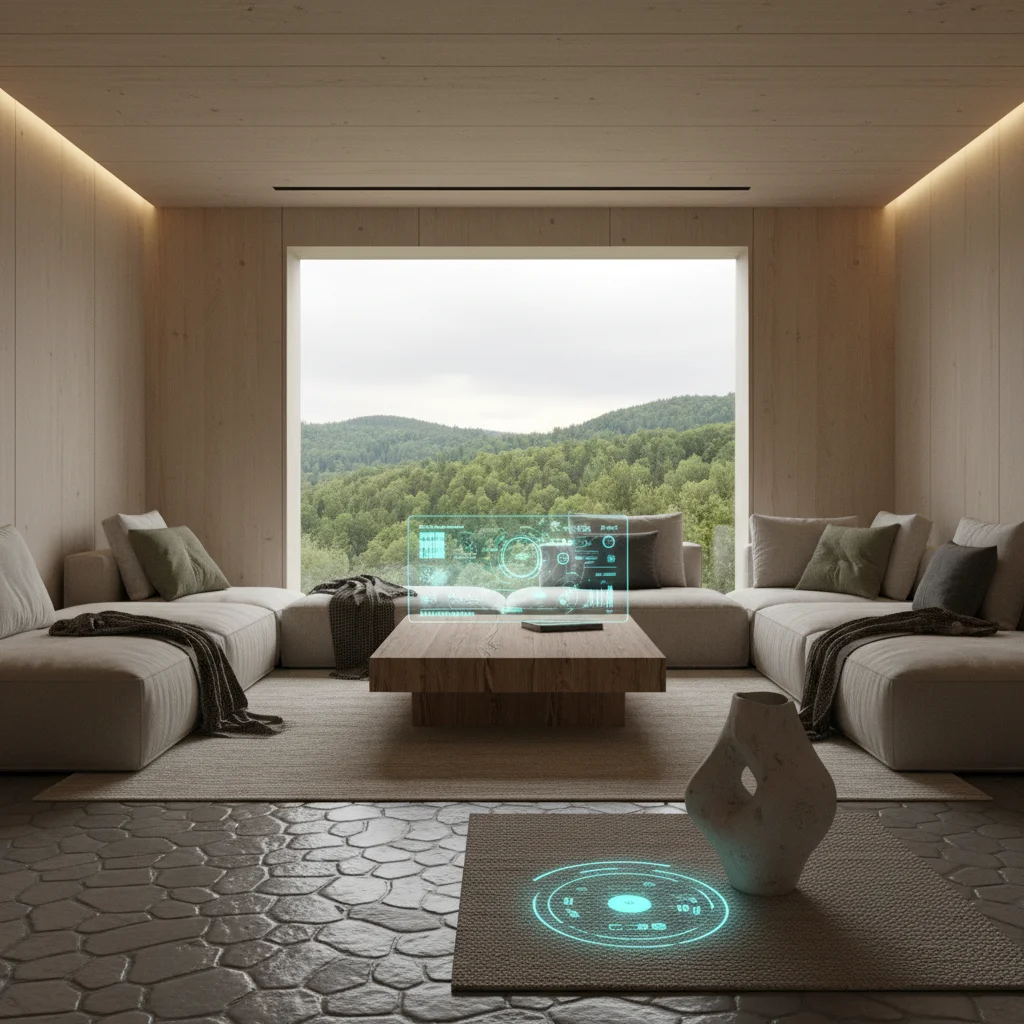
[IMAGE: A serene living room with natural stone walls, wooden beams, linen curtains, and a single sculptural vase. A digital interface is faintly visible on a side table, blending nature with technology.]
The economic rationale is compelling. The lifetime value of a customer who buys not only a handbag but also a home interior collection, a wellness retreat package, and a retirement villa is exponentially higher than that of a customer who only purchases seasonal fashion. Moreover, lifestyle expansion allows brands to tell a more holistic story about how they see the world—reinforcing emotional resonance.
However, this expansion carries risks. Brands must ensure that quality and authenticity are maintained across categories. A disappointing fitness app can damage the perception of a heritage fashion house. The most successful players treat lifestyle expansion as a long-term brand-building exercise, not a quick revenue grab.
4. Sustainability as Baseline: From Differentiator to Expectation
Five years ago, sustainable luxury was a niche selling point. Today, it is a baseline requirement. Consumers, particularly in Europe and North America, increasingly expect luxury brands to demonstrate environmental responsibility—not as a marketing campaign, but as an embedded operational principle.
Regulation is accelerating this shift. The European Union’s Digital Product Passport (DPP) requirement, which will apply to textiles and other goods by 2027, is already driving change. Brands are investing in blockchain-based traceability systems that allow consumers to verify the origin of materials, the conditions of production, and the carbon footprint of each item. These digital product passports turn transparency into a trust-building tool.
[IMAGE: A handcrafted leather bag placed next to a glowing holographic interface displaying a digital passport—showing material source, artisan details, and carbon footprint. Soft lighting, earth tones with a cyan accent.]
Beyond compliance, many luxury houses are rethinking their materials. Stella McCartney has been a pioneer, but now heritage brands like Gucci and Chanel are investing in circular economy models—repair services, resale platforms, and upcycling initiatives. The business logic is clear: a product that can be repaired or resold retains value longer, reducing the need for new raw materials and appealing to environmentally conscious consumers.
Yet sustainability in luxury faces a tension: the very concept of luxury often relies on overconsumption and novelty. Brands that successfully navigate this tension frame sustainability not as sacrifice but as higher quality. A garment that lasts decades is more luxurious than one that fades after a season. The circular economy becomes a new form of exclusivity—access to repair services and resale platforms that non-luxury brands cannot offer.
5. The Experiential Boom: $103.4 Billion and Rising
Perhaps the most tangible signal of luxury’s shift is the numbers. Experiential luxury—travel, dining, wellness retreats, cultural events—is projected to reach $103.4 billion in 2025, according to Euromonitor data. This growth outpaces that of traditional luxury goods and reflects a structural change in consumer priorities.
High-income consumers are spending more on “memory assets” than on “material assets.” A private chef experience in a remote cabin, a behind-the-scenes tour of a champagne cellar, or a week-long wellness program at a branded resort delivers emotional dividends that a new handbag cannot. The 55% of respondents who prioritize experiences are not rejecting products; they are demanding that products be embedded in experiences.
[IMAGE: A luxury wellness retreat with a saltwater infinity pool overlooking mountains. Guests are practicing yoga on wooden decks. Subtle brand logos on towels and robes.]
For brands, this means rethinking retail. Flagship stores are becoming experience centers—places to try, learn, and connect rather than simply transact. Louis Vuitton’s cafés and pop-up art exhibitions, Dior’s beauty spas, and Hermès’s flower shops are examples of retail spaces designed to create memories. Online, brands are investing in virtual try-ons and immersive digital showrooms that simulate the experience of visiting a boutique.
The challenge is scalability. Experiences are inherently less replicable than products. A brand that wants to compete in experiential luxury must invest heavily in talent, locations, and service standards. But the payoff is higher margins and deeper customer relationships. A traveler who attends a two-week wellness program at a Aman resort is likely to become a lifelong brand ambassador—and to purchase products that remind them of that experience.
Conclusion: Rethinking Value in an Age of Paradox
The five forces reshaping luxury in 2025 are not independent; they reinforce one another. Emotional resonance drives demand for experiences. AI enables personalization that makes those experiences feel unique. Lifestyle expansion turns a single purchase into a lifelong relationship. Sustainability ensures that relationship does not come at the planet’s expense. And experiential growth provides the revenue engine that funds all of the above.
Yet the paradox remains: 71% of high-income consumers are worried about everyday costs, yet they are spending more on luxury than ever. The answer lies in perception. Luxury is no longer about splurging on things; it is about investing in quality, meaning, and connection. Brands that can deliver those intangible returns—while managing costs through AI, circularity, and operational efficiency—will thrive.
The next era of luxury belongs not to those who own the rarest objects, but to those who curate the most resonant lives. For brands, the question is no longer “What can we sell?” but “How can we make our customers feel?” The answer will define success in 2025 and beyond.
[IMAGE: A serene, modern living space blending natural materials (stone, wood, linen) with subtle high-tech elements—a sleek holographic display floating above a minimalist table, with a window overlooking a lush green landscape. In the foreground, a single luxury object (a sculptural vase or a handcrafted leather bag) sits next to a glowing digital passport interface. The atmosphere is calm, aspirational, and integrated: no text, no watermark. Soft lighting, muted earth tones with a hint of futuristic cyan.]
Keywords
Ahmed Al-Farsi
Luxury & Lifestyle Editor with expertise in high-end hospitality and retail.